What Is Callus Removal and Is It Necessary in a Pedicure?
If you've ever booked a spa pedicure and wondered what the callus removal step actually involves, or whether it's really necessary, you're not alone. It's one of the most common questions clients ask before their first professional pedicure service. Callus removal is a core part of what separates a basic polish change from a true spa pedicure experience. In this post, we'll break down what calluses are, how they're safely treated, and why this step makes such a meaningful difference in how your feet feel and look.
Why Calluses Form in the First Place
Calluses are thick, hardened areas of skin that develop in response to repeated friction or pressure. They're your skin's natural defense mechanism, when an area is under consistent stress, the outer layer of skin thickens to protect the tissue underneath. According to dermatology resources, calluses affect an estimated 14% of the general population at any given time, with higher rates among people who spend long hours on their feet.
The most common areas where calluses develop on the feet include the heel, the ball of the foot, and the sides of the big toe. Factors that contribute to their formation include:
- Wearing shoes that don't fit properly or lack adequate cushioning
- Walking barefoot frequently on hard surfaces
- Standing or walking for extended periods throughout the day
- Certain foot structures, such as high arches or prominent bones
- Dry skin that hasn't been regularly moisturized or exfoliated
While calluses aren't harmful on their own, allowing them to build up over time can lead to discomfort, cracking, and a rough texture that feels uncomfortable, especially in open-toed shoes or sandals. Regular spa pedicure services are one of the most effective ways to stay ahead of buildup before it becomes a more noticeable issue.
The Tools Used for Callus Removal: File, Blade, and Chemical Softeners
Professional callus removal is not a one-size-fits-all process. Trained nail technicians assess the skin's condition and choose the appropriate method, or combination of methods, based on the thickness and location of the callus. At Meraki, every spa pedicure service begins with a thorough evaluation of the foot to determine the right approach.
Foot Files and Pumice Stones
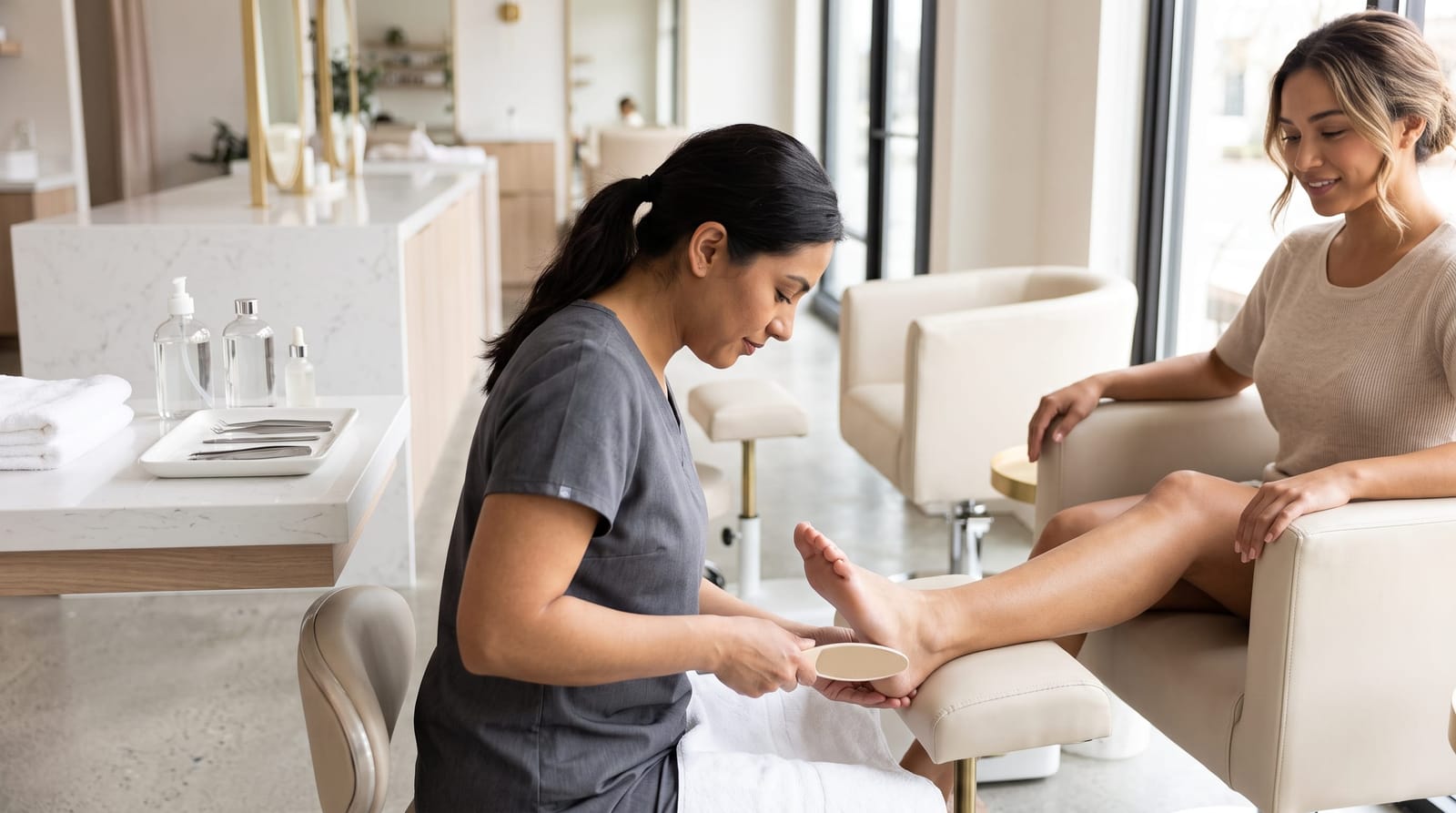
For lighter callus buildup, a professional-grade foot file or pumice stone is typically the first line of treatment. These tools physically buff away the top layers of thickened skin through gentle abrasion. When used correctly by a trained technician, this method is both effective and comfortable. It's often sufficient for clients who receive spa pedicure services regularly, roughly every 4 to 6 weeks, since consistent maintenance keeps buildup minimal.
Chemical Softeners and Exfoliating Solutions
Many spa pedicure services incorporate a foot soak or chemical softening solution before any physical exfoliation begins. These solutions often contain ingredients like urea, salicylic acid, or natural alpha hydroxy acids that penetrate the thickened skin and soften it from within. A typical softening soak lasts between 5 and 10 minutes, which makes the subsequent exfoliation step significantly more comfortable and effective. At Meraki, we use high-quality professional-grade softeners that are gentle enough for sensitive skin while still being highly effective on stubborn buildup.
Callus Blades (Used Only by Trained Professionals)
For more significant callus buildup, trained technicians may use a callus blade: a specialized tool designed to carefully shave away thickened skin. This method is precise and efficient, but it requires proper training and technique. In a professional spa environment like Meraki, these tools are used with full attention to safety standards and never applied past the point of comfort. It's worth noting that at-home callus blades carry a much higher risk of injury and are not recommended as a DIY alternative.
Is Callus Removal Necessary in a Spa Pedicure?
The short answer is: for most clients, yes, and it makes a significant difference. A spa pedicure without callus treatment addresses the surface level of foot care, but it leaves the underlying texture of the skin unchanged. Polish and massage feel lovely, but if rough, thickened skin hasn't been addressed, the overall result won't feel as smooth or look as polished.
Studies on foot care habits suggest that roughly 60% of adults report experiencing foot discomfort related to dry or hardened skin at some point, yet fewer than 20% seek professional treatment regularly. This gap often means that by the time clients do book a spa pedicure service, there's several months of buildup to work through.
Clients who benefit most from regular callus removal include:
- Those who are on their feet for most of the day at work
- Active clients who walk, run, or exercise frequently
- Anyone who tends to wear open-back shoes or heels regularly
- Clients with naturally dry skin that tends to thicken quickly
- Anyone preparing for sandal season or a special event
Even clients who don't have noticeable calluses benefit from the preventative aspect of regular exfoliation during spa pedicure services. Keeping the skin smooth and hydrated makes it far less likely that thick calluses will develop in the first place.
Safety and Hygiene Standards at Meraki
One of the most important considerations when it comes to callus removal is where and how it's being done. The tools, sanitation practices, and technician training all matter enormously for both safety and results.
At Meraki, every spa pedicure service follows strict hygiene protocols. All metal tools, including files and blades, are either single-use or sterilized between every appointment using professional-grade disinfectant solutions. Foot basins are sanitized and lined before each service. Our nail technicians are trained not only in technique but also in recognizing when a client's skin concerns fall outside the scope of a spa service and should be referred to a dermatologist.
We never push past what's comfortable, and callus removal at Meraki is always performed with a light hand and careful attention to the client's feedback. The goal is smooth, healthy-feeling skin, not over-exfoliation or irritation.
If you're weighing your options for a pedicure upgrade, it's also worth exploring how our Gel Pedicure vs. Regular Pedicure: What's the Difference? post breaks down what each service level includes beyond just the polish itself.
How Often Should You Have Calluses Professionally Treated?
For most clients, booking spa pedicure services every 4 to 6 weeks is enough to keep calluses from building up significantly. Clients with more active lifestyles or drier skin may find that coming in closer to every 3 to 4 weeks keeps their feet in the best condition year-round.
Between appointments, a few at-home habits can help extend the results of your spa pedicure service:
- Apply a rich foot cream or moisturizing balm nightly, focusing on the heel and ball of the foot
- Wear moisture-wicking socks to reduce friction throughout the day
- Use a gentle pumice stone once a week in the shower on damp skin only: never on dry skin
- Stay hydrated, since overall skin hydration affects how quickly calluses develop
Frequently Asked Questions
Does callus removal during a spa pedicure hurt?
When performed by a trained technician, callus removal should not be painful. Most clients describe the sensation as a light buffing or gentle scraping that feels neutral to slightly satisfying. A professional foot soak beforehand helps soften the skin significantly, which makes the entire process more comfortable. If anything feels uncomfortable during your spa pedicure service at Meraki, simply let your technician know and they'll adjust their approach.
Is it safe to have calluses removed at a nail salon?
Yes, when proper sanitation and training standards are followed. The key is choosing a salon that uses sterilized or single-use tools, follows professional hygiene protocols, and employs trained nail technicians. At Meraki, callus removal is always performed within safe, professional guidelines. We do not offer blade treatments that go beyond the outer layer of thickened skin, and we never treat open wounds, inflamed skin, or areas that show signs of infection.
What's the difference between a regular pedicure and a spa pedicure?
A regular pedicure typically includes nail shaping, basic cuticle care, and polish application. A spa pedicure goes several steps further: it usually includes a foot soak, callus removal, exfoliation, extended massage, and additional skin-softening treatments. The experience itself is also more relaxing and unhurried. If you're curious about how different pedicure service levels compare, our post on Gel Pedicure vs. Regular Pedicure: What's the Difference? walks through the key distinctions in detail.
How long does a full spa pedicure with callus removal take?
A complete spa pedicure service at Meraki typically takes between 50 and 75 minutes, depending on the level of care needed and the specific service selected. Clients with more significant buildup may need a few extra minutes for the softening and exfoliation steps. We always allow enough time to give each guest a thorough, unhurried experience rather than rushing through the process.
The Bottom Line
Callus removal isn't just an add-on: it's one of the most impactful parts of a complete spa pedicure service. It's what takes your feet from simply polished to genuinely smooth, healthy-looking, and comfortable. At Meraki, we approach every spa pedicure service with careful attention to technique, hygiene, and how each individual client's skin responds. Whether you're coming in for the first time or making pedicures a regular part of your self-care routine, callus treatment is one of the steps that makes a lasting difference in both results and comfort.