What to Bring to Your Bridal Hair Trial Appointment
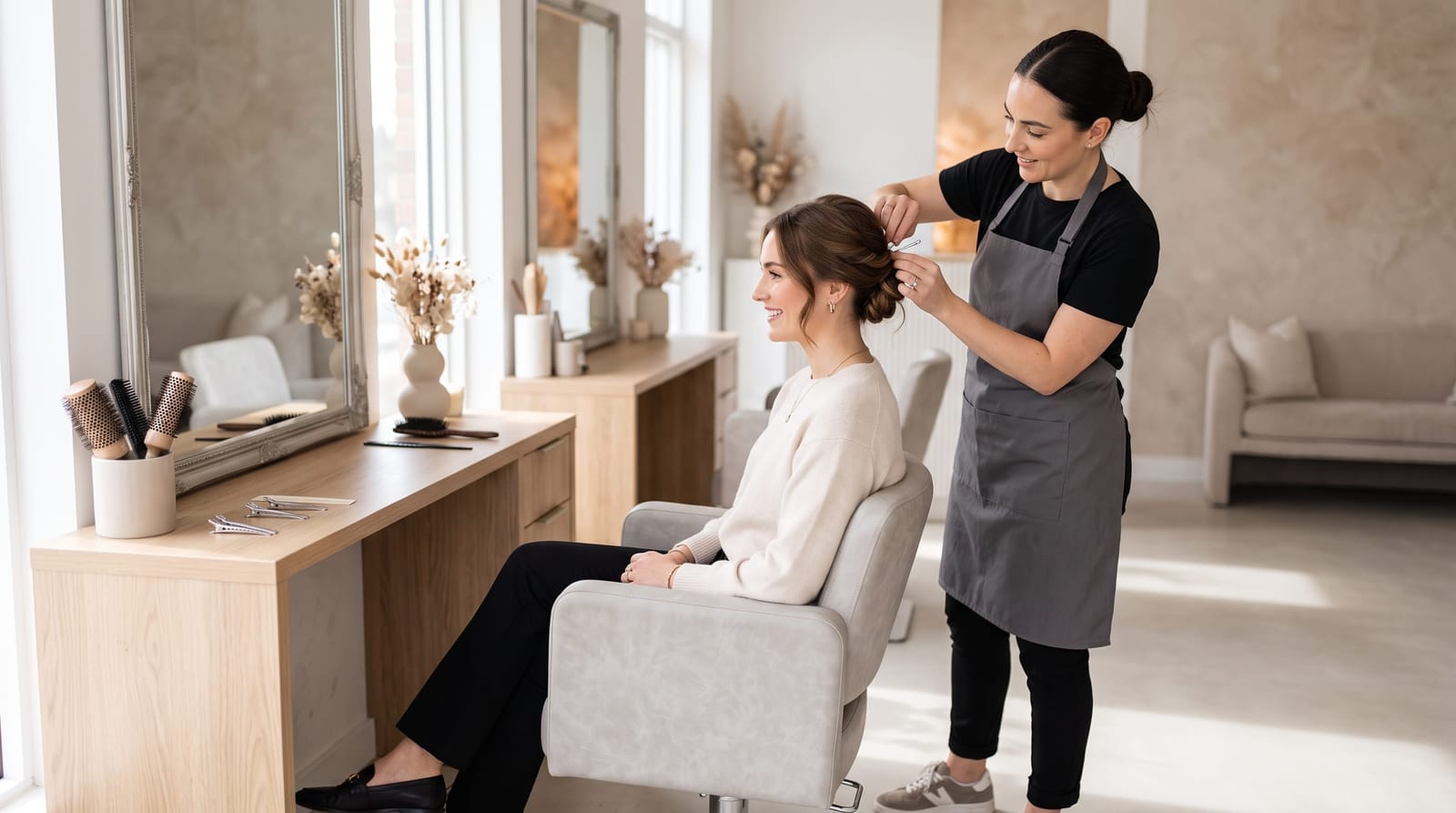
Your bridal hair trial is one of the most important appointments on your wedding planning calendar, and what you bring with you can make all the difference. Proper bridal hair trial preparation goes far beyond simply showing up with clean hair. The items you carry into that appointment directly shape how accurately your stylist can recreate your final wedding day look. This guide walks you through everything to pack, explains why each item matters, and shows you how Meraki Salon's stylists use this information to make your trial as productive and meaningful as possible.
Why Your Hair Trial Preparation Matters More Than You Think
A hair trial is essentially a full dress rehearsal, and just like any rehearsal, the closer it mirrors the real event, the better your outcome will be. According to wedding planning research, most stylists recommend scheduling your bridal hair trial between 3 and 6 months before your wedding date. This timeline gives you enough space to refine the look, order any additional accessories, and address any adjustments without the stress of last-minute changes.
When brides arrive without their accessories, veil, or inspiration images, stylists are essentially working blind. They may create something beautiful, but it might not translate to the actual wedding day environment: different lighting, different neckline, different headpiece. Arriving fully prepared means your trial reflects reality, not just a general idea of what you want.
At Meraki Salon, our stylists treat the trial as a true collaboration. The more information and physical items you bring, the more tailored and precise the result will be. Think of it as giving your stylist every tool they need to make your vision a reality, not just part of it.
The Complete Bridal Hair Trial Checklist
Here is everything you should bring to your bridal hair trial appointment. Even if some items feel minor, each one plays a specific role in the process.
Inspiration Images
Visual references are one of the most valuable tools in a stylist's kit. Bring 3 to 5 photos that capture different elements you love: one for overall style, one for texture detail, one for how the back looks, and so on. Avoid bringing just a single photo and expecting an exact replica. Instead, use your images to communicate a mood, a silhouette, or a specific detail. Pinterest boards, saved Instagram posts, and magazine tearouts all work well. Be honest about what you love and what you don't: specificity helps more than vague descriptions.
Your Veil or Headpiece
This is non-negotiable. A veil, tiara, floral crown, or hair comb will change the entire structure of a hairstyle. Certain updos require specific placement points to accommodate a veil properly. A style that looks stunning as a standalone updo may need significant adjustment once a cathedral-length veil is added. Bringing your actual headpiece, not a similar one, but the exact one you plan to wear, allows your stylist to test placements, secure it properly, and ensure the final look is structurally sound for an entire wedding day.
Hair Accessories and Jewelry
Beyond a veil, bring any additional accessories you plan to wear, including:
- Bobby pins, decorative pins, or pearl hair clips
- Floral hairpieces or fresh flower placeholders
- Statement earrings or chandelier styles
- Your necklace, especially if it's a statement piece near the neckline
- A photo of your wedding dress neckline if you haven't received the gown yet
Accessories dramatically affect how a hairstyle reads as a whole. Large statement earrings, for example, often look best with hair swept to one side or fully pinned up. Your stylist needs to see the full picture to make smart decisions about volume, placement, and silhouette.
Your Current Hair Products
Bring a list, or even the actual bottles, of every product you use in your hair regularly. This includes shampoos, conditioners, leave-ins, serums, dry shampoos, and styling sprays. Why? Because products containing silicones or heavy smoothing oils can affect how well styling products grip and hold throughout the day. Some ingredients interfere with curl hold or updo longevity in ways that don't show up until the style starts to fall hours later.
Meraki stylists use this information to troubleshoot potential issues in advance. If your current routine includes products that might affect the style's staying power, adjustments can be made before the wedding day, not during it.
Clean, Product-Free Hair: With a Twist
Wash your hair the night before your trial, not the morning of. Hair that has been washed and dried 12 to 24 hours before an appointment typically holds styles better than freshly washed hair, which can be too soft or slippery for intricate work. Avoid applying silicone-based serums or smoothing oils after washing. Arrive with dry, natural hair so your stylist can assess your texture honestly and work with it directly.
How Meraki's Stylists Use What You Bring
At Meraki Salon, the bridal hair trial is a structured, intentional process, not just an exploratory styling session. When you arrive with your full checklist of items, here's how your stylist puts each piece to work:
- Inspiration images open the conversation and set shared expectations. Your stylist will ask which elements resonate most and flag anything that may need to be adapted to your specific hair type, length, or texture.
- Your veil and headpiece are incorporated into the actual style during the trial, not added as an afterthought at the end. Placement, height, and security are tested with your real accessories.
- Accessories and jewelry help your stylist assess proportion, whether your updo needs more height, whether the style should be softer or more structured, and how to frame your face given what you'll be wearing.
- Product information informs product selection during the trial itself, helping your stylist choose the right hold, texture, and finish for your specific hair.
By the end of your trial, you and your stylist will have a documented plan, often with photos taken from multiple angles, so there's a clear reference for your wedding morning. Nothing is left to memory or guesswork.
A Few Final Prep Tips Before You Arrive
In addition to your checklist, keep these practical notes in mind as you prepare:
- Schedule your trial at least 3 months before your wedding to allow time for any adjustments or follow-up appointments
- Wear a button-down or zip-up shirt so you can change without disturbing your style mid-appointment
- Arrive with clean, dry hair washed the night before
- Bring your phone charged so you can reference saved inspiration images easily
- Plan to take photos from the front, side, and back before you leave: these become your wedding day reference guide
- Be honest if something isn't working: your trial is the ideal time to redirect, not the morning of your wedding
Frequently Asked Questions
Should I bring my wedding dress to the hair trial?
Your full gown isn't necessary, but bringing a photo of the neckline and back of the dress is very helpful. The neckline, whether it's a deep V, strapless, high neck, or backless, influences whether an updo or down style is more complementary. If you haven't received your gown yet, even a screenshot from the designer's website works well.
What if I haven't chosen a veil yet: should I still schedule my trial?
You can still move forward with your trial even without a finalized veil. However, if you're between two veil styles or headpieces, try to narrow it down before your appointment. Your stylist can help you evaluate which option pairs better with the direction of your look, but having at least one option on hand makes the trial significantly more useful.
How long does a bridal hair trial appointment typically take?
Most bridal hair trials run between 1.5 and 2.5 hours depending on the complexity of the style and whether adjustments are made during the session. Trials for updos with intricate braiding, multiple accessories, or layered styling techniques tend to take longer than softer, more natural styles. Your stylist will let you know what to expect when booking.
Can I bring a friend or family member to my trial?
Many brides find it helpful to bring their maid of honor or mother for a second opinion. One trusted guest is generally a welcome addition. Bringing a large group can sometimes add pressure or create conflicting feedback, which may make the decision process harder rather than easier: something to keep in mind when deciding who to invite.
Your Trial Is Where the Vision Becomes Real
Strong bridal hair trial preparation is one of the simplest ways to ensure your wedding morning feels calm, confident, and exactly as planned. When you arrive with your inspiration images, your veil, your accessories, and an understanding of your current hair routine, your stylist has everything needed to create something truly aligned with your vision. At Meraki Salon, every bridal trial is approached with that level of care and intention, because the details you bring to the appointment are the details that show up beautifully on your wedding day.