Balayage vs. Foil Highlights: The Complete Guide to Choosing Your Perfect Hair Color in NJ
Choose balayage when your priority is softly blended dimension, especially through the middle and ends of your hair. Choose foil highlights when you want precisely placed brightness, including lighter pieces close to the roots. If you love elements of both, a blended approach can combine a soft-looking root with more noticeable lightness.
The important distinction is that neither technique guarantees one particular look. Balayage can be subtle or dramatic. Foil highlights can be bold or beautifully understated. Placement, contrast, tone, and your starting color matter as much as the technique itself.
At Meraki Salon & Spa in Mountainside, NJ, we offer balayage, foil highlights, glossing, and lived-in color, with services personalized to your style and routine. This guide explains how the options compare, what affects the investment, and how to choose a color plan that feels right both on appointment day and as it grows out.
How Balayage and Foil Highlights Work
Balayage: freehand placement for a graduated effect
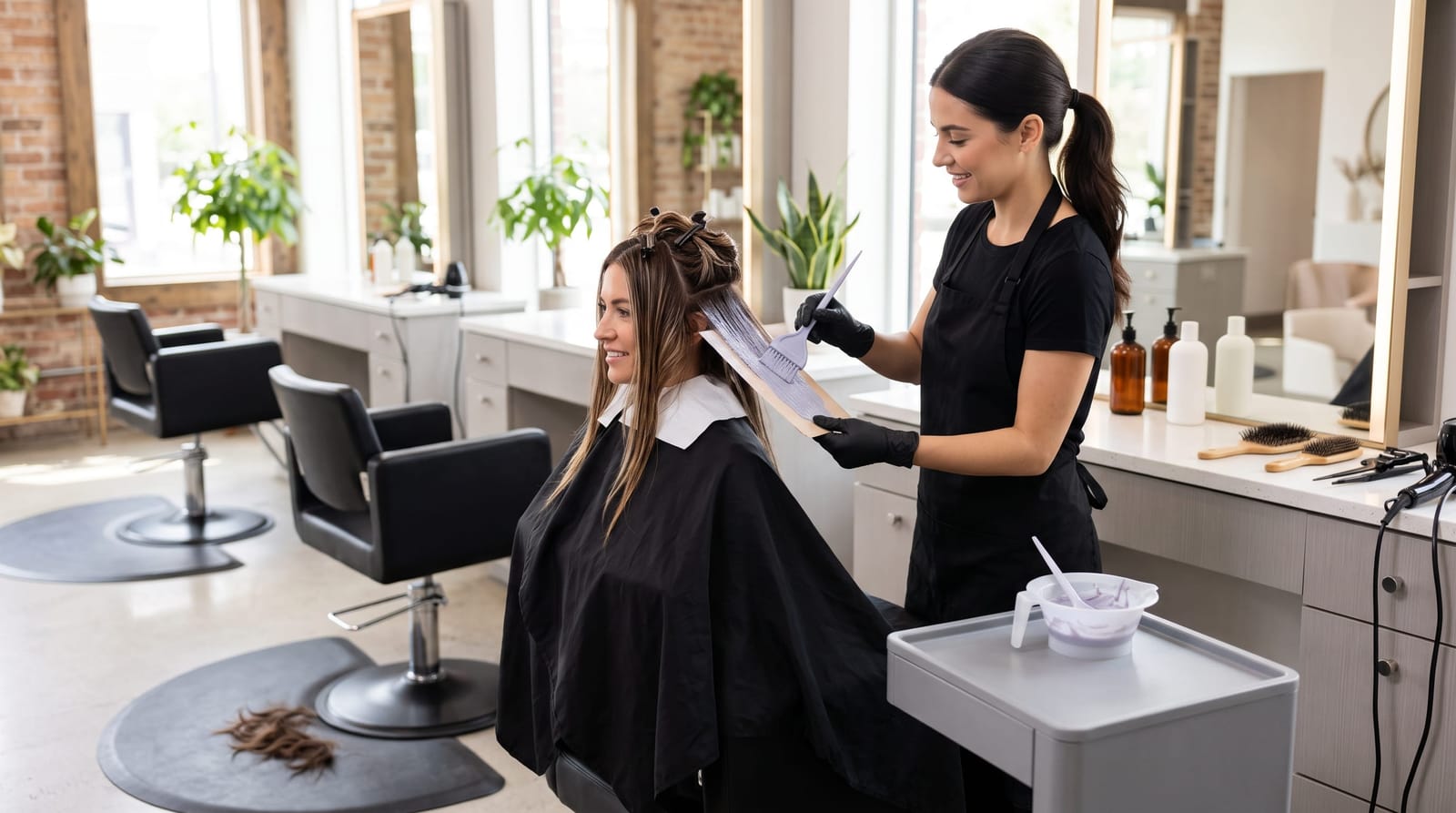
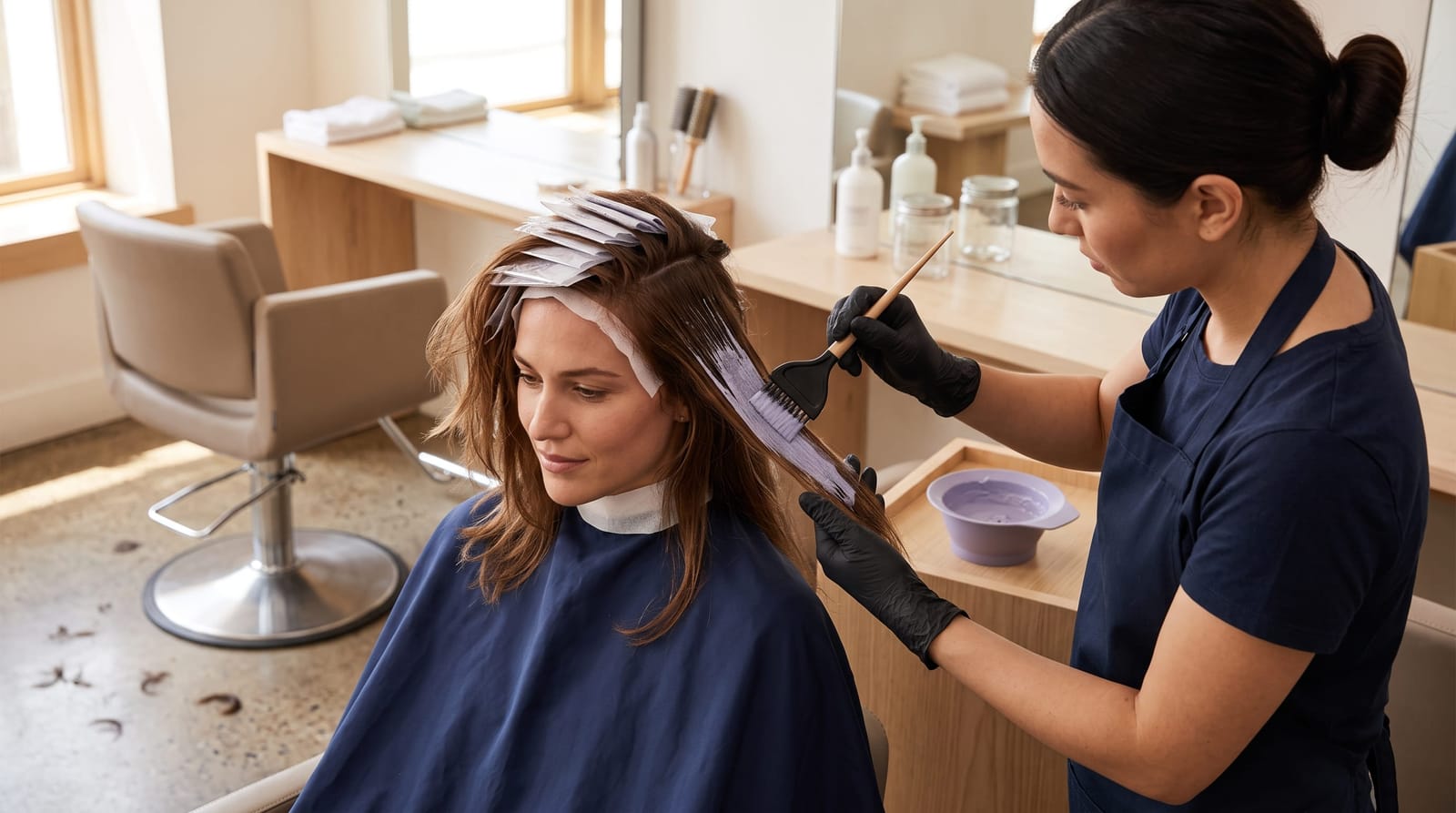
Balayage is a freehand highlighting technique. Your stylist paints selected areas of the hair rather than creating the same pattern of lightness throughout. Placement often concentrates brightness through the mid-lengths and ends, with a softer transition near the roots.
Leaving some of your base color visible creates dimension, the contrast between lighter and darker areas. That contrast helps ribbons of color stand out without making every strand lighter.
Balayage is a strong option when you want:
- Lightness that feels connected to your natural base.
- A softer transition between darker roots and lighter lengths.
- Brightness focused around the face or toward the ends.
- Dimension without an all-over blonde effect.
It is not exclusively a blonde service. Caramel on brunette hair, honey tones, or warmer copper-inspired dimension can all reflect a balayage approach. The starting color and finishing tone determine the palette.
Foil highlights: controlled sections and precise brightness
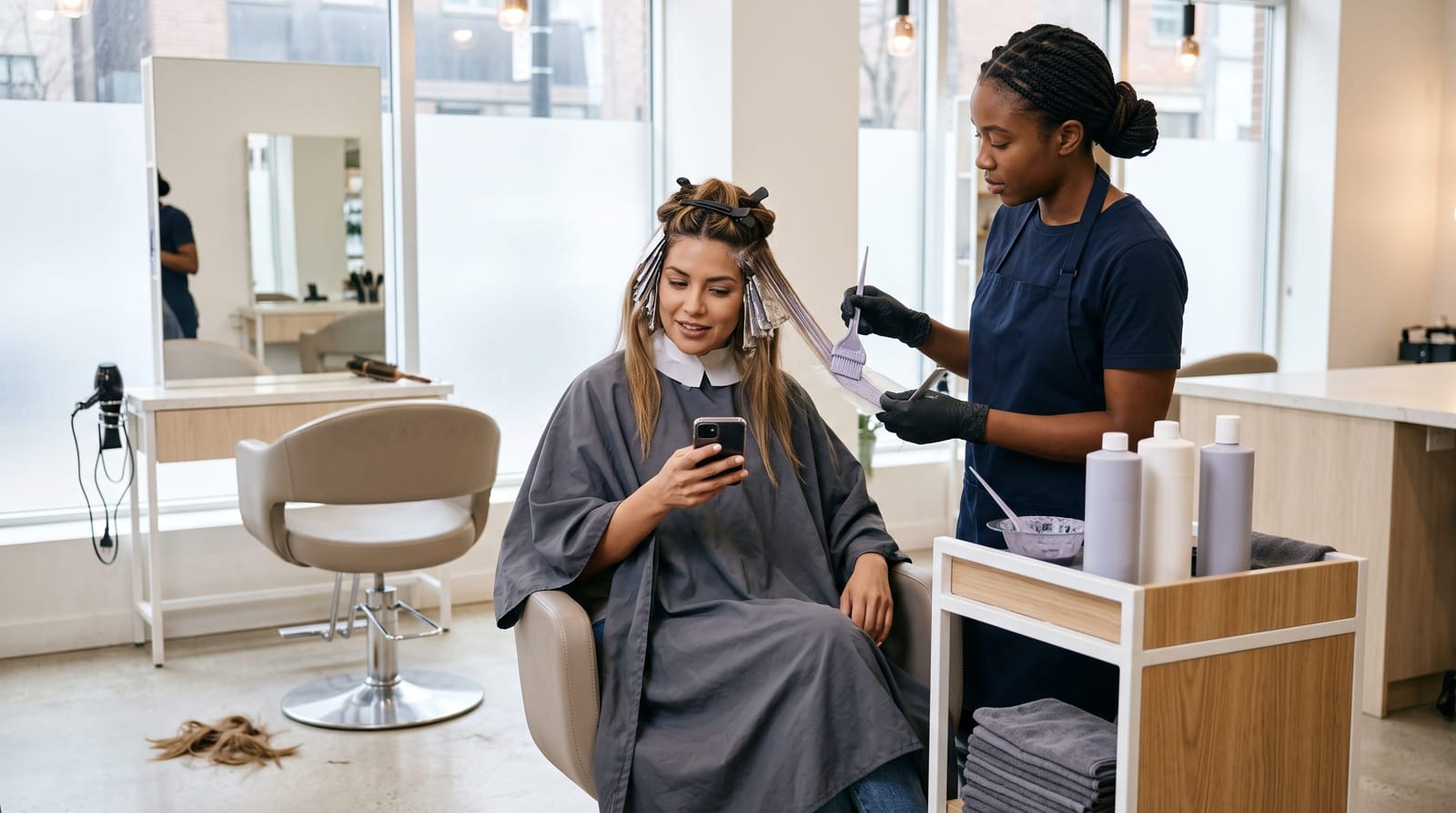
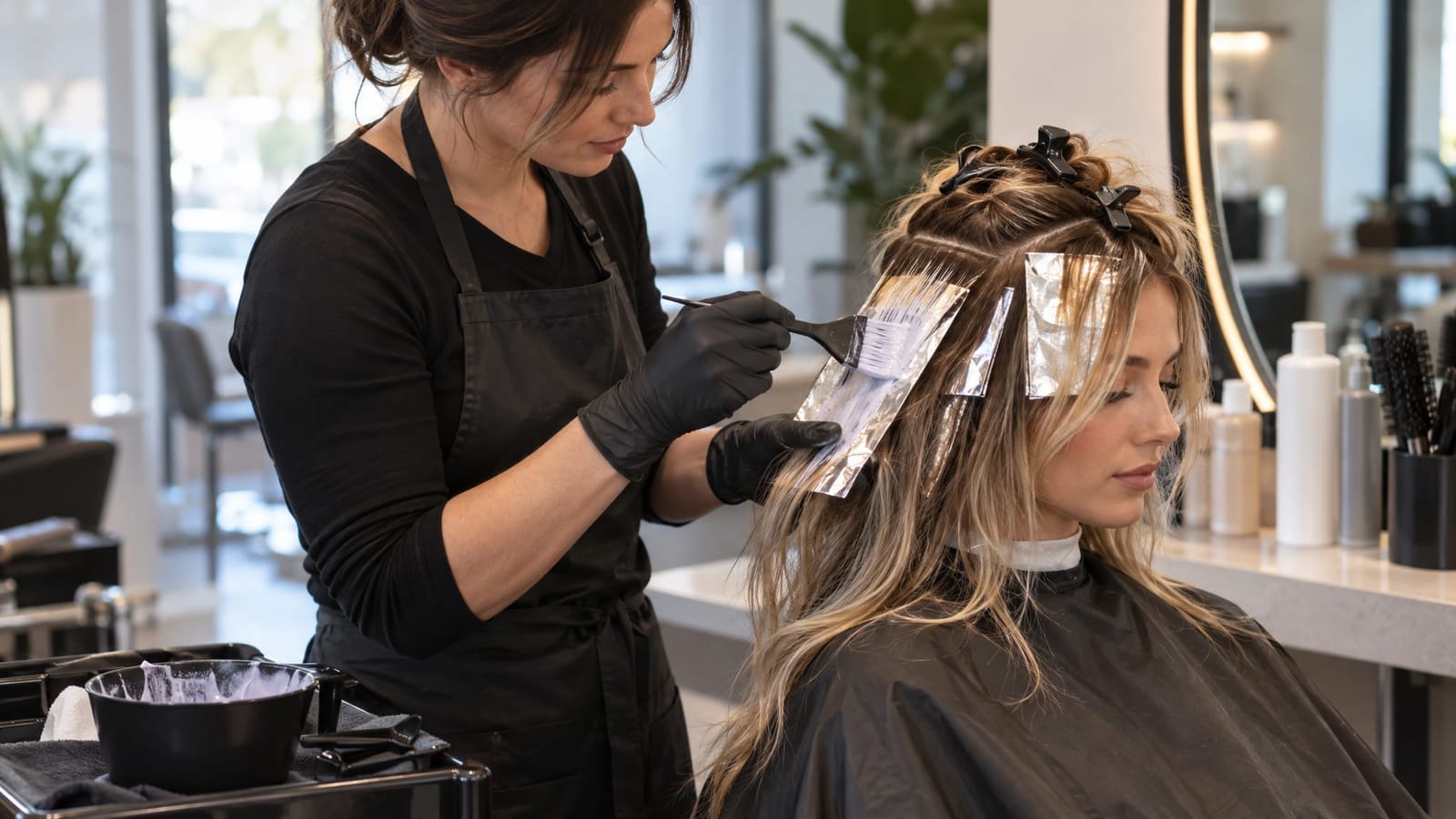
For foil highlights, a stylist selects sections of hair, applies lightener, and encloses those sections in foil while they process. The size, spacing, and placement of those sections shape the finished result.
Fine, closely spaced highlights can create an overall lighter appearance. More space between highlighted sections preserves visible depth. Foils also allow a stylist to place brightness close to the roots or target particular areas with precision.
Foil highlights are a strong option when you want:
- Noticeable brightness beginning near the scalp.
- Fine, evenly distributed light pieces.
- A lighter overall appearance while retaining some natural color.
- Carefully defined brightness around the face or through the top layers.
Foils do not automatically mean stripes. A soft result comes from thoughtful section size, placement, and contrast with the surrounding hair.
Placement and tone are separate decisions
Placement determines where your hair looks lighter. Tone determines whether that lightness looks golden, beige, coppery, cool, or another shade.
A gloss or toner refines the color of lightened hair. It does not replace the lightening needed to reach a much brighter result. If you like the pattern of your highlights but not their warmth, your next service may focus on tone rather than adding more light pieces.
Balayage vs. Foil Highlights at a Glance
| Decision point | Balayage | Foil highlights |
|---|---|---|
| Application | Freehand painting tailored to selected areas. | Selected sections isolated in foils. |
| Common placement | Graduated brightness through the lengths, often with depth near the roots. | Precise lightness that can begin close to the roots. |
| Overall effect | Ribbons of dimension with a less uniform pattern. | Anything from delicate, scattered highlights to substantial overall brightness. |
| Grow-out | A retained natural root can soften the visible transition. | Close-to-root brightness creates a more visible transition as darker hair grows in. |
| Main maintenance question | When do the placement or tone need refreshing? | When does the new growth change the look you want? |
These are common patterns, not fixed rules. A high-contrast balayage with a bright face frame can feel more maintenance-intensive than subtle foil highlights that stay close to your base color.
Blended Techniques: When the Best Choice Is Not Either-Or
Many inspiration photos combine more than one color approach. A softly shaded root, bright face-framing pieces, and luminous ends do not necessarily come from a single technique.
Foilyage and fine highlights
You may hear the term foilyage, which describes balayage-inspired placement processed in foils. It combines a painted or graduated effect with foil isolation.
Babylights are very fine highlights designed to create delicate strands of brightness. They can help soften the transition between a deeper base and lighter areas. These names describe application choices, not a completely separate family of finished colors.
Root shadows and root smudges
A root shadow or root smudge adds color near the roots to soften the transition into lighter lengths. These terms overlap, so a photo and a description of your preferred root depth are more useful than relying on the name alone.
The tradeoff is straightforward: a deeper-looking root can make grow-out feel softer, but it also means less brightness directly at the scalp. If you dislike any visible depth around your part, that finish may not suit your preferences.
Lived-in color is an overall look
Lived-in color describes a result designed around blended transitions and retained depth. It can involve balayage, foil highlights, or a combination of placement and toning choices.
For example, a brunette who wants brighter ends but dislikes a strong contrast at the part may prefer a dimensional finish that keeps the natural base visible. Someone who wants a lighter appearance around the face might choose more concentrated brightness there while keeping the interior deeper.
At Meraki, we offer lived-in, low-maintenance color alongside balayage, foil highlights, and glazing, toning, and glossing. The goal is to connect those choices to your preferred finish, rather than make you choose by terminology alone.
Which Option Fits Your Hair and Your Routine?
Start with your current color and color history
Your starting point influences what is achievable in a color appointment. Natural brunette hair, previously lightened hair, and hair with darker permanent color on the lengths do not respond in the same way.
Previously colored lengths also differ from untreated new growth. A stylist needs to account for both when planning an even-looking result. A substantial change from dark or previously colored hair to a much lighter shade may take more than one appointment.
For your consultation, include home color, salon color, previous lightening, smoothing services, and extensions in your hair history. Older color can remain on the lengths even when it is no longer obvious at the roots.
Decide how much of your base you want to keep
If you want to remain recognizably brunette, preserving darker space between lighter pieces is essential. Adding more highlights everywhere can gradually move the result away from dimensional brunette and toward an overall lighter look.
If your priority is a brighter blonde appearance, more closely placed highlights may better match that goal than a small amount of painting at the ends.
A useful way to describe the difference is: “I want to stay brunette with lighter ribbons,” versus “I want my hair to read lighter overall.” Those requests give your stylist more direction than “natural-looking” on its own.
Match placement to texture, length, and styling
Color placement needs to work with how your hair moves and how you usually wear it.
- Curly or textured hair: The curl pattern affects where lighter pieces appear. Your everyday texture is an important part of the placement discussion.
- Straight hair: Transitions and section patterns can be easier to see, making the balance of light and dark especially important.
- Short hair: There is less length available for a long dark-to-light transition. More targeted placement can create dimension without relying on lighter ends alone.
- Layered hair: Layers change which colored pieces are visible. A significant haircut and a color plan work best when considered together.
If you usually wear your hair straight, choose at least one straight-haired reference. Waves separate and overlap highlighted pieces, so the same color can look different in a curled photograph. Mention your usual part and whether you regularly wear your hair up, too.
Separate gray blending from gray coverage
Highlights can reduce the visual contrast between gray strands and darker hair. That is gray blending, not the same as covering gray with a base color.
If covering new gray growth is a priority, a root color service can be a separate part of your plan. You might need to refresh that base color while leaving the balayage or highlighted lengths alone. We offer root touch-ups and color retouching for this distinct need.
Choose warmth intentionally
Warmth is not automatically an unwanted result. Golden, caramel, and copper tones can be an intentional part of dimensional color.
Instead of requesting “no warmth” without a reference, compare the actual shades you like. A creamy beige blonde, a cool brunette highlight, and a golden ribbon are different goals. Choosing the tone helps your stylist explain both the lightening involved and the upkeep.
What a Helpful Color Consultation Covers
A consultation connects your inspiration with your starting hair, preferred maintenance, and service scope. Our licensed hairstylists help translate your preferences into a personalized color plan.
Bring references, then explain what you like
A photo is most useful when you can identify the detail you want. Is it the brightness around the face, the darker root, the warm ends, or the amount of contrast?
Photos of hair with a similar base color and texture make comparisons easier. It also helps to bring an example you do not like and explain why, such as a root that feels too dark or highlights that look too bold.
Describe the maintenance you actually want
Think beyond whether a color looks beautiful when freshly styled. Consider which changes bother you as it grows out:
- A visible line of darker roots.
- Gray growth around the hairline.
- Warmth developing through lighter pieces.
- A face frame that no longer feels bright enough.
- Ends that look much lighter than the rest of the hair.
Each concern points toward a different maintenance service. Someone comfortable with natural roots but particular about tone needs a different plan from someone who wants brightness consistently close to the scalp.
Discuss the condition of the lengths
The plan needs to account for previously lightened areas, dryness, tangling, and how the hair responds to styling. Repeatedly lightening the same lengths is not always necessary to refresh a look. Sometimes the useful change is at the roots, around the face, or in the finishing tone.
Conditioning can support softness and manageability, but it does not make every lightening goal suitable for every starting point. Preserving the feel and appearance of the hair belongs in the color discussion.
Leave with a clear service outline
A useful consultation gives you a shared understanding of:
- The brightness and tone being pursued.
- How much natural depth will remain.
- Whether root color, lightening, and glossing serve separate purposes.
- The expected appointment scope and time.
- Which parts of the color are likely to need attention next.
This is especially helpful before a substantial change. “Soft caramel dimension” and “bright beige blonde” involve different decisions, even if both inspiration photos are labeled balayage.
What Affects Cost and Appointment Time?
Balayage is not automatically more expensive than foil highlights, and foils are not automatically the quicker option. The service name alone does not describe the amount of work involved.
The main factors include:
- Coverage: Brightening selected areas is a different scope from working throughout the head.
- Length and density: More hair affects sectioning, application, product use, and finishing.
- Starting color: Refreshing an established look differs from changing a darker base or working through previous color.
- Number of color steps: Lightening, root color, and toning have different roles.
- Finishing services: The estimate needs to be clear about any haircut, conditioning service, or blowout included in the plan.
Compare the complete appointment rather than a technique label. Useful questions include what the estimate covers, whether glossing is included, and what kind of follow-up service the result will need.
Consider the maintenance pattern, not just the first visit
A softly blended root can reduce the need to refresh lightener near the scalp, but maintaining a particular tone can still involve gloss appointments. Bright foil highlights can also be refreshed selectively without repeating every part of the original service.
The better value is the plan that matches what you want to maintain. Paying for a very bright root when you prefer infrequent root upkeep creates a mismatch, even if you love the first-day result.
Plan around the full appointment
Color appointments involve more than applying lightener. Consultation, sectioning, processing, rinsing, toning when needed, and drying all contribute to the visit.
For a salon day in Mountainside, allow room for the full service rather than treating color as a quick stop between fixed commitments. An appointment-specific time estimate is more useful than a generic duration attached to “balayage” or “highlights.”
Build a Maintenance Schedule Around What Changes
There is no single touch-up schedule that fits every balayage or highlight result. Maintenance is clearer when you separate root growth, placement, and tone.
| What you notice | What the next service may address |
|---|---|
| The placement still looks good, but the shade has shifted | A gloss or toner to refine the color. |
| Darker new growth interrupts a bright-root look | A highlight refresh focused on the regrowth and visible areas. |
| Gray growth is visible, but the lighter lengths still work | A root color touch-up rather than more lightening throughout. |
| The face frame has grown down or lost its prominence | Targeted attention to face-framing placement. |
| The overall balance of light and dark no longer feels right | A broader reassessment of placement and retained depth. |
A brunette with a soft natural root might enjoy the placement as it grows while refreshing the tone separately. Someone with light highlights close to a dark base is more likely to notice new growth first. The technique matters, but contrast and personal preference determine when the change becomes noticeable.
Keep home care simple and suited to your color
A manageable routine supports the feel and finish of highlighted hair:
- Cleanse for your needs: Choose shampoo suited to color-treated hair and wash according to your routine rather than following an arbitrary schedule.
- Condition the lengths: Focus on areas that need slip and softness, especially through lightened ends.
- Use heat thoughtfully: Apply a heat protectant as directed and avoid repeated passes with hot tools.
- Treat tinted products as targeted tools: Purple shampoo addresses yellow tones, while blue-toned products address orange tones. Neither is automatically right for every highlighted shade.
- Evaluate before adding more lightener: If the color simply feels too warm or dull, describe that concern rather than assuming the entire highlight service needs repeating.
Tinted shampoos are not a substitute for a personalized gloss. Using them more often than needed can leave an unwanted cast, particularly on very light or porous areas.
Deep Dive Topics
For a closer look at the decisions that matter most to your color plan, explore these related topics:
-
Choosing between services and understanding cost. Explore balayage cost NJ considerations alongside the differences between foil highlights and balayage.
-
Lived-in color with a brunette base. See how low maintenance brunette hair color uses retained depth and blended brightness as an alternative to traditional highlights.
-
Maintaining your color between visits. Understand hair color touch up frequency and the different roles of home care, tonal refreshes, and placement maintenance.
-
The hand-painted color process. Learn what goes into balayage appointment time and how freehand placement shapes the result.
-
Preparing for your first consultation. Get familiar with the hair consultation process, including how to explain your inspiration, color history, and maintenance preferences.
The Best Choice Starts With the Look You Want to Live With
Balayage is a strong starting point for graduated dimension. Foil highlights offer precise brightness and flexible placement. A blended plan can bring those qualities together without forcing your preferences into a single service label.
When choosing balayage or highlights in Mountainside, NJ, focus on the details that shape everyday satisfaction: how bright you want the roots, how much base color you want to keep, which tones you enjoy, and what upkeep fits your routine. Those answers create a clearer direction than any trend name alone.