How Often Should You Get Deep Conditioning Treatments?
If you've ever wondered whether you're deep conditioning too little, or too much, you're not alone. It's one of the most common questions in professional hair care, and the honest answer is: it depends on your hair. Deep conditioning frequency isn't one-size-fits-all. Your hair type, texture, damage level, and even the season all play a role in how often your strands actually need this intensive moisture treatment. This guide breaks down exactly how to find the right schedule for your specific hair and what to do between appointments to keep results lasting longer.
The General Deep Conditioning Frequency Guidelines by Hair Type
The most important factor in determining deep conditioning frequency is your current hair condition. Here's what professional stylists and leading haircare brands recommend:
- Healthy hair: Every 4-6 weeks is typically sufficient to maintain moisture balance without over-saturating the hair shaft.
- Dry or color-treated hair: Every 2-4 weeks helps replenish moisture lost through chemical processing, heat styling, or environmental exposure.
- Damaged or severely dry hair: Every 1-2 weeks initially, scaling back as the hair's health improves over time.
- Curly and natural hair textures: Weekly deep conditioning is commonly recommended, since tightly coiled strands have a harder time retaining moisture along the hair shaft due to their spiral shape.
Research from Davines confirms that regardless of hair type, everyone benefits from incorporating deep conditioning into their regular hair care rotation: the difference lies in how often that rotation repeats. Studies on hair porosity show that high-porosity hair (which absorbs moisture quickly but loses it just as fast) may need treatment as frequently as once per week, while low-porosity hair responds better to less frequent but highly penetrating treatments every 3-4 weeks.
If you're unsure where your hair falls on this spectrum, looking for signs damaged hair needs treatment is a helpful starting point before settling on a schedule.
Factors That Affect How Often You Need Deep Conditioning
Beyond general hair type, several specific lifestyle and maintenance factors influence how frequently your hair needs professional deep conditioning treatment.
Chemical Processing and Color Services
Color-treated, bleached, permed, or relaxed hair has a structurally altered cuticle layer that loses moisture up to 30% faster than unprocessed hair. If you're regularly coloring your hair or have recently undergone a chemical service, bumping your deep conditioning frequency to every 2-3 weeks is strongly advisable, not just to restore softness, but to preserve the structural integrity of the hair fiber itself.
Heat Styling Habits
Daily flat iron or blow-dryer use at temperatures above 300°F causes cumulative moisture loss with every pass. Studies indicate that repeated heat exposure without protective care leads to significant cuticle damage within weeks. If you heat style 4 or more times per week, your deep conditioning schedule should reflect that: aim for every 2 weeks at minimum.
Water Quality and Lifestyle Factors
Hard water contains calcium and magnesium deposits that build up on the hair shaft and block moisture absorption. If your home has hard water, you may find that your hair dries out faster between treatments. Similarly, chlorine from swimming pools, salt from ocean exposure, and even high-humidity environments (ironically) can dehydrate hair over time. Swimmers, for example, often benefit from deep conditioning every 1-2 weeks during active swim seasons.
Seasonal Deep Conditioning: Adjusting Your Schedule Throughout the Year
Your hair's moisture needs don't stay constant year-round, which means your deep conditioning frequency shouldn't either. Seasonal adjustments are one of the most overlooked, and most impactful, changes you can make to your hair care routine.
Winter Months
Cold, dry air outside combined with indoor heating strips moisture from the hair rapidly. Most stylists recommend increasing deep conditioning frequency by one session per month during November through February. If you normally go every 4 weeks, consider shifting to every 3 weeks during peak winter months. Frizz, static, and breakage rates noticeably increase during this period without adequate moisture support.
Summer Months
UV radiation, salt water, chlorine, and air conditioning all increase dehydration risk during summer. According to haircare experts, UV exposure alone can degrade up to 18% of hair's surface proteins over a single summer season. If your hair sees significant sun, pool, or beach time, treat summer like a high-damage period and maintain a more frequent schedule: every 2-3 weeks is appropriate for most hair types during peak summer.
Spring and Fall Transitions
These transitional seasons tend to be gentler on hair, making them ideal periods to return to your baseline schedule and give your hair a maintenance reset before the more extreme seasons ahead.
Maintaining Deep Conditioning Results Between Appointments
A professional deep conditioning treatment can last significantly longer when you actively maintain the results at home. Here are specific strategies to extend the time between appointments without sacrificing hair health:
- Use a sulfate-free shampoo: Sulfates strip moisture from the hair shaft up to 3x faster than sulfate-free alternatives. Switching your daily shampoo alone can meaningfully extend the results of each professional treatment.
- Apply a leave-in conditioner after every wash: Even a lightweight leave-in creates a protective moisture barrier between washes, slowing dehydration between professional sessions.
- Reduce wash frequency: Washing hair 2-3 times per week instead of daily reduces moisture loss significantly and lets your hair's natural oils protect the shaft longer.
- Use a microfiber towel or cotton T-shirt: Rough terrycloth towels cause up to 40% more friction-based damage on wet hair than microfiber alternatives: a simple swap that protects cuticle integrity.
- Sleep on a satin or silk pillowcase: Cotton pillowcases absorb moisture from the hair overnight. Silk or satin alternatives reduce friction and moisture loss while you sleep.
Combining professional treatments with consistent at-home care means you'll need professional appointments less frequently over time, and you'll see better results from each one.
Frequently Asked Questions
Can you deep condition your hair too often?
Yes. Over-conditioning, sometimes called hygral fatigue, occurs when the hair shaft repeatedly swells and contracts from too much moisture exposure. This weakens the hair fiber over time and leads to limpness, elasticity loss, and increased breakage. If your hair feels unusually soft and limp but breaks easily, you may be deep conditioning too frequently. For most hair types, more than once per week is excessive unless directed by a professional stylist.
Is at-home deep conditioning the same as professional treatment?
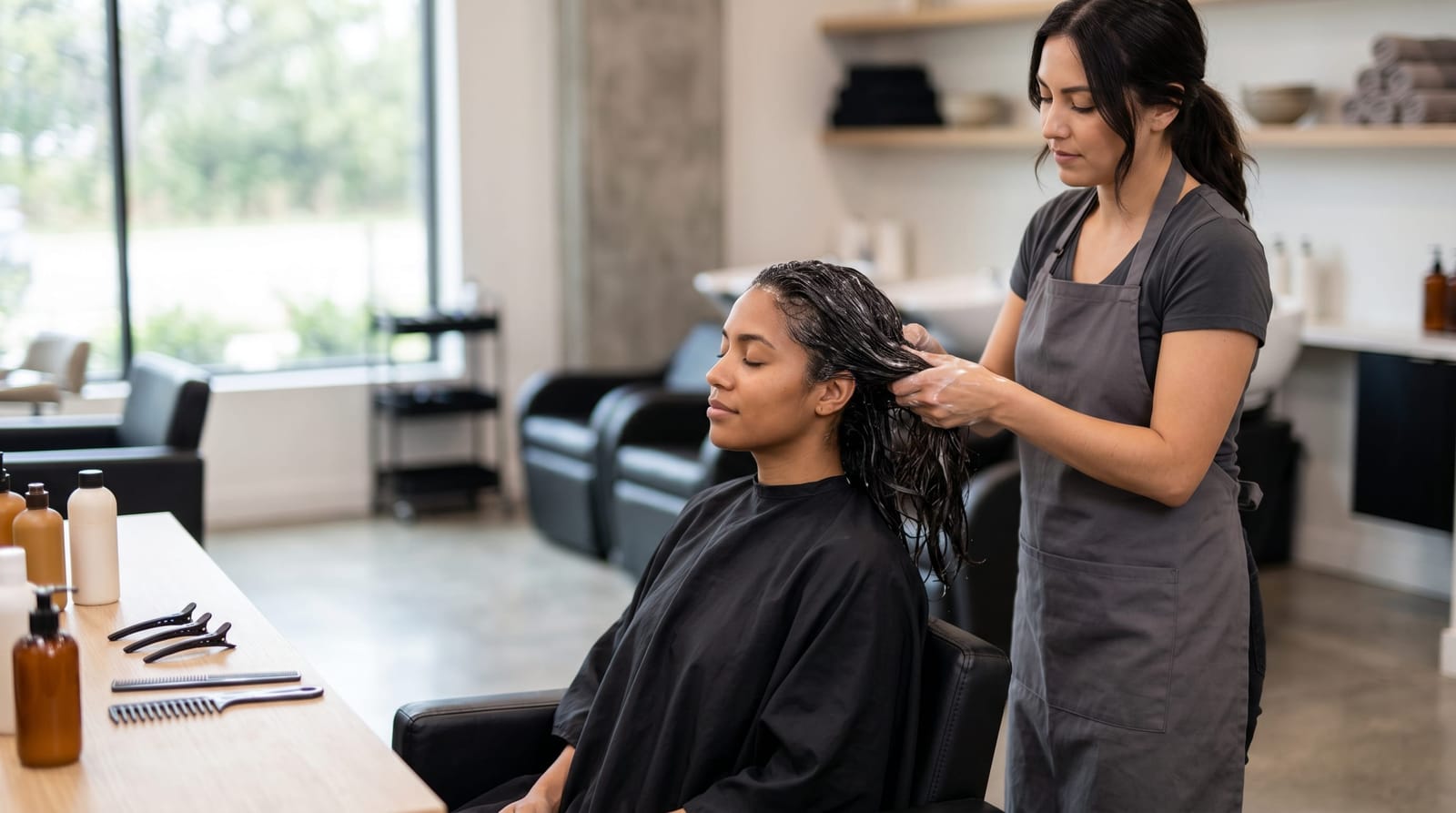
Not exactly. Professional deep conditioning treatments use higher-concentration formulas and often include heat application, which opens the hair cuticle and allows ingredients to penetrate significantly deeper than at-home products. The results typically last longer and address more serious moisture deficits. At-home treatments are excellent for maintenance between appointments, but they're not a substitute for professional-grade care when your hair needs serious restoration.
How do I know if my deep conditioning frequency is working?
The clearest indicators that your schedule is dialed in: hair feels consistently soft and manageable, frizz is noticeably reduced, breakage decreases over 4-6 weeks, and color (if applicable) retains vibrancy longer. If your hair still feels dry or brittle between appointments, your current frequency may not be sufficient for your hair's needs.
Does deep conditioning frequency change after a keratin treatment?
Yes. After a keratin smoothing treatment, stylists generally recommend waiting at least 72 hours before any conditioning treatment and then maintaining a lower frequency, around every 4-6 weeks, since keratin treatments significantly improve moisture retention on their own. Using too many conditioning products post-keratin can actually soften the treatment bond prematurely.
Finding the Right Deep Conditioning Frequency for Your Hair
There's no single answer to how often you should get deep conditioning treatments, but there is a right answer for your specific hair. Damaged and dry hair needs more frequent attention, starting as often as every 1-2 weeks, while healthy hair maintains well on a 4-6 week schedule. Adjust seasonally, account for your lifestyle, and support each professional treatment with smart at-home habits to maximize results. Deep conditioning is one of the most impactful investments you can make in your hair's long-term health, and getting the frequency right makes every treatment count.