How to Maintain Your Balayage: Color Care Tips Between Salon Visits
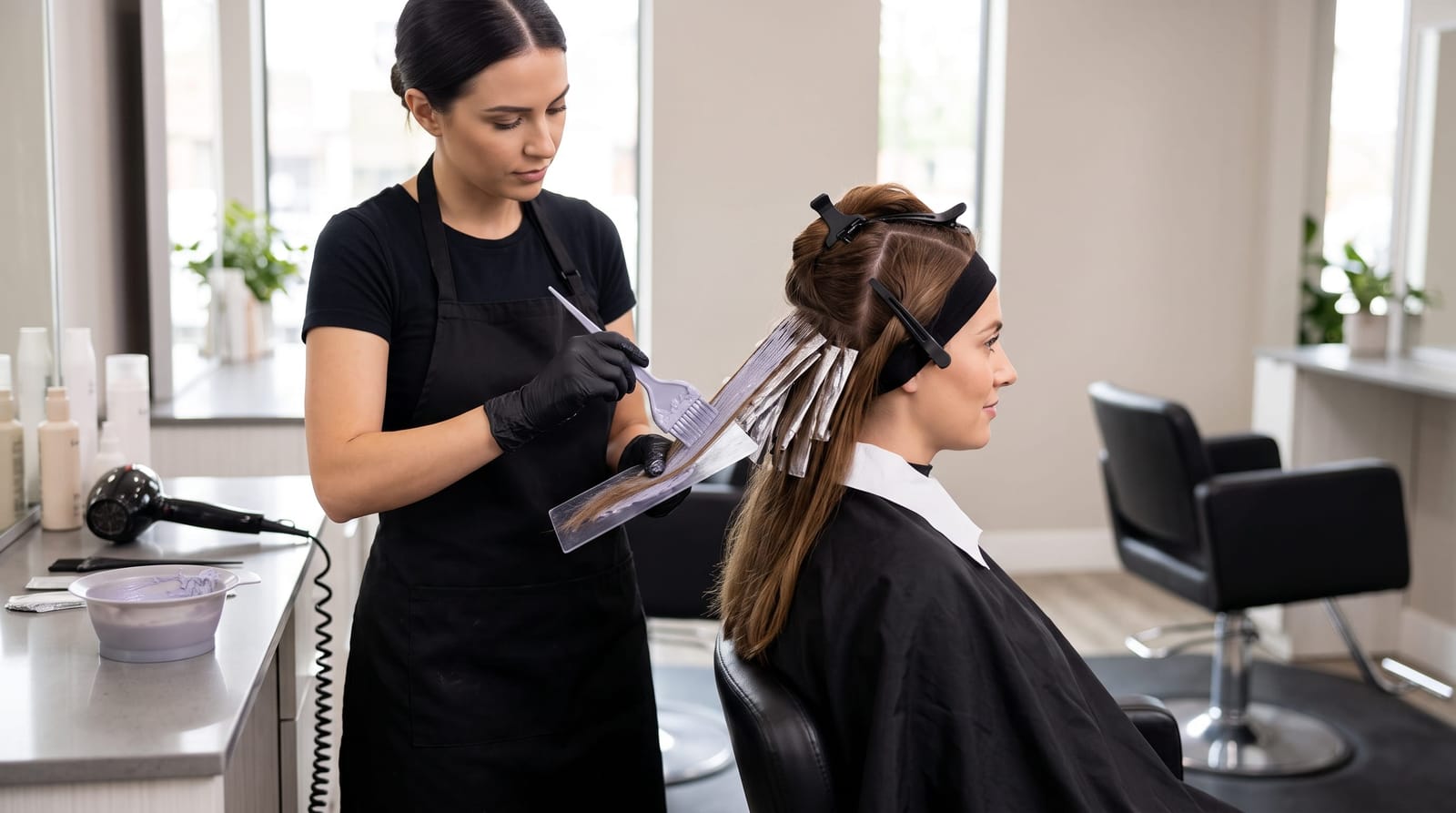
Balayage maintenance usually involves two different appointments: refreshing the tone of your existing color and adding new lightness as your hair grows. You may want a toner or glaze before you need more highlights. Foil highlights placed close to the scalp can need attention sooner than balayage with a softly blended, natural-looking root, but the placement and contrast matter more than the technique’s name alone.
The best hair color touch up frequency depends on what has changed: your roots, your tone, or where the brightness sits. A softer blonde does not automatically need another full lightening appointment, and visible growth does not always mean your color needs correcting.
If you are comparing balayage and foil highlights, maintenance is an important part of choosing your look. These essential tips will help you plan appointments, simplify home care, and decide when a color refresh makes sense, whether you visit from Mountainside, Westfield, or nearby.
1. Set separate schedules for highlights, tone, and root color
“Touch-up” can describe several services. Treating them as one appointment often creates confusion about how frequently you need to return.
- Highlight maintenance: Adds lightness to new growth or updates the placement through your hair.
- Toner, gloss, or glaze: Refines the appearance of existing color, such as making blonde look more neutral or refreshing a warmer finish.
- Root color: Addresses new growth when you also have an all-over base color or gray coverage.
For context, Joseph’s Hair Design describes foil-highlight maintenance at roughly 8-16 weeks and single-process root touch-ups at 4-6 weeks. Those are another salon’s general guidelines, not a schedule established for every client or for Meraki.
Balayage with a soft transition at the root may allow longer gaps between lightening appointments than a bright, close-to-the-scalp highlight pattern. However, balayage combined with gray coverage still has a separate root-color maintenance need. The softer highlights do not change how that base color grows out.
For a closer comparison, explore how often to touch up balayage versus foil highlights. The useful goal is a schedule for your actual color design, rather than one interval for everything.
2. Judge the change before choosing the service
Before booking another full balayage appointment, look at your hair in indirect daylight. Indoor lighting, styling products, and the way your hair is parted can all affect how you perceive the color.
If the color looks warmer than you prefer
Your existing highlights may need their tone refined rather than more lightness. A toner or gloss may be appropriate if the placement still looks good. Explain whether you see more yellow, orange, or warmth overall, and bring a photo of the finish you liked after your previous visit.
If the brightness has moved too far down
As hair grows, the lightened sections sit farther from the scalp. If you miss brightness around your face or through the top, discuss a targeted highlight refresh. It may not require recreating the entire original placement.
If your roots form a noticeable line
A visible line can come from base color, densely placed highlights, or a strong contrast with your natural shade. Toning the lengths will not replace a root-color service or move highlights closer to the scalp.
These distinctions also explain why two people with “balayage” can need different appointments. Our guide to how the hand-painted balayage technique works offers more context on placement and what happens during the service.
3. Use glossing or glazing for the right reason
A gloss, glaze, or toner can be part of maintaining a balayage finish between larger appointments. Salon terminology varies, so the most useful question is what the proposed formula will do for your color, not simply what the service is called.
A color-depositing formula may soften unwanted warmth, shift the tonal finish, or make faded color look more cohesive. A clear formula is a different choice from a tinted one. Neither replaces highlighting when your goal is to make darker sections significantly lighter.
Garnier’s general color guidance places demi-permanent refreshes around 4-6 weeks or as needed. That offers context for some toning formulas, but not every gloss or glaze uses the same type of color. Your stylist can explain the product selected and whether a refresh is worthwhile at that point.
When discussing a between-visit refresh with Meraki Salon & Spa, describe your goal clearly: “I still like the placement, but I want a more neutral blonde,” is more useful than simply asking for another balayage. Confirm which toning or glazing option fits your existing color and what appointment to book.
For more on the terminology, see hair gloss vs. glaze and how toning treatments differ.
4. Build a wash routine around your hair, not a rigid calendar
At-home care cannot stop new growth, but it can help you maintain the appearance and feel of your colored hair. Start with a shampoo intended for color-treated hair and a conditioner suited to your texture. Garnier’s color-maintenance guidance includes color-safe shampoo, conditioning, and limiting heat styling as general care practices.
There is no universal number of washes that suits everyone. Exercise, styling-product use, hair texture, and personal comfort all influence your routine. Rather than forcing long gaps between washes, focus on a routine you can maintain comfortably.
- Cleanse where cleansing is needed. Concentrate shampoo on the scalp rather than vigorously scrubbing the ends.
- Condition the lengths. Adjust the amount and richness to your hair so it feels manageable without becoming weighed down.
- Ask about occasional products. Clarifying shampoos and depositing masks serve different purposes from everyday cleansing; use them according to their directions and your stylist’s guidance.
If your color appears dull, note whether the hair also feels coated, dry, or difficult to style. That observation helps your stylist distinguish a home-care issue from a color-refresh request.
5. Treat purple shampoo as a color product, not a default
Purple shampoo deposits violet pigment to help counter the appearance of yellow tones. It does not lighten your hair, erase dark roots, or address every kind of warmth. A caramel balayage and an icy blonde do not necessarily benefit from the same depositing product.
Ask your stylist three practical questions before adding one to your routine:
- Does my chosen tone need a depositing shampoo at all?
- Which product suits the warmth I am seeing?
- How does its label recommend using it?
Using more pigment is not always an improvement. A depositing product can leave lightened pieces looking cooler or more muted than intended. If that happens, avoid layering on other corrective colors at home; explain what you used at your next salon consultation.
Think of toning shampoo as an optional tool for a specific finish, not proof that every blonde needs a more complicated routine.
6. Make styling and seasonal care work together
Color can look different depending on its finish. Smooth styling may emphasize shine, while waves reveal alternating light and dark pieces. Before deciding your dimension has disappeared, try viewing your hair in your usual style and with your usual part.
For heat styling, follow your tool’s directions, use a suitable heat-protection product as directed, and avoid repeatedly passing a hot tool over the same section. Heat protection is not permission to use unlimited heat. On days when a polished blowout is not essential, a heat-free style can simplify the routine.
Summer plans also belong in the maintenance conversation. Tell your stylist about frequent swimming or extended time outdoors, especially before scheduling a color appointment around a trip. Ask whether your current products suit those activities rather than adding several unfamiliar products at once.
Our guide to keeping balayage looking fresh through a New Jersey summer explores that seasonal planning in more detail.
7. Choose your next color design around the upkeep you enjoy
The easiest maintenance plan starts with the color placement itself. If you prefer fewer lightening appointments, discuss a softer root transition and brightness that works with your natural shade. If you love a bright hairline and lightness close to the scalp, expect growth to become noticeable sooner.
For example, hypothetically: Someone with softly blended brunette-to-caramel balayage may still like the grow-out while wanting the ends’ tone refreshed. Someone with bright blonde foils around the part may want new highlights sooner because the darker growth changes the look they prefer. Neither schedule is inherently better; each supports a different finish.
Balayage and foils are also not mutually exclusive. A stylist may combine approaches to create particular placement or brightness. Our comparison of foil highlights and balayage can help you think through those choices before your consultation.
Before leaving your appointment, ask which change is likely to matter first: fading tone, visible root color, or highlights growing out. Record the recommended service separately from the approximate return date. That makes the next booking much clearer.
A maintenance plan that fits your color
Fresh-looking balayage does not always require more lightening. Sometimes the right next step is a tonal refresh, a small placement update, or a simpler home-care routine. Let what you see, and the finish you want, guide the conversation rather than treating every visit as a full touch-up.
For a personalized maintenance plan in Mountainside, contact Meraki Salon & Spa to discuss your current color, your routine, and the right service for your next visit.