How to Prepare for a Toning or Glazing Appointment at a NJ Salon
Preparing for a toning or glazing appointment is mostly about sharing the right information: your color history, the shade you want, and what you would like to change. There is no need to deliberately arrive with dirty hair. Hair without heavy styling-product buildup gives your stylist a useful starting point, while any preparation instructions for your appointment take priority.
At Meraki Salon & Spa in Mountainside, we offer glazing, toning, and glossing as part of our personalized color services. Here is how to prepare and what to expect.
Step 1: Describe the result you want, not just the service name
“Toner,” “glaze,” and “gloss” can describe overlapping services. Rather than choosing a label first, explain what you notice about your hair and how you would like it to look.
Useful descriptions include:
- “My blonde looks more yellow than I prefer, but I still want it to feel bright.”
- “I like the warmth in my brunette color. I want more shine, not a cooler shade.”
- “My highlights look too separate from my base. I would like a softer blend.”
Bring a few reference photos and identify the detail you like in each. A warm honey blonde and a cool beige blonde may look equally appealing in photos but require different color choices.
If shine is your main goal, it helps to understand whether a hair gloss can add shine without changing your color before deciding between a clear or tinted option.
Step 2: Bring your recent color and treatment history
Your current shade does not tell the whole story. Previous color and lightening can affect how a new formula develops, particularly through older lengths and ends.
Make a short note on your phone covering:
- Previous color: Salon color, at-home dye, highlights, balayage, or henna, including roughly when each was applied.
- Color-depositing products: Purple or blue shampoo, tinted conditioners, and temporary color masks.
- Other chemical services: Keratin smoothing, straightening, or perms.
- Changes you notice: Uneven fading, ends that look darker after color, or sections that feel especially dry.
Include older color still present in your lengths, even if your roots are now natural. Product names or photos of packaging are more useful than trying to remember technical terms.
Step 3: Keep your washing and styling routine simple
Clean or dirty hair? For a toner or glaze, there is no universal reason to skip washing. A recent normal wash is fine. The more useful goal is avoiding heavy layers of dry shampoo, oils, waxes, or styling products.
A special clarifying wash is not automatically necessary. Your stylist can prepare your hair for the selected formula, including cleansing when appropriate. Application on damp or dry hair also depends on the product, so there is no need to arrive with wet hair unless instructed.
In the lead-up to your visit:
- Keep your routine familiar rather than trying a new color-removing or color-depositing product.
- Mention recent purple shampoo or tinted-mask use because it can influence the shade your stylist sees.
- Wear your hair in an easy-to-release style so the roots, lengths, and ends are accessible.
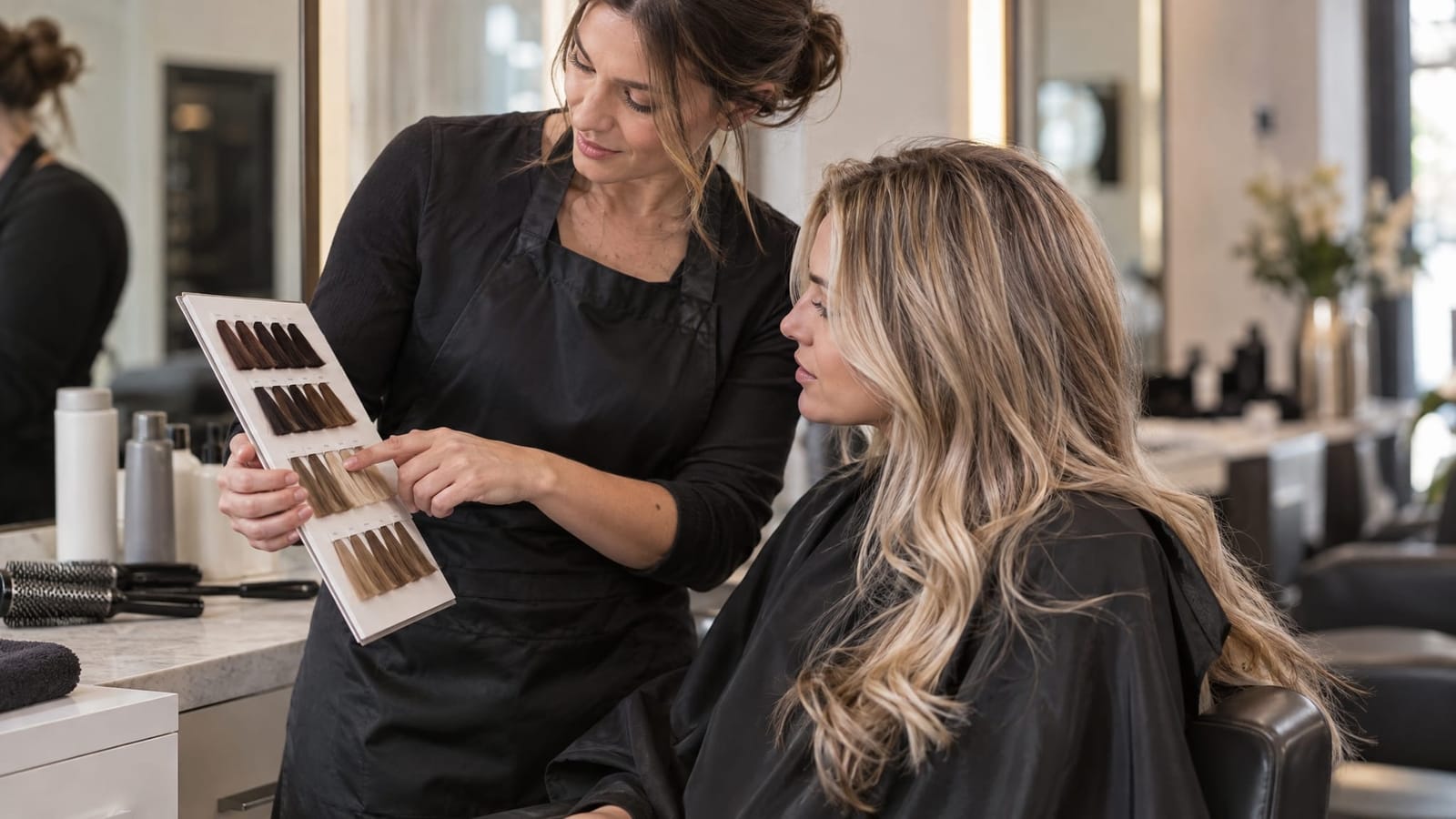
Step 4: Use the consultation to agree on the color plan
The hair consultation process connects your inspiration with your starting color. We tailor our color services to your style and lifestyle, including how much maintenance feels manageable.
Before application, clarify these points:
- Tone: Do you prefer warm, neutral, or cool color?
- Depth: Are you comfortable with a richer-looking result, or is preserving brightness the priority?
- Placement: Does the concern affect all your hair, only the highlights, or mainly the ends?
- Service scope: What preparation and finishing are included, and what are the expected appointment time and cost?
This is also the moment to name anything you do not want. “Less yellow, but not gray-looking” gives a clearer direction than “make it cooler.”
Step 5: Understand the main stages of the appointment
The exact sequence depends on the formula and your hair, but a toning or glazing session generally includes these stages:
- Assessment and preparation. Your stylist reviews the starting shade and condition, then prepares the hair for application.
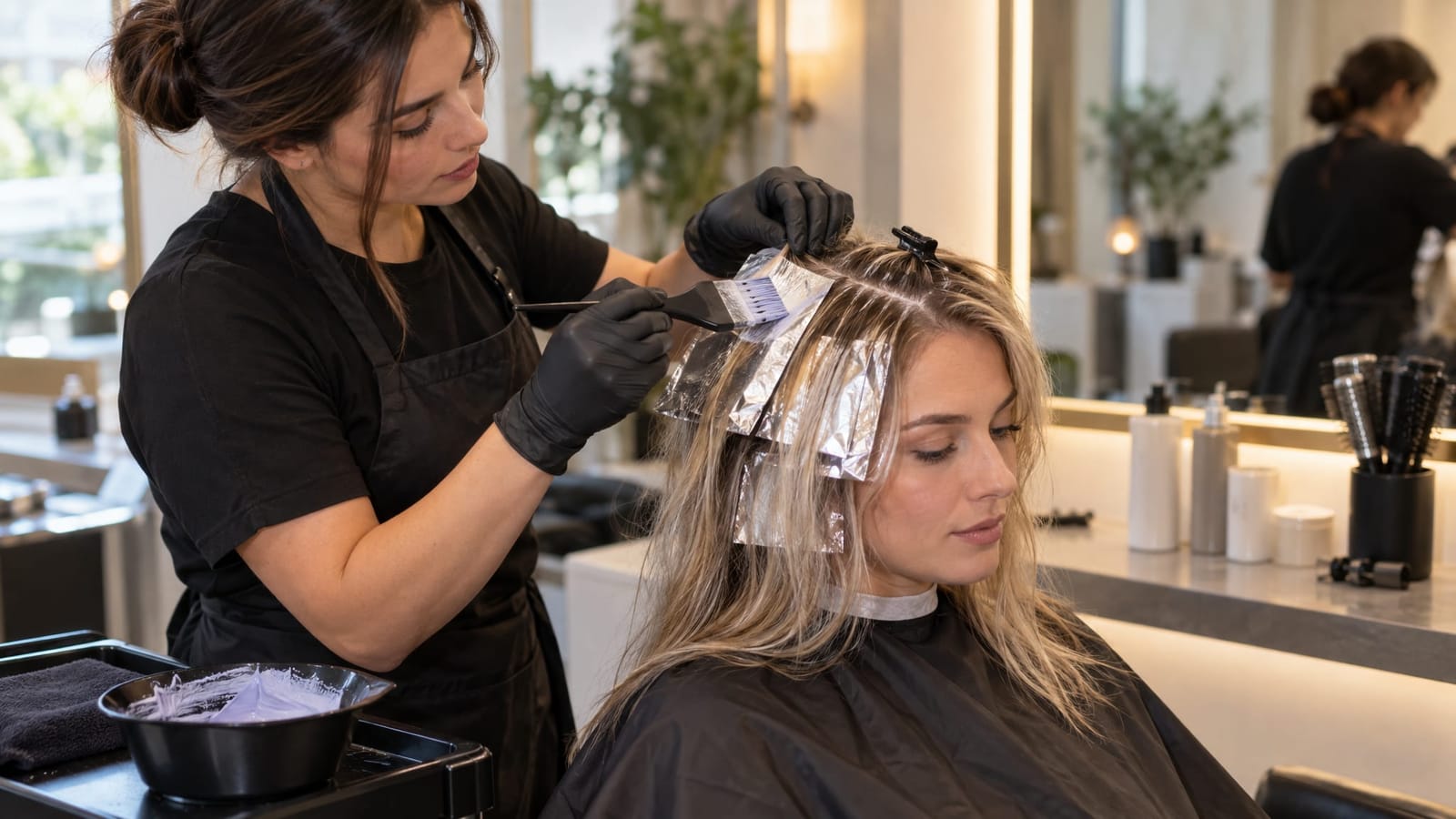
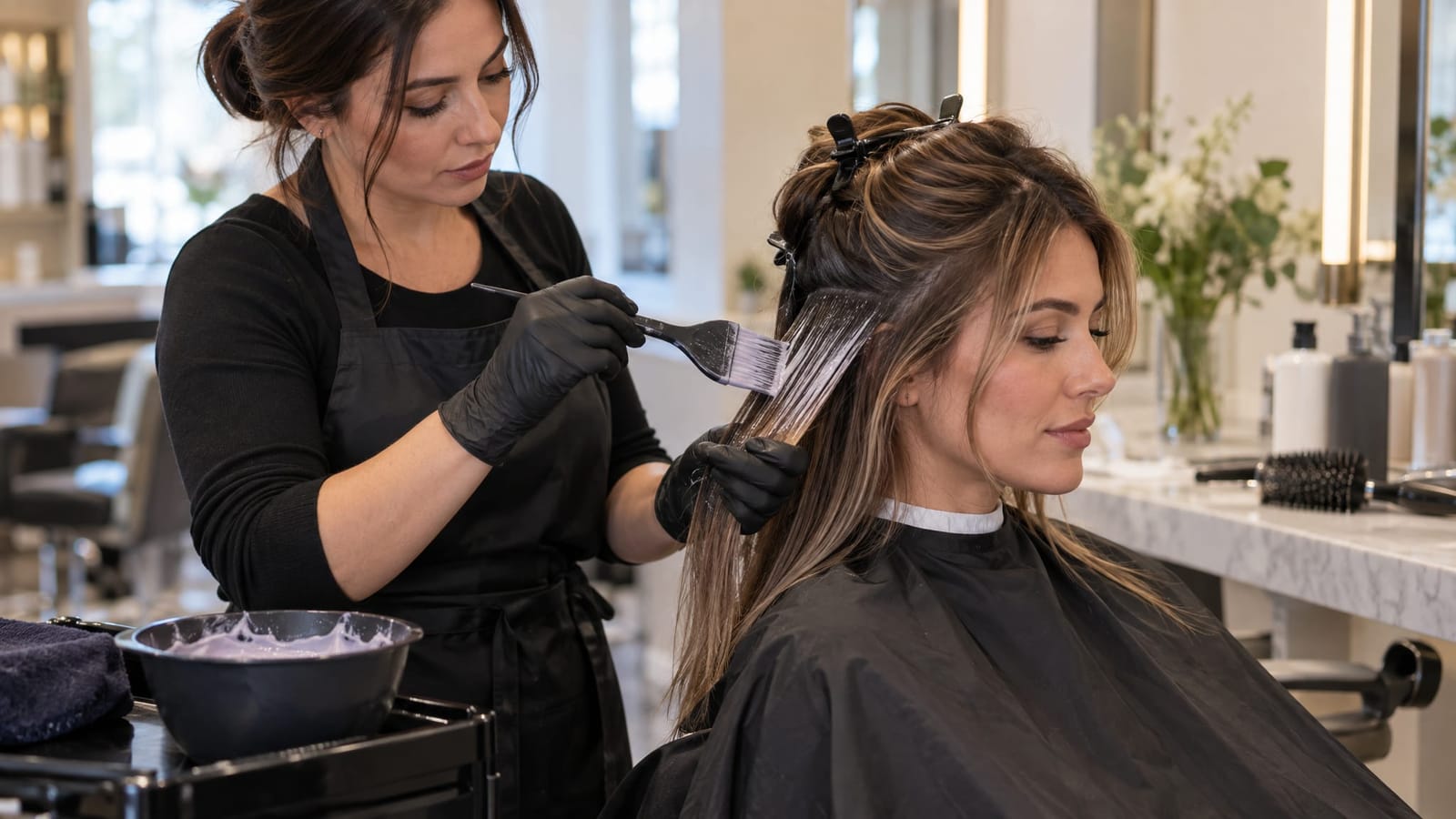
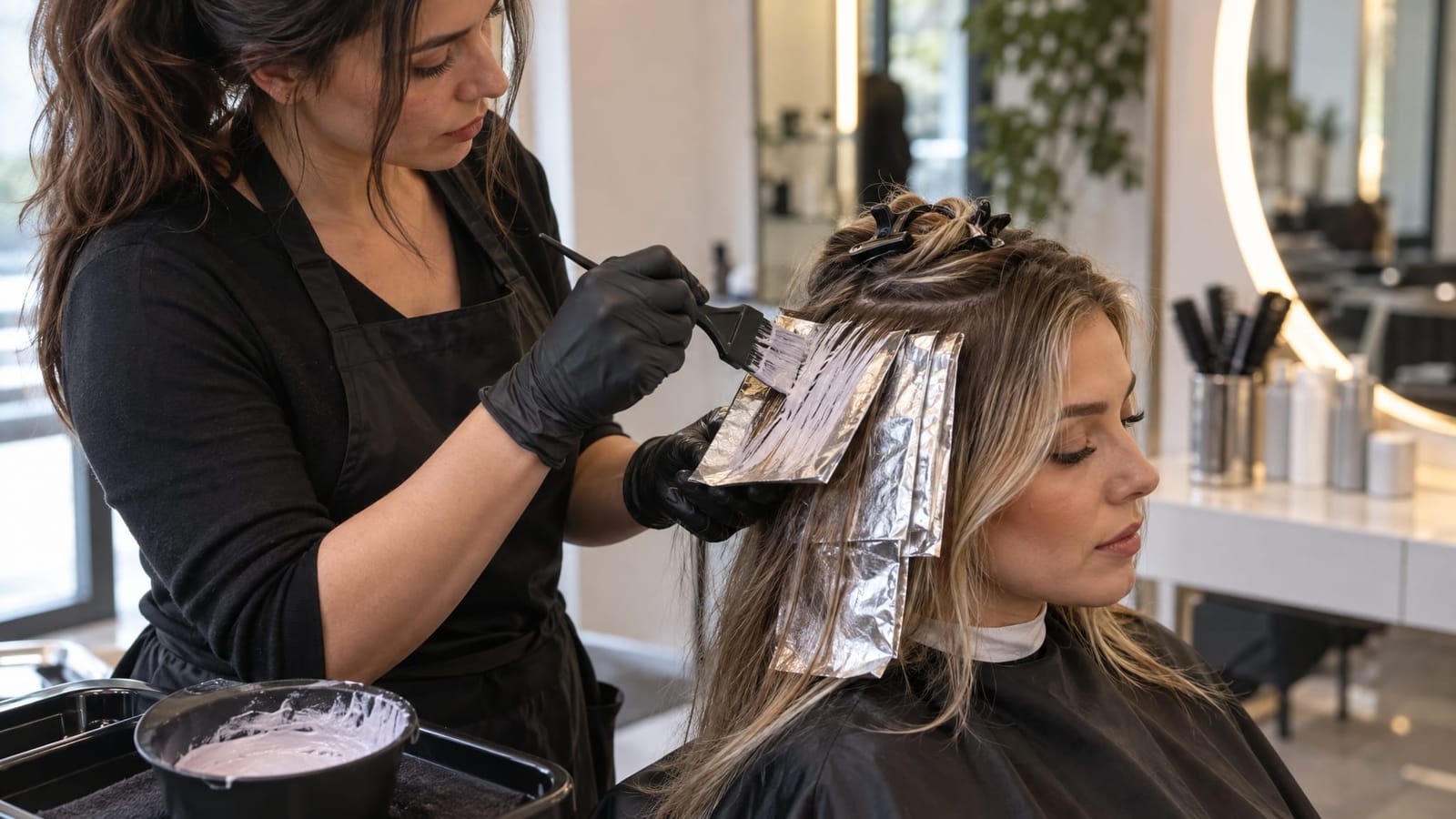
- Formula application. The product is applied where the color needs refreshing or refining. Roots and ends may need different treatment rather than one formula everywhere.
- Processing. The formula develops according to its directions and the planned result. More processing time does not automatically mean a better finish.
- Rinsing and finishing. The product is rinsed out, followed by the appropriate cleansing or conditioning steps and your agreed finish.
Wet hair appears different from dry hair. Reviewing the finished shade after drying gives a more useful picture of its brightness, depth, and tone than judging it at the shampoo bowl.
Step 6: Leave with a straightforward maintenance plan
Before leaving, clarify when to shampoo next and which home-care products suit the formula used. A single waiting period does not apply to every gloss or toner.
Discuss color-depositing products separately from ordinary shampoo and conditioner. Purple shampoo, for example, is not a general shine product. It adds pigment, so it is useful only when that pigment supports your color goal.
Plan your next refresh around what changes first: warmth returning, tone fading, or new growth becoming noticeable. These are different concerns, and they do not always call for the same service.
Questions to ask before a toning or glazing visit
Can toner make my hair significantly lighter?
Toner primarily refines tone rather than providing significant lift. If your goal is noticeably lighter hair, the appointment may need to include lightening rather than a toner alone. Make that goal clear when discussing the service.
Can toning be done with highlights?
Yes. Toning often follows highlights or other lightening services to refine the resulting shade. It can also be a standalone refresh between color appointments. Describe the full result you want so the planned visit accounts for both services when needed.
Will a glaze replace a root touch-up?
Not necessarily. A tinted glaze can adjust tone, but it is not interchangeable with a root-color service designed for coverage or a distinct change at the roots. Mention whether new growth or gray coverage is part of your goal.
A little preparation makes the conversation clearer
Bring your color history, choose specific reference photos, and keep your pre-appointment routine simple. The most useful preparation is a clear explanation of what you love about your color and what you want to refine.