Keratin Treatment for Different Hair Types: Who Gets the Best Results?
If you've been researching whether a keratin treatment is the right move for your hair, you've probably noticed that the results look a little different from person to person. That's because they genuinely are. Keratin treatments are not a one-size-fits-all service: the outcome depends heavily on your natural hair type, its current condition, and the specific formula your stylist chooses. Understanding how keratin interacts with your particular texture is one of the most important parts of deciding whether it's the right investment for you. This guide breaks down what realistic results look like for five of the most common hair types, so you can walk into your consultation at Meraki Salon feeling informed, confident, and ready to ask the right questions.
What Keratin Treatments Actually Do (Before We Talk Hair Types)
Before diving into hair-type specifics, it helps to understand the basics of what a keratin treatment does. Keratin is a naturally occurring protein that makes up the structure of your hair. Over time, through heat styling, color services, environmental exposure, and everyday wear, that protein breaks down, which can leave hair looking frizzy, dull, or difficult to manage.
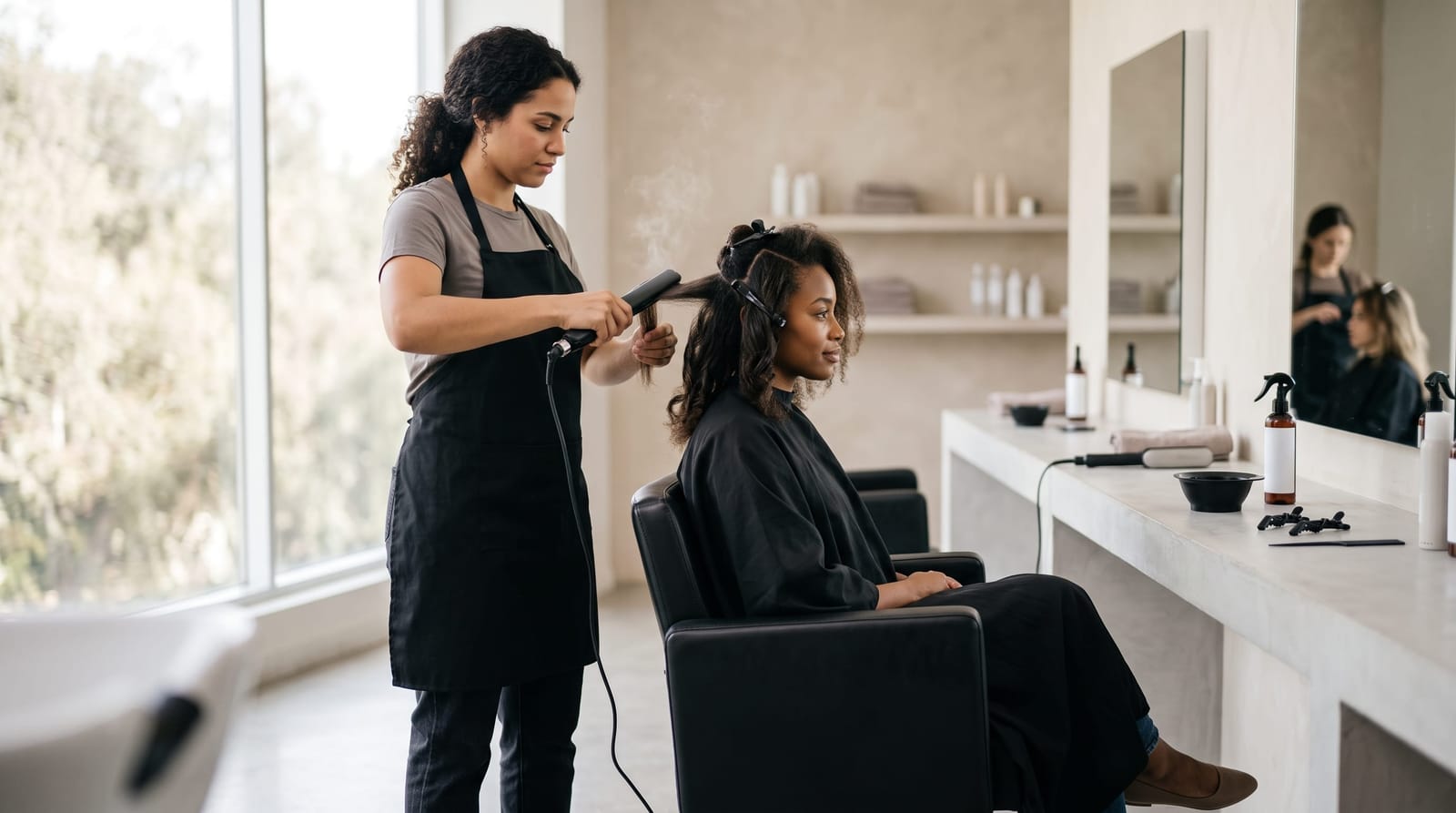
A keratin treatment works by infusing a concentrated keratin formula into the hair shaft and then sealing it in with heat. The result is smoother, shinier, more manageable hair with significantly reduced frizz. How dramatic that transformation looks, and how long it lasts, depends on your starting point.
There are several formulas available today, ranging from more intensive smoothing treatments to gentler, express options. A skilled stylist will assess your hair type and goals during a consultation to recommend the right approach. At Meraki, that conversation is a built-in part of the process, because the best keratin result is always a personalized one.
Fine Hair: Smoothing Without Weighing Things Down
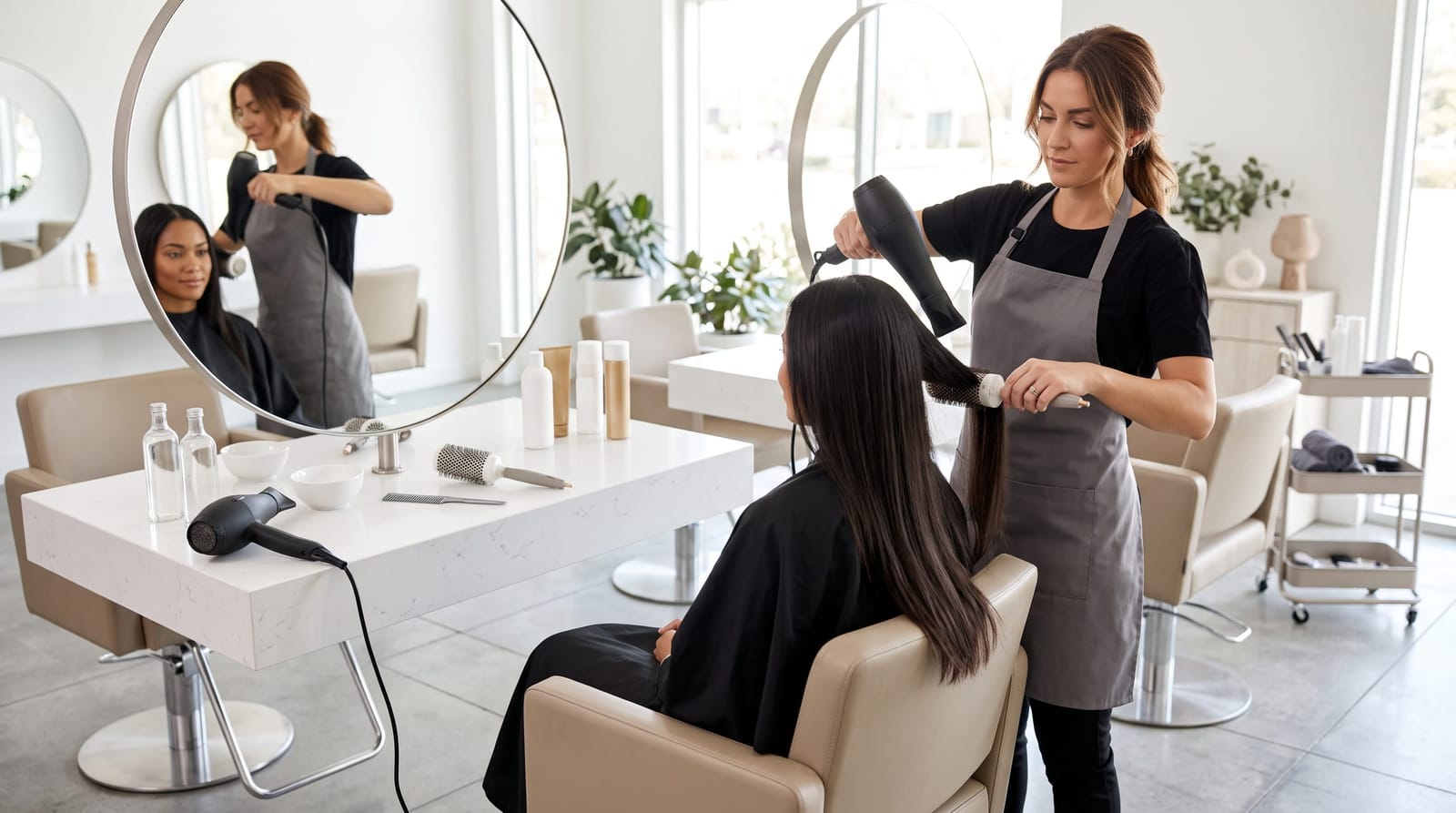
Fine hair is one of the most commonly misunderstood candidates for keratin treatments. Many clients with fine hair worry that a smoothing service will leave their hair flat, limp, or lacking body. The good news is that with the right formula and an experienced stylist, fine hair can benefit beautifully from keratin: it just requires some thoughtful customization.
What to Expect
Fine hair tends to absorb keratin formulas quickly and responds well to lighter-weight treatments. The goal for fine hair isn't dramatic straightening: it's frizz control, added shine, and improved manageability. When done correctly, a keratin treatment can actually make fine hair look healthier and more polished without eliminating natural movement or volume.
Key Considerations
The formula matters significantly here. Heavier or more intensive keratin treatments can overwhelm fine strands, so a lighter, more targeted approach is typically the better fit. Your stylist should also consider how much time is spent applying heat during the treatment, as fine hair can be more sensitive to high temperatures.
If fine hair is something you're navigating, exploring dedicated guidance on keratin treatment hair types for fine strands can help you understand what a realistic result looks like before booking your appointment.
Thick, Coarse Hair: When Keratin Delivers the Most Dramatic Results
If there's a hair type that tends to see the most striking transformation from a keratin treatment, it's thick, coarse hair. This texture, often described as dense, resistant to styling, and prone to puffing up in humidity, responds to keratin in a way that can feel genuinely life-changing for the people who have it.
What to Expect
Thick, coarse hair often requires more time and product to achieve smooth results, but the payoff is significant. Blowouts that used to take 45 minutes might take 10. Styles that never quite laid flat suddenly cooperate. Frizz that was a daily struggle becomes a non-issue. For this hair type, keratin treatments often deliver results that last closer to the longer end of the typical timeframe, usually several months with proper care.
Key Considerations
Because coarse hair is naturally more resistant, it may benefit from a more intensive formula than fine or medium hair. Your stylist will assess the hair's porosity and density to determine how much product to use and how much heat to apply during the sealing process. Skipping that assessment and using a formula that's too light can result in a treatment that doesn't deliver the smoothing effect this hair type is capable of achieving.
Curly Hair: Managing Frizz While Keeping Your Pattern
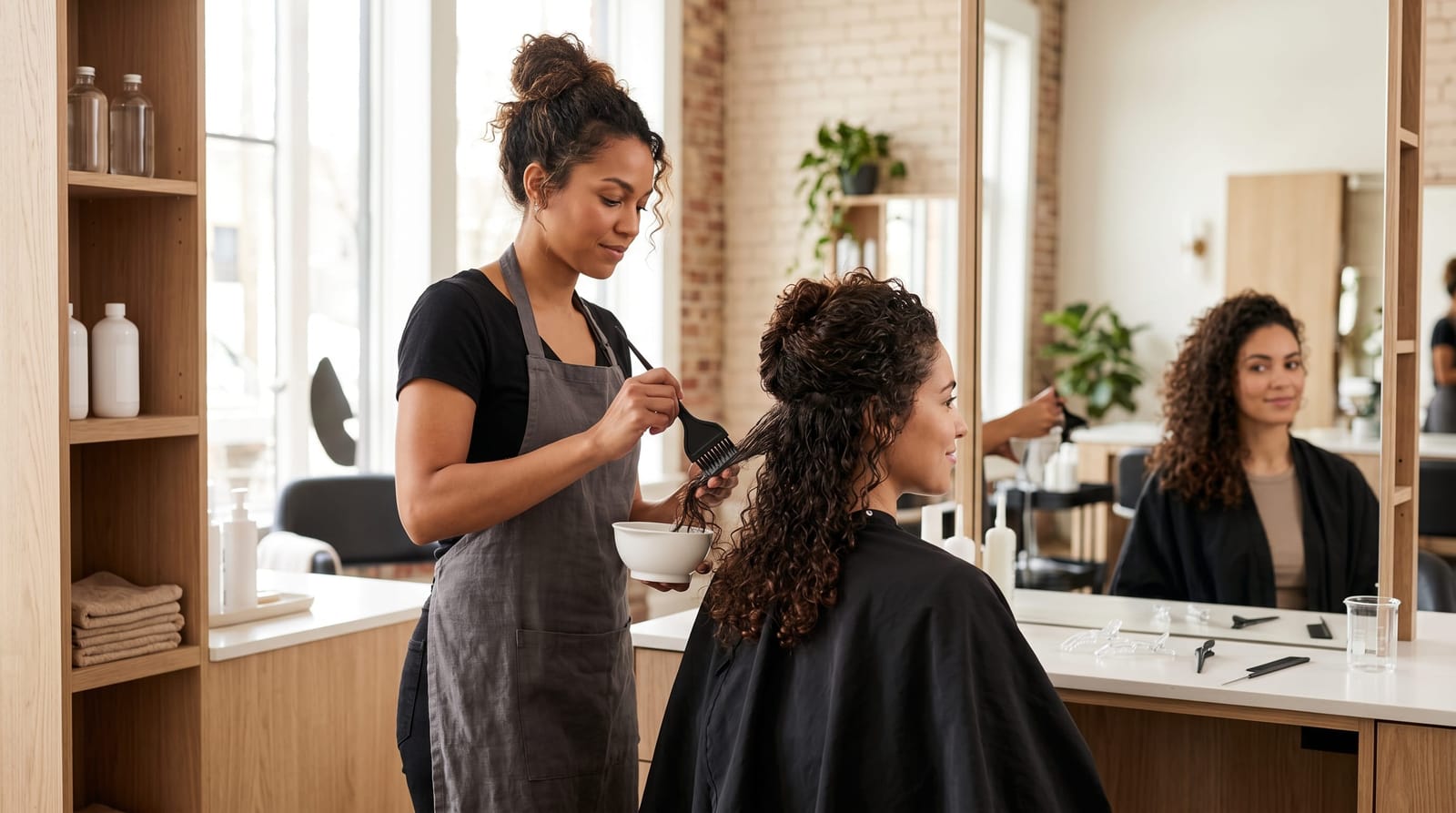
Curly hair and keratin treatments have a nuanced relationship, and it's one worth understanding clearly before you book. The results curly-haired clients experience can range from reduced frizz with curl pattern intact to noticeably looser waves, depending on the formula used, how it's applied, and what the client is hoping to achieve.
What to Expect
For many clients with curly hair, the appeal of keratin isn't about eliminating curls: it's about making them more manageable, more defined, and less frizzy. A well-selected keratin formula can do exactly that, smoothing the outer layer of the hair shaft so that curls look polished rather than puffy. Moisture retention tends to improve as well, which is a genuine benefit for curly textures that can be prone to dryness.
Clients who want to maintain their curl pattern should communicate that clearly in their consultation. There's a meaningful difference between a full smoothing treatment and a more curl-friendly keratin service, and your stylist should help you understand which approach aligns with your goals.
Key Considerations
Curl pattern and density vary widely: loose waves, tight ringlets, and everything in between will each respond a little differently. A consultation is especially important for curly-haired clients because the right formula selection makes a significant difference in the final result. For a deeper look at this specific topic, keratin treatment hair types for curly hair covers the key questions worth asking before you decide.
Color-Treated Hair: Timing and Compatibility Matter
Color-treated hair is another category where keratin treatments are absolutely possible, but where the order of services and the condition of the hair matter a great deal. Whether your hair has been highlighted, balayaged, toned, or dyed a solid color, there are a few things to keep in mind before layering in a smoothing treatment.
What to Expect
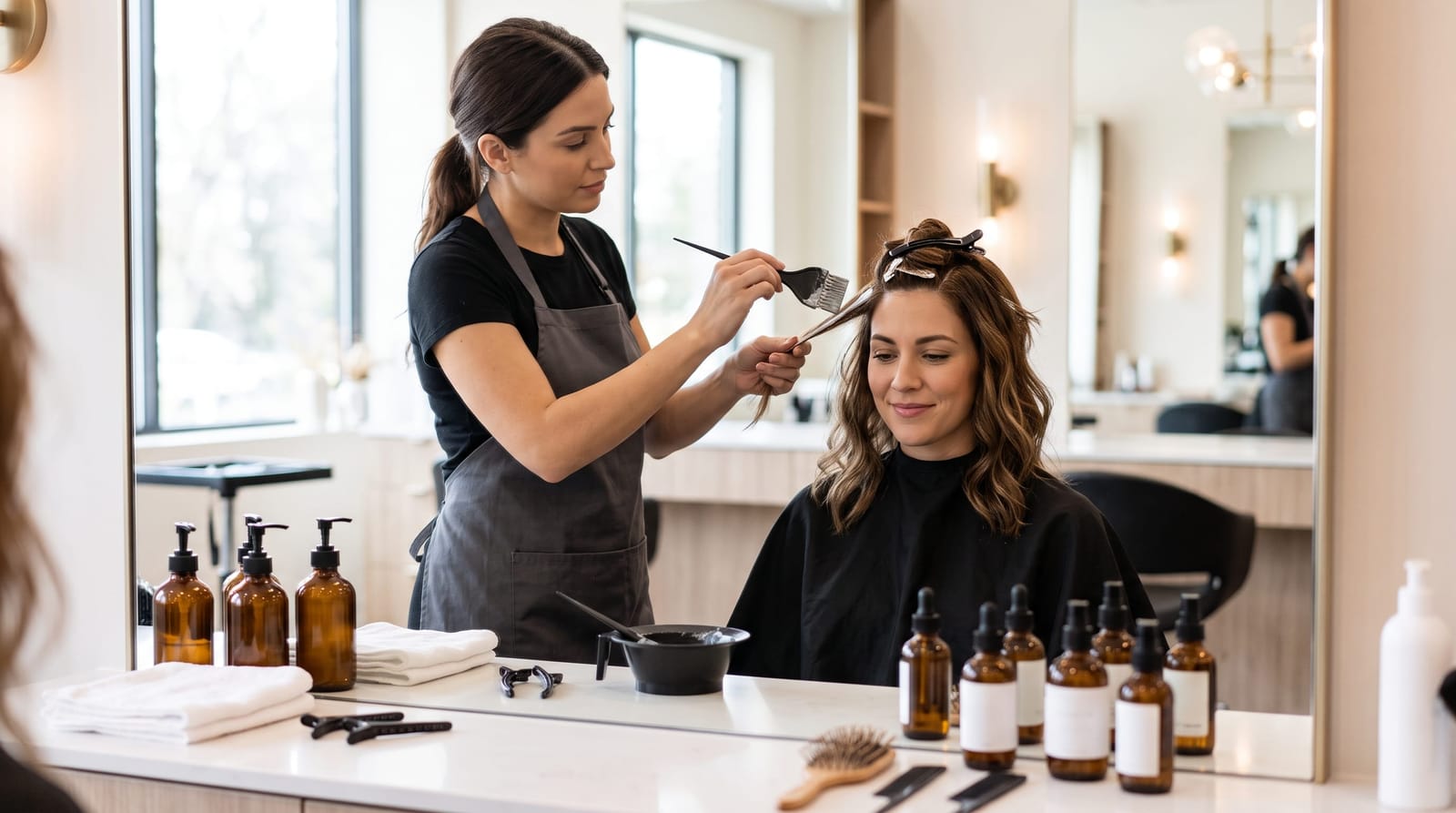
Keratin treatments are generally compatible with color-treated hair and can actually enhance the appearance of color by smoothing the cuticle and boosting shine. Many clients find that their color looks more vibrant and dimensional after a keratin treatment, simply because light reflects more evenly off a smoother surface.
Timing Is Everything
The sequence in which you schedule these services matters. In most cases, it's recommended to complete any color work before your keratin treatment rather than after, since the keratin sealing process can affect how the hair absorbs color. Your stylist will advise you on the ideal timeline based on your specific color service and the current condition of your hair.
It's also worth noting that color-treated hair can sometimes be in a more porous state, which means it may absorb keratin formulas differently. A thorough consultation helps ensure the treatment is applied in a way that works with your hair's current condition rather than against it.
Chemically Processed Hair: Proceed with Personalized Care
Hair that has undergone chemical processing, whether that's a relaxer, a previous smoothing treatment, or another chemical service, is a category that requires careful evaluation before adding a keratin treatment into the mix. This isn't a reason to avoid keratin entirely, but it is a reason to have an honest, detailed conversation with your stylist before moving forward.
What to Expect
The results for chemically processed hair can be beautiful, but the condition and integrity of the hair are the most important factors to assess first. Hair that has been over-processed or is experiencing significant damage may not be the best candidate for an immediate keratin treatment. In those cases, a stylist might recommend a period of conditioning and restoration before introducing another chemical service.
What a Good Consultation Looks Like
At Meraki, the consultation process for chemically processed hair involves a thorough look at the hair's current health, elasticity, and history. That information shapes everything, which formula is selected, how it's applied, and what at-home care will be recommended afterward. The goal is always to support the hair's long-term health while still achieving a result the client is genuinely happy with.
Transparency in both directions is key here. Sharing your full chemical history, including any at-home treatments or box color, allows your stylist to make the most informed recommendation possible.
How Meraki's Consultation Process Finds the Right Fit
Across every hair type, the common thread is this: a keratin treatment is only as good as the thought that goes into selecting and applying it. That's why Meraki's approach begins with a real conversation.
During a keratin consultation at Meraki Salon, your stylist will evaluate your hair's texture, density, porosity, and current condition. They'll ask about your hair history, your daily routine, and what you're actually hoping to get out of the treatment. Are you looking to cut your blowout time in half? Tame humidity-driven frizz? Keep your curls but lose the puffiness? The answers to those questions shape every decision that follows, from formula selection to application technique to aftercare recommendations.
This is what separates a thoughtfully delivered keratin treatment from one that misses the mark. The goal isn't just smooth hair: it's smooth hair that makes sense for your lifestyle, your texture, and your long-term hair health.
Explore the Details: Related Topics Worth Reading
If you're still working through whether keratin is the right fit for your specific situation, these deeper dives can help:
- Curly hair clients wondering what the process looks like for their texture can find detailed guidance on keratin treatment hair types for naturally curly hair.
- Fine-haired clients with questions about volume and formula weight will find the specifics they need in the dedicated post on keratin treatment hair types for fine hair.
The Bottom Line: Your Hair Type Shapes Your Result
Keratin treatments aren't a single experience: they're a category of services that can be customized to deliver meaningful results across a wide range of hair types. Whether your hair is fine and prone to frizz, thick and hard to manage, naturally curly, color-treated, or chemically processed, there's likely a version of a keratin treatment that could work well for you. The key is working with a stylist who takes the time to understand your hair before making a recommendation.
If you're ready to find out which keratin approach is right for your hair, the team at Meraki Salon is here to help. Book a consultation and let's start the conversation, because great hair starts with the right plan.