Signs Your Hair Needs Professional Deep Conditioning
Your hair talks to you every day. It tells you when it's stressed, depleted, and begging for help. The problem is most people don't know how to listen. If you're dealing with damaged, frizzy, or brittle strands, your hair is showing clear signs damaged hair needs treatment. Professional deep conditioning can reverse much of that damage. This post walks you through exactly what to look for, when to book an appointment, and how a professional consultation can help you build a real recovery plan.
The Most Common Signs Your Hair Is Damaged
Hair damage doesn't always happen overnight. It builds slowly. By the time most people notice a problem, the damage has already been progressing for weeks or months.
Here are the signs to watch for:
- Dryness that won't quit: You moisturize and condition regularly. But your hair still feels like straw. This happens when the hair's cuticle is compromised. It can no longer lock in moisture effectively.
- Dullness and lack of shine: Healthy hair reflects light. Damaged hair absorbs it. If your strands look flat and lifeless no matter how you style them, this is a clear warning sign.
- Split ends and breakage: Split ends mean the protective tip of the hair strand has frayed. Breakage means strands are snapping mid-shaft. Both signal structural weakness inside the hair fiber.
- Persistent frizz and flyaways: Frizz isn't just a humidity problem. When hair is damaged, its cuticle layers lift and separate. This creates a rough surface that catches moisture from the air and puffs up.
- Rough or gummy texture: Run your fingers through your hair. Does it feel rough when dry? Does it feel gummy or stretch excessively when wet? Both are signs of compromised hair structure.
- Tangles and knots: Healthy hair cuticles lie flat and smooth. Damaged cuticles are raised and jagged. They snag on each other constantly, making detangling a painful daily battle.
- Thinning strands: Hair that looks visibly thinner than it used to may be experiencing breakage throughout the shaft. This is different from hair loss at the scalp. It's a sign of serious structural damage.
If you're experiencing three or more of these symptoms, your hair is giving you a strong signal. At-home products alone may not be enough to address the damage.
When At-Home Products Stop Being Enough
There's a difference between maintenance and repair. Deep conditioning masks from the drugstore are great for maintenance. They help healthy hair stay hydrated and manageable.
But when your hair is significantly damaged, those products can't penetrate deeply enough to make a real difference. Here's how to know you've crossed that line:
- You've been using conditioning masks weekly for months with no visible improvement
- Your hair breaks during normal brushing or styling
- Dryness and frizz return within one or two days of washing
- Your hair feels weaker or thinner than it did six months ago
- Color treatments are no longer processing evenly because of uneven hair porosity
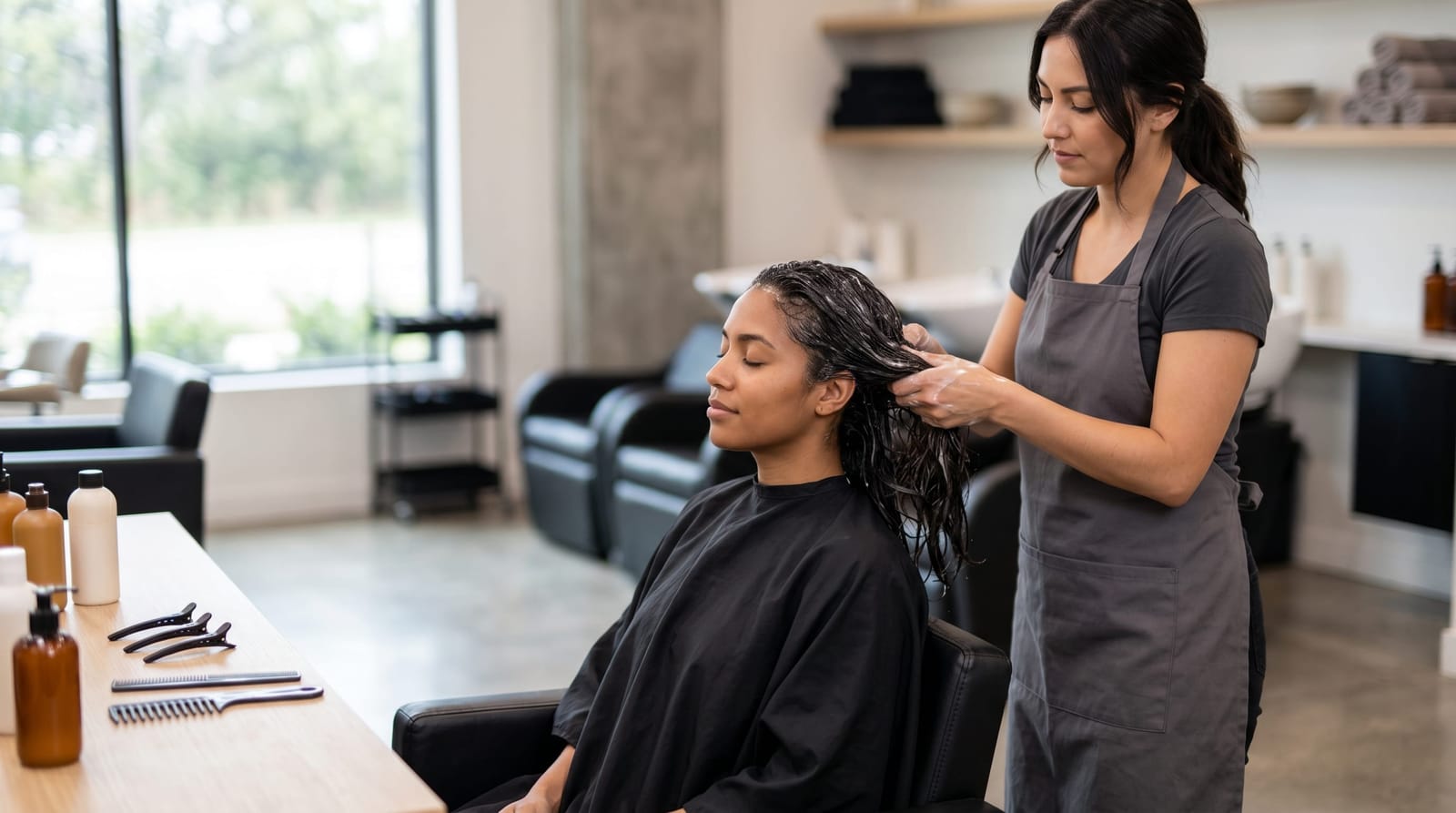
These are all signs damaged hair needs treatment at a professional level. Professional deep conditioning treatments use medical-grade formulas. They work at the cortex level of the hair fiber. They also use heat activation and processing time that isn't possible to replicate at home.
At Meraki Salon in Mountainside, NJ, professional deep conditioning services are designed specifically for hair that has moved beyond what retail products can fix.
What Happens During a Professional Hair Damage Consultation
Before any treatment begins, a skilled stylist should perform a thorough assessment. This step is crucial. It determines what type of damage you have and which treatment approach will work best.
Here's what a professional consultation typically includes:
Porosity Testing
Your stylist will assess how quickly your hair absorbs and loses moisture. High porosity hair has a raised, damaged cuticle. It absorbs moisture fast but loses it just as quickly. This affects which treatment formulas will bind effectively to your strands.
Elasticity Check
A single strand of healthy hair can stretch up to 30% of its length when wet and spring back. Damaged hair stretches too far or snaps immediately. This test reveals how much protein and internal structure your hair has lost.
Texture and Density Analysis
Fine hair and coarse hair respond differently to treatments. The same formula that restores a thick, coarse strand may weigh down fine hair. Your stylist maps out your specific hair profile before recommending a treatment plan.
Damage History Review
Chemical services like coloring, bleaching, relaxing, and perming all leave a mark on the hair. So do heat styling habits and environmental exposure. Knowing your history helps your stylist build a realistic recovery timeline.
This consultation is where a professional treatment differs most from anything you can do at home. It's personalized. The treatment is built around your exact damage pattern, not a generic formula.
Prevention Strategies to Protect Your Hair Going Forward
Once you've invested in professional deep conditioning, protecting that investment matters. A good stylist won't just treat your damage. They'll help you build habits that prevent it from returning.
Here are practical strategies that make a real difference:
- Lower your heat styling temperature: Most people use their tools at temperatures far higher than necessary. Dropping from 450°F to 350°F dramatically reduces heat damage over time.
- Always use a heat protectant: Apply it to damp hair before blow drying and again before using flat irons or curling wands. This is non-negotiable for damaged hair.
- Switch to a microfiber towel: Regular cotton towels roughen the cuticle. A microfiber towel absorbs water gently without creating friction.
- Sleep on a silk or satin pillowcase: Cotton pillowcases create friction all night. This leads to breakage and frizz, especially for already-fragile strands.
- Trim regularly: Split ends travel up the hair shaft if left untreated. Regular trims every six to eight weeks prevent the damage from spreading.
- Schedule maintenance treatments: Understanding how often you should get deep conditioning treatments helps you maintain your results long-term. Your stylist can build a schedule based on your hair type and lifestyle.
Prevention is always easier than repair. But when repair is necessary, professional treatment closes the gap that home care can't bridge.
Frequently Asked Questions
How do I know if my hair damage is severe enough for a professional treatment?
If your hair is breaking regularly, feels gummy when wet, has significant elasticity loss, or hasn't responded to weeks of at-home conditioning, it's time to see a professional. These signs damaged hair needs treatment go beyond what retail products can address. A stylist can assess your specific damage level and recommend the right professional service.
Can deep conditioning fix split ends?
Deep conditioning improves the overall strength and moisture balance of your hair, which can temporarily seal the appearance of split ends. However, the only permanent solution for split ends is trimming them. Professional treatments work best when combined with regular trims to remove already-damaged sections.
How long does it take to see results from professional deep conditioning?
Many clients notice immediate improvements in softness, manageability, and shine after a single session. For severely damaged hair, consistent treatments over several weeks deliver the most dramatic and lasting results. Your stylist will give you a realistic timeline based on your starting condition.
Is professional deep conditioning different from keratin treatment?
Yes. Deep conditioning focuses on restoring moisture, protein, and structural integrity to the hair fiber. Keratin treatments smooth and seal the cuticle to eliminate frizz and improve manageability over a longer period. Some clients benefit from both services. Your stylist can help determine which is right for your hair goals.
Time to Listen to What Your Hair Is Telling You
Dryness, breakage, frizz, dullness, and rough texture are your hair's way of asking for help. Recognizing the signs damaged hair needs treatment is the first step toward real recovery. Professional deep conditioning goes deeper than anything you can achieve at home. It targets damage at the structural level and creates lasting results. If your hair has been struggling and nothing you've tried has worked, a professional consultation at Meraki Salon in Mountainside, NJ is the smartest next step you can take.