Women's Haircuts: From Classic to Trendy Styles
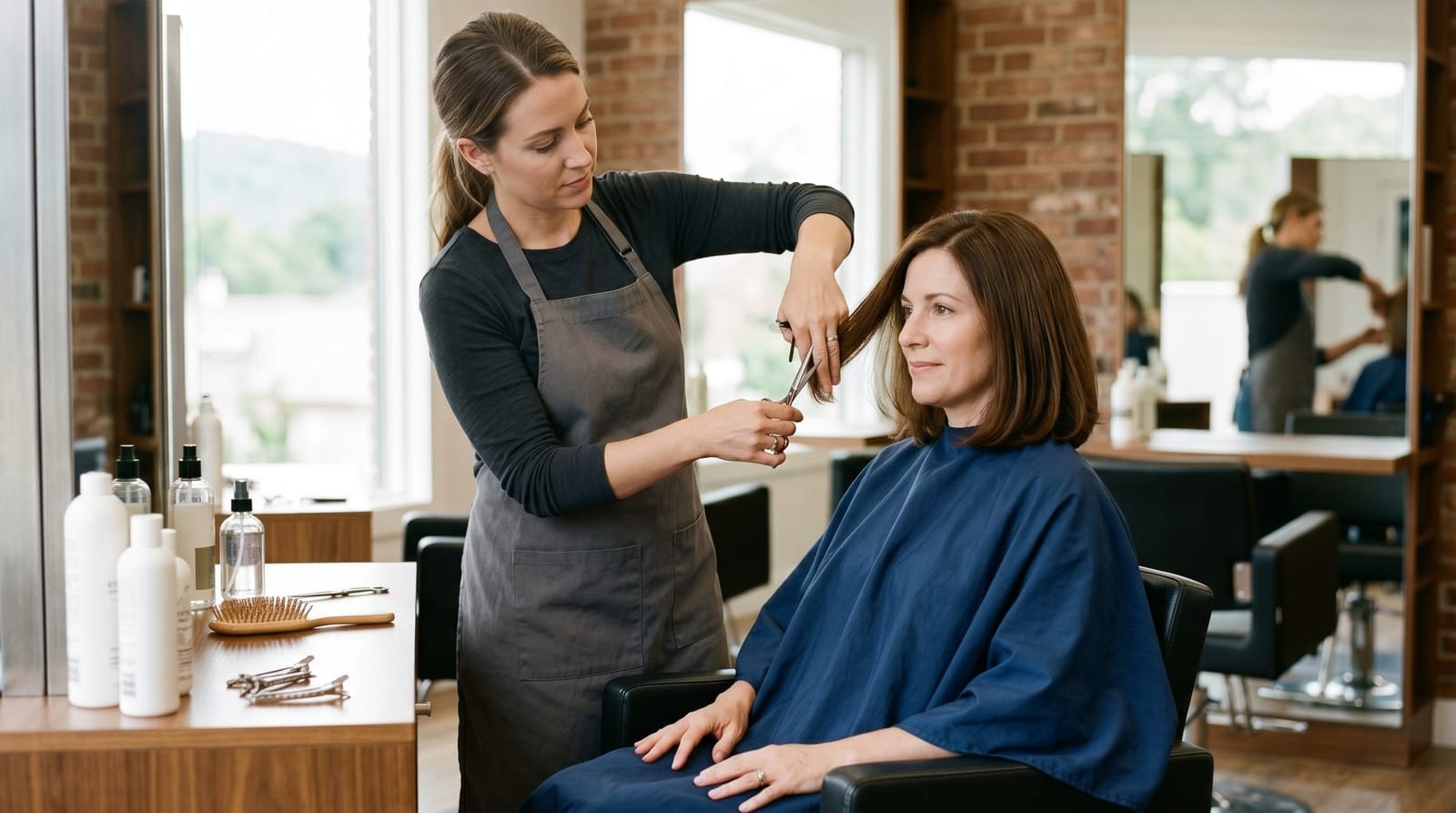
When it comes to professional haircuts and styling services in the Westfield area, women's cuts represent one of the most nuanced and personalized services a salon can offer. A great women's haircut is never just about removing length: it's about architecture, movement, and understanding how a cut will behave with your specific hair texture, face structure, and lifestyle. Whether you're searching for women's haircuts in Mountainside, NJ or simply ready for a fresh start, this guide walks you through the most popular styles, how face shape affects the right cut for you, and what a truly customized consultation looks like. At Meraki Salon and Spa, located at 887 Mountain Avenue in Mountainside, we've spent nearly two decades refining our approach to women's cutting services, and the difference is visible from the moment you sit in the chair.
The Most Popular Women's Haircut Styles Right Now
Women's haircutting trends evolve every season, but certain styles consistently dominate because they're genuinely flattering across a wide range of hair types and face shapes. Understanding what's popular, and why, helps you arrive at your appointment with clarity and confidence.
The Lived-In Lob
The long bob, or "lob," has remained one of the top-requested women's haircuts for the past several years, and for good reason. Falling anywhere from the collarbone to just below the jaw, the lob offers versatility that shorter cuts can't match. According to industry data from the Professional Beauty Association, the bob and its variations consistently rank among the top 3 most requested cuts in U.S. salons. At Meraki, we customize the lob by adjusting the weight line, adding internal layers, and personalizing the perimeter shape to complement each client's features.
Curtain Bangs and Face-Framing Layers
Curtain bangs, those soft, center-parted fringe pieces that sweep away from the face, have surged in popularity, with Google Trends data showing a 200% increase in searches over the past three years. They soften angular features and add an effortless, Parisian quality to almost any cut. When paired with face-framing layers, the effect is both polished and relaxed. This combination works especially well with medium-length cuts and long hair.
The Shag and Modern Mullet
Retro-inspired cuts with heavy layering, disconnected sections, and textured ends have made a massive comeback. The modern shag borrows from the 1970s but is executed with contemporary precision: removing bulk in the right places while preserving fullness where it matters. This style suits wavy and curly hair particularly well, since natural texture enhances the layered look without requiring excessive heat styling.
Blunt Cuts and One-Length Styles
On the opposite end of the spectrum, blunt cuts create graphic, sophisticated lines that exude confidence. A blunt bob or one-length cut at shoulder or mid-back works best on straighter, finer hair where the clean perimeter creates visible weight and shine. This style requires precise technical execution, even 2-3 millimeters of inconsistency in the cut line becomes obvious once the hair is blown out.
How Face Shape Should Influence Your Cut
One of the most important consultative skills a stylist brings to the table is the ability to identify face shape and translate that into cutting decisions. Understanding your haircut for face shape can transform a good cut into a genuinely transformative one. There are six primary face shapes, and each responds differently to haircut architecture:
- Oval: Considered the most versatile face shape, oval faces can carry nearly any style, from pixie cuts to long layers. The goal is simply to avoid hiding the natural balance of the face.
- Round: Angular cuts, longer lengths, and height at the crown create the illusion of length. Blunt bobs cut at chin level tend to emphasize roundness, so stylists often recommend the cut fall below the jawline instead.
- Square: Soft layers, wispy bangs, and side-swept fringe all work to soften a strong jawline. Curtain bangs are particularly effective here, drawing the eye upward and inward.
- Heart-Shaped: Wider at the forehead and narrowing at the chin, heart-shaped faces benefit from cuts that add volume at or below the jaw, such as chin-length bobs with volume or shoulder-length cuts with flipped ends.
- Oblong/Rectangle: Width is the goal here. Blunt, one-length cuts with fullness on the sides, or cuts with waves and texture, help broaden the appearance of the face. Avoid extremely long, straight styles that elongate further.
- Diamond: This less-common shape features a narrow forehead and chin with wide cheekbones. Side-swept bangs and cuts with volume at the crown and jaw help balance the dramatic cheekbone width.
At Meraki Salon and Spa, every women's haircut begins with a thorough face shape assessment during the consultation, not as a checklist exercise, but as a genuine conversation about what features you love and what you'd like to soften or highlight. This is what separates a skilled women's haircut from an average one.
Understanding Hair Texture and How It Changes the Cut
Face shape is only half the equation. Hair texture fundamentally determines how a cut behaves between salon visits, and a cut designed for straight hair will behave completely differently on wavy or coily strands. This is why expertise in women's haircuts in Mountainside, NJ means having stylists who are fluent in multiple cutting techniques across all textures.
Straight Hair
Straight hair reveals every cut decision with maximum clarity. Clean lines show beautifully, but so do any inconsistencies. Straight hair often benefits from point cutting and slight texturizing at the ends to prevent a "helmet" look when blow-dried. Fine, straight hair needs strategic weight distribution to avoid appearing flat.
Wavy Hair
Wavy hair has an unpredictable spring factor: meaning wet length and dry length can differ by 1 to 2 inches depending on the wave pattern. Stylists working with wavy hair typically cut with more conservative length removal and incorporate layers to encourage the wave pattern rather than fighting it. Removing too much weight from wavy hair can cause it to puff outward rather than wave downward.
Curly and Coily Hair
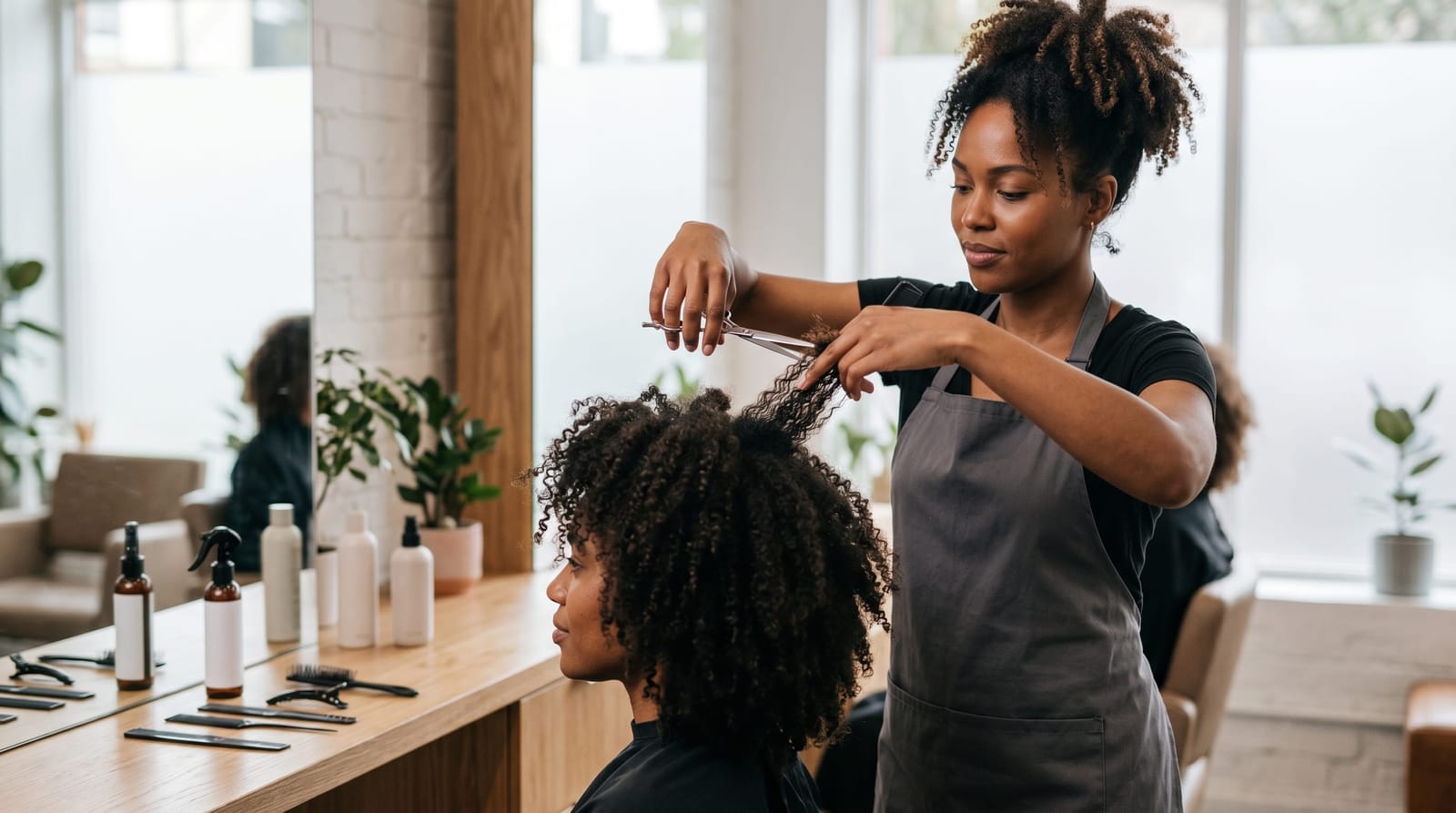
Curly cutting is its own discipline entirely. Shrinkage, the difference between wet and dry length, can be as dramatic as 50% for tightly coiled hair. Dry cutting is often preferred for curly textures because it allows the stylist to see exactly how each curl cluster falls, rather than guessing. For a deeper look at this specialized approach, our guide on curly and textured hair cutting techniques covers the methods we use to honor natural texture rather than fight it.
The Meraki Consultation Process: What to Expect
Since opening in 2005, Meraki Salon and Spa has built its reputation on a consultation-first philosophy. We believe that a 10-minute conversation before picking up the scissors prevents miscommunication, builds trust, and results in a client who leaves genuinely happy, not just politely satisfied. Here's what our women's haircut consultation typically covers:
- Lifestyle assessment: How much time do you spend styling your hair each morning? Do you air-dry, blow-dry, or diffuse? Are you active and need a style that holds through workouts?
- Inspiration review: We encourage clients to bring photos, not because we'll replicate them exactly, but because photos communicate tone and direction faster than words alone. A photo of a lived-in lob tells us immediately whether you're drawn to soft texture versus sleek lines.
- Honest feedback about your hair's behavior: We ask about what your hair does naturally, where it parts on its own, whether it has cowlicks or growth patterns that affect the final look, and what past cuts have or haven't worked.
- Budget and maintenance conversation: A dramatic cut with lots of layers may require more frequent trims to maintain its shape. Understanding how often you're willing to return helps us design a cut that stays beautiful between visits. This is closely connected to your haircut frequency schedule: some styles need attention every 6 weeks, while others hold well for 12 or more weeks.
- Product and styling education: After the cut, we walk through exactly how we styled the hair and which products we used, so you can recreate the look at home.
Customizing Your Cut: Beyond the Scissors
The most transformative women's haircuts don't happen through cutting alone. Precision haircuts are enhanced by finishing decisions that many clients don't think about until they're in the chair. At Meraki, our stylists integrate several techniques depending on the desired result:
- Point cutting: Cutting into the ends at an angle to create softness and remove hard lines: ideal for fine or straight hair that tends to look blunt and heavy.
- Slide cutting: A sliding motion with shears along the hair shaft to reduce weight and create seamless movement. Particularly effective in layered cuts.
- Razor cutting: Used to create lived-in, textured ends with a soft, undone quality. Best suited to medium-to-coarse textures, not recommended for very fine hair, as razoring can cause splitting over time.
- Notching: Small, deep cuts into the perimeter to create disconnection and visual interest in shag-style or heavily layered cuts.
- Blunt perimeter with internal softness: A hybrid approach that gives the graphic clarity of a blunt cut while removing internal weight to allow natural movement.
This level of technical decision-making is also relevant when we talk about hair layering and shaping: the way layers are placed dramatically changes how movement and dimension appear in the finished cut. It's an area worth understanding deeply, especially if you're growing out a previous cut or dealing with hair that feels heavy and lifeless.
Similarly, if you're bringing a partner or family member in for their first appointment, our approach to men's haircuts follows the same consultation-first, precision-driven philosophy: the techniques differ, but the care is identical.
Related Details: Going Deeper on Women's Cutting Topics
If you want to explore specific aspects of women's haircuts in greater depth, we've developed detailed guides covering two of the most common questions we hear in the salon:
- Understanding your haircut for face shape: a complete breakdown of how to identify your face shape at home and which cuts are most flattering for each type.
- Figuring out your ideal haircut frequency schedule: how often different cuts and hair types actually need trimming to stay healthy and shaped.
Conclusion: Your Best Women's Haircut Starts with the Right Salon
A truly great women's haircut is the produ