Balayage vs Foil Highlights: Which Technique is Right for You?
Choosing the right hair color technique can feel overwhelming, especially when two of the most popular options, balayage and foil highlights: each promise beautiful, dimensional results. If you've been searching for balayage in Mountainside NJ or trying to figure out whether traditional foils are the better fit for your hair goals, you're in the right place. This post is part of our Complete Guide to Professional Hair Color Services at Meraki Salon & Spa, where we break down everything you need to know about achieving stunning color. Here, we'll go deep on how balayage and foils actually differ, what results each technique delivers, how maintenance compares, and how the expert colorists at Meraki Salon & Spa in Mountainside guide clients toward the choice that genuinely suits their hair, lifestyle, and budget.
Understanding the Two Techniques: What Actually Happens at the Salon
Before you can choose between balayage and foil highlights, it helps to understand what each technique involves on a technical level. These are not just two names for the same service: they are fundamentally different approaches to placing color on hair, and that difference affects everything from the end result to how often you'll need to return to the salon.
What Is Balayage?
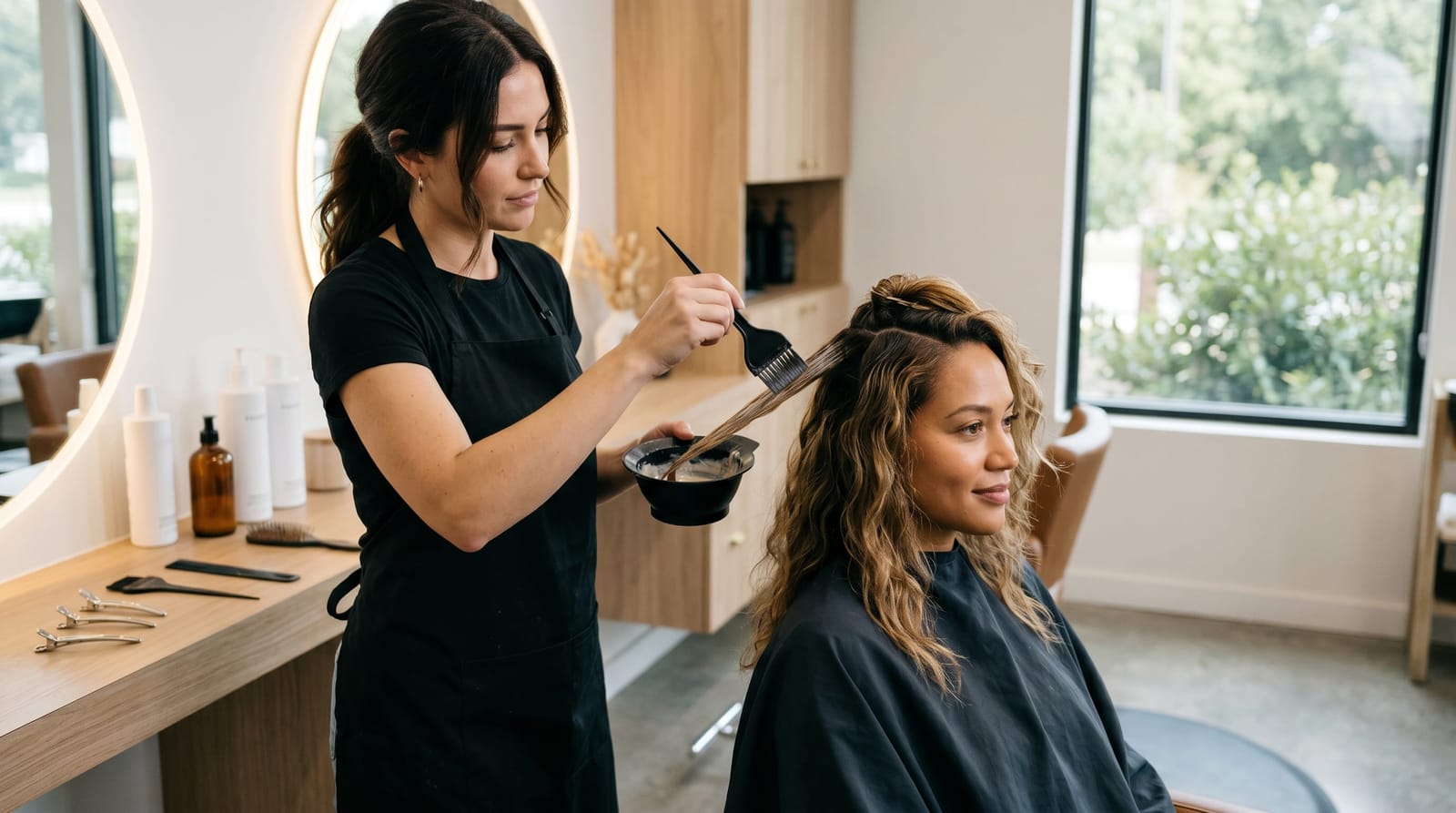
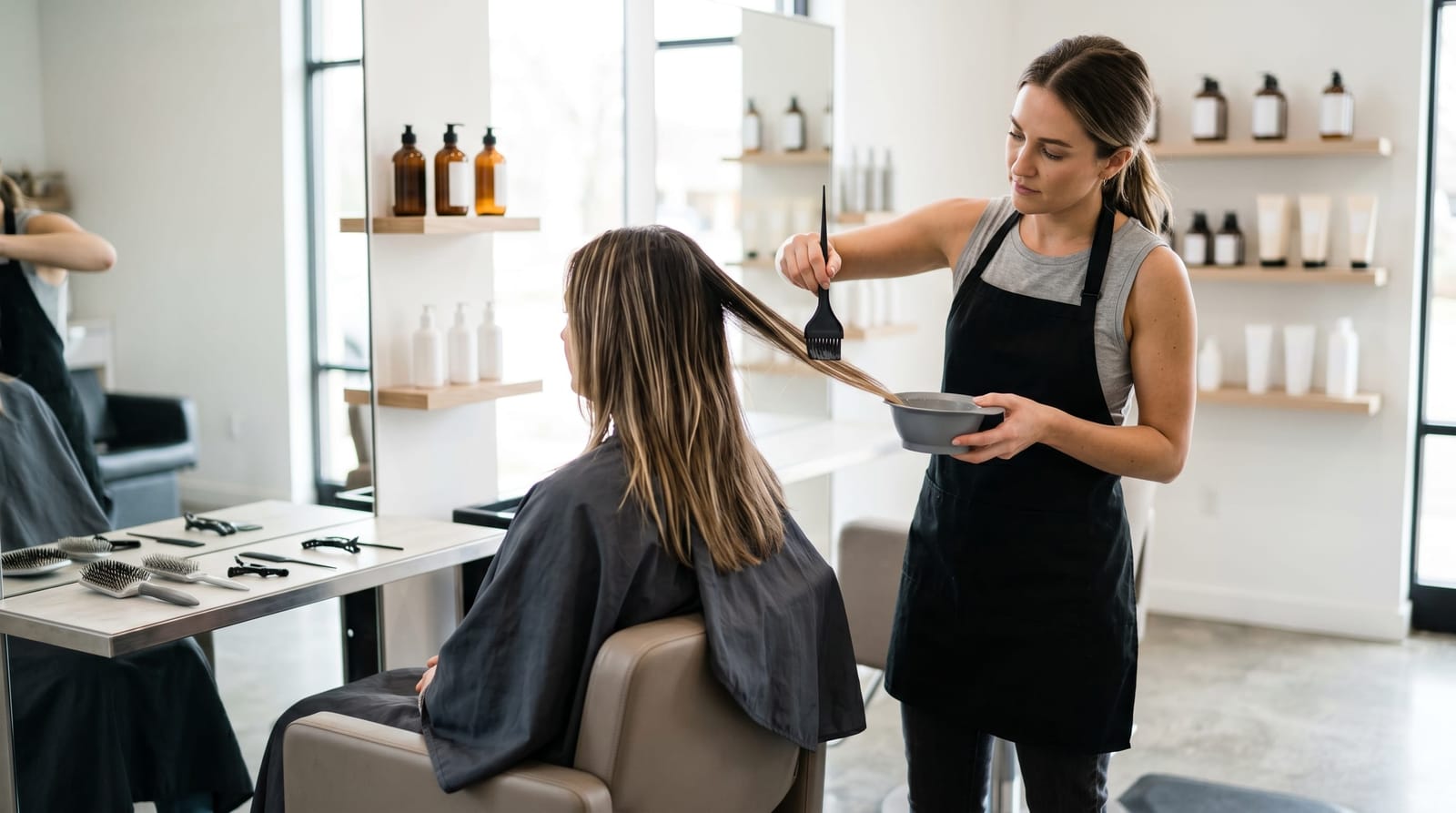
Balayage is a French word meaning "to sweep." The technique involves a colorist hand-painting lightener or color directly onto the surface of hair sections in a sweeping motion, without enclosing the hair in foil. Because the color is applied freehand and left to process in open air, it develops more gradually from root to tip. This creates a soft, blended gradient effect, lighter at the ends, with a natural shadow at the roots, that mimics the way hair lightens naturally in the sun. According to industry data, balayage has grown to represent over 60% of all highlight services requested in U.S. salons, a dramatic rise from just 15% a decade ago. Its popularity is rooted in that lived-in, effortlessly natural appearance that works across hair types and textures.
What Are Foil Highlights?
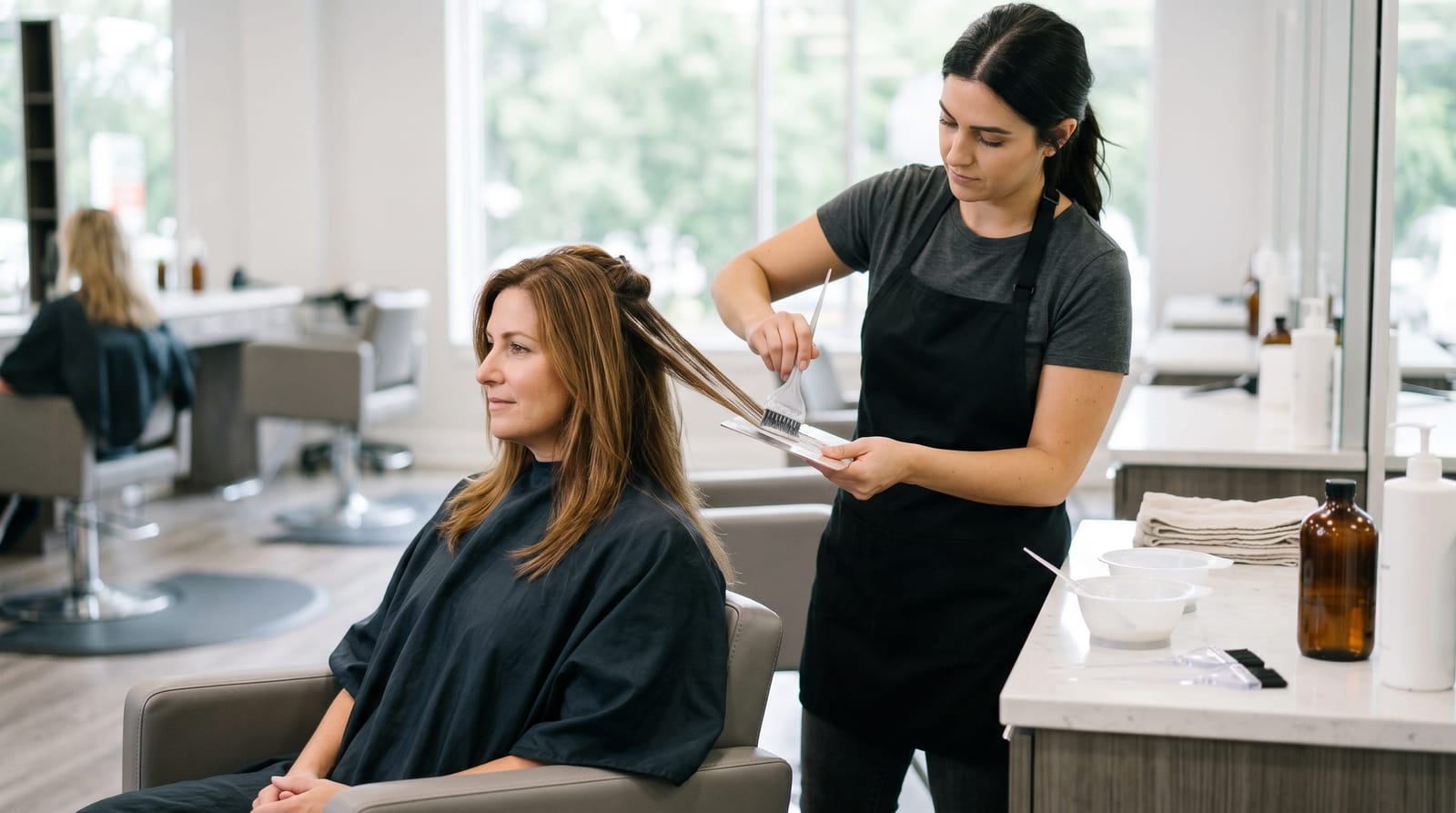
Foil highlights involve sectioning the hair, applying lightener or color to specific strands, and then wrapping those sections tightly in aluminum foil. The foil creates a sealed, warm environment that speeds up and intensifies the lightening process. Because each section is isolated, colorists have precise control over exactly which strands are lightened and to what degree. Traditional foil highlights have been a salon staple for decades, and for good reason: they deliver consistent, high-contrast results that can lift hair significantly lighter than balayage alone, often achieving 6 to 8 levels of lift in a single session under the right conditions.
The Results: How Each Technique Looks in Real Life
The most visible difference between balayage and foil highlights comes down to contrast, placement, and how the color interacts with your root area. Neither is objectively better, but one will almost certainly feel more "you."
Balayage Results: Soft, Sun-Kissed Dimension
Balayage produces a gradient effect with no harsh lines at the root. Because lightener is painted onto the mid-shaft and ends rather than from the root, there's a natural blend zone where your base color transitions into the lighter pieces. The result tends to look like your hair has spent a summer at the beach: warm, natural, and dimensional without appearing overly processed. Balayage is particularly flattering on women who want noticeable color without the "done" look, and it's exceptionally beautiful on wavy or curly hair textures, where the hand-painted pieces wrap around movement and curl patterns organically.
Foil Highlight Results: Bright, Defined Contrast
Foil highlights deliver more uniform brightness and higher contrast. Because the foil heats the lightener, strands can go significantly lighter, and the color is applied from closer to the root, which creates a more noticeable dimension against the base shade. If you have dark brown or black hair and want to achieve truly blond highlights, foils are often the only technique that will get you there in one or two appointments. Foils also allow for very precise placement, chunky highlights, fine money pieces, or a very specific pattern, that's harder to replicate with freehand painting alone.
Maintenance: What to Expect Between Appointments
One of the most practical factors in choosing between balayage and foil highlights is how much upkeep each requires, both in terms of salon visits and at-home care. This is an area where the two techniques differ significantly, and it often becomes the deciding factor for busy clients.
Balayage Maintenance Timeline
Because balayage is designed with a naturally blended root, regrowth is far less noticeable as your hair grows out. Most clients return for a balayage refresh every 3 to 4 months, and many can comfortably stretch appointments to 5 or even 6 months without their color looking grown out. That extended timeline translates to real savings: both in salon visits per year and in the cumulative cost of color maintenance. At-home care is straightforward: a good sulfate-free shampoo, regular deep conditioning, and a weekly toning mask to keep brassiness at bay are the primary requirements.
Foil Highlight Maintenance Timeline
Foil highlights, particularly those placed close to the root, show regrowth more quickly and more visibly. Most clients with foil highlights return to the salon every 6 to 10 weeks to address root demarcation. If you go very light, brassiness can develop faster, requiring more frequent toning appointments in between. That said, for clients who enjoy the ritual of regular salon visits or who need their color to look polished at all times, think professionals who are frequently photographed or on camera, the precision and brightness of foils can be worth the added frequency.
How Meraki's Colorists Choose the Right Technique for Each Client
At Meraki Salon & Spa in Mountainside, the colorist consultation is where the real decision-making happens. Located at 887 Mountain Avenue and serving clients since 2005, Meraki has developed a consultation process that treats every client as an individual, not just a candidate for a trending technique. There is no one-size-fits-all answer to the balayage vs. foils question, and the team's approach reflects that philosophy.
The Factors a Colorist Evaluates
During a color consultation at Meraki, your stylist will assess several key variables before making a recommendation:
- Your current base color: Darker starting shades often need the amplified lift of foils to achieve significant lightening, while medium brown bases are excellent balayage candidates.
- Your hair's condition and history: Chemically processed, bleached, or heat-damaged hair may not tolerate the aggressive lift of foils safely. Balayage, applied to the ends rather than the root, can be a gentler option.
- Your lifestyle and maintenance tolerance: Clients who travel frequently, have busy schedules, or prefer lower-maintenance routines are often steered toward balayage for its forgiving grow-out.
- Your desired end result: A client wanting platinum-adjacent brightness will likely need foils. A client wanting soft, beachy warmth is a natural balayage candidate.
- Your hair texture: Curly and wavy hair often responds beautifully to balayage, which highlights natural movement. Fine, straight hair can look stunning with either technique depending on the desired contrast level.
It's also worth noting that the two techniques are frequently combined in a single service, a method often called "foilayage", where the colorist uses foils at the root for maximum lift and blends into a hand-painted application lower on the shaft. This hybrid approach gives clients the best of both worlds and is a specialty of experienced colorists like those at Meraki.
Cost and Time: Setting Realistic Expectations
Two of the most common questions clients ask before booking are how much the service will cost and how long they'll be in the chair. Both are legitimate considerations, and both vary depending on the technique, your hair length, and your starting color.
Balayage services in New Jersey typically run higher than traditional foil highlights in upfront cost, because the hand-painting process is more time-intensive and technique-driven, often requiring 2.5 to 4 hours of chair time for a full application. However, because the grow-out is so gradual, the annual cost of maintaining balayage can actually be lower than the cumulative cost of foil highlight appointments every 6 to 8 weeks. For a detailed breakdown of what you can expect to invest, our post on balayage cost NJ covers pricing factors in depth. And if you're wondering how to plan your schedule, our guide on balayage appointment time walks through what a typical session looks like from start to finish.
Foil highlights, by contrast, can sometimes be completed more quickly for clients with finer hair or shorter lengths, but full-head foils on thick, long hair can rival or exceed a balayage appointment in chair time. Pricing also varies widely depending on how many foils are placed and whether a toner is applied after lightening: a step that's almost always recommended to neutralize brassiness and refine the tone.
Related Topics Worth Exploring
Once you've settled on your technique, there's more to the color journey than the highlight application itself. Achieving truly beautiful, salon-worthy hair color involves several supporting services and decisions that complement your highlights or balayage.
If you're considering a more dramatic change: going from dark to light, switching tones entirely, or correcting previous color: the full process is covered in our post on complete hair color transformation services, where we walk through multi-step color journeys and what to expect at each stage. After your initial color service, maintaining the vibrancy of your highlights is equally important, which is something our upcoming post on root touch-ups and color retouching addresses in detail. And for anyone who wants to take their color one step further, glazing and glossing services are the unsung heroes of long-lasting, luminous color: a topic explored fully in our post on glazing, toners, and glossing.
Conclusion: Making the Choice That's Right for Your Hair
There's no universally superior technique between balayage and foil highlights: only the right choice for your specific hair, goals, and lifestyle. Balayage delivers effortless, low-maintenance dimension with a natural grow-out that suits clients who want beautiful color without constant upkeep. Foil highlights provide precise, high-contrast brightness that's ideal for significant lightening or a more polished, defined look. Many clients ultimately benefit from a combination of both.
The best way to determine which approach is right for you is to sit down with an experienced colorist who can evaluate your hair honestly and help you set realistic expectations. The team at Meraki Salon & Spa in Mountainside, NJ has been doing exactly that since 2005. If you're ready to explore your options, book a color consultation at