Root Touch-ups and Color Retouching: Maintaining Your Perfect Color
When you invest in a stunning hair color service, whether it's a rich single-process color, a dimensional balayage, or a bold transformation, the last thing you want is to watch it fade or grow out unevenly. Maintaining that fresh, polished look between major appointments is where professional root touch-ups become essential. As part of our complete guide to professional hair color services at Meraki Salon & Spa, this deep dive covers everything you need to know about root touch-up services: how they work, how often to book them, what to expect during your appointment, and how to build a maintenance plan tailored to your specific hair type and color goals. If you've been searching for a root touch up salon near me in the Mountainside or Westfield area, this guide will help you understand exactly what professional color retouching involves, and why it's worth doing right.
What Is a Professional Root Touch-Up (and Why Does It Matter)?
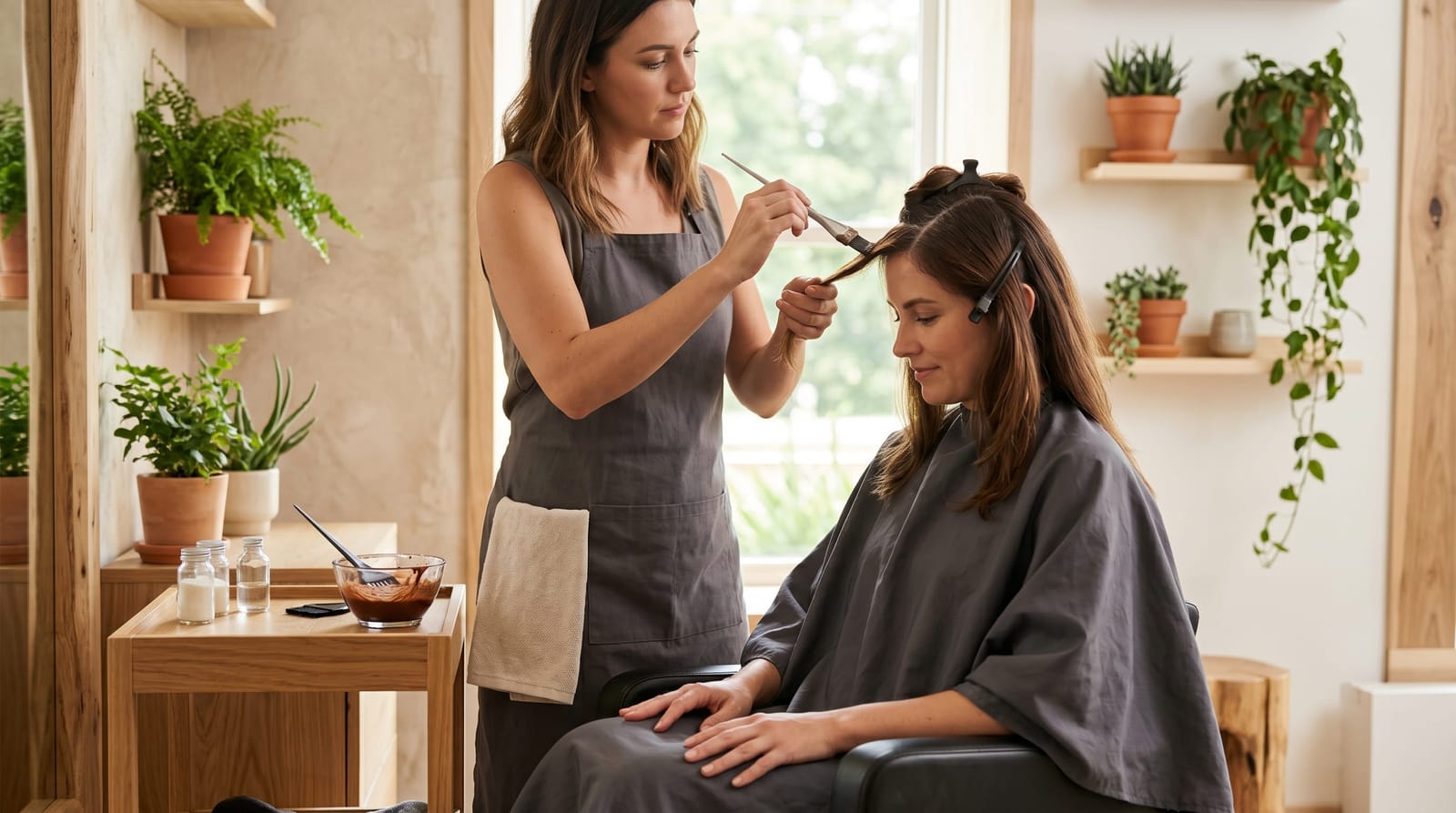
A root touch-up is a targeted hair color service that refreshes the regrowth at your roots, blending new growth seamlessly with your existing color. It sounds simple, but in practice it requires significant technical skill. Hair at the root processes color differently than hair that has already been colored, bleached, or chemically treated. The root area is warmer due to body heat, meaning it processes faster: sometimes lifting or depositing color in as little as half the time it takes mid-lengths and ends.
At a professional root touch up salon near me, your colorist doesn't simply apply the same formula from your last appointment and hope for the best. They assess several variables:
- How much new growth has come in (typically ¼ inch to 1 inch)
- Whether your existing color has faded, shifted tone, or oxidized
- The porosity of your hair along the length
- Whether any correction is needed at the demarcation line
According to professional color education data, approximately 65% of salon hair color clients visit for root touch-up or maintenance appointments rather than full color services: making it one of the most frequently performed technical services in any color-focused salon. Getting it right every time requires consistent documentation of your formula, skilled color matching, and an understanding of how your hair has changed since the last visit.
At Meraki Salon & Spa in Mountainside, NJ, every root touch-up begins with a formula review to ensure the result is consistent, not just close enough.
How Often Should You Book a Root Touch-Up?
One of the most common questions clients ask when scheduling a root touch up salon near me appointment is: "How often do I actually need to come in?" The honest answer depends on several factors specific to you: your natural hair color, the type of color service you have, your personal tolerance for visible regrowth, and your hair growth rate.
General Timing Guidelines by Color Type
Hair grows an average of approximately half an inch per month, which means most clients begin to notice regrowth between three and six weeks after a color appointment. Here's a breakdown by service type:
- Single-process all-over color: Every 4-6 weeks. Because the color covers the entire head, even a small amount of regrowth creates a visible line, especially if there is a significant contrast between your natural color and your dyed color.
- Highlights or partial highlights: Every 6-10 weeks. The blended nature of highlights makes regrowth less obvious, giving you a longer window before a touch-up feels necessary.
- Balayage or lived-in color: Every 10-16 weeks. The seamlessly painted technique is designed to grow out naturally and gracefully, requiring the least frequent maintenance.
- Gray coverage: Every 3-5 weeks. Gray hair is notoriously fast to reappear at the root line and often has a coarser texture that can resist color, making timely retouching especially important.
For a more detailed breakdown of timing based on your specific color service, our guide on hair color touch up frequency covers the science behind regrowth cycles and how to find the right rhythm for your lifestyle.
Your Lifestyle Matters Too
If you wash your hair daily, use harsh shampoos, or spend significant time in the sun, your color may fade faster: meaning the contrast between roots and ends becomes more pronounced sooner. Clients who swim regularly in chlorinated pools often find that their color fades up to 40% faster than non-swimmers, which can impact how soon they need a root touch-up or toner refresh.
The Root Touch-Up Process at Meraki: What to Expect
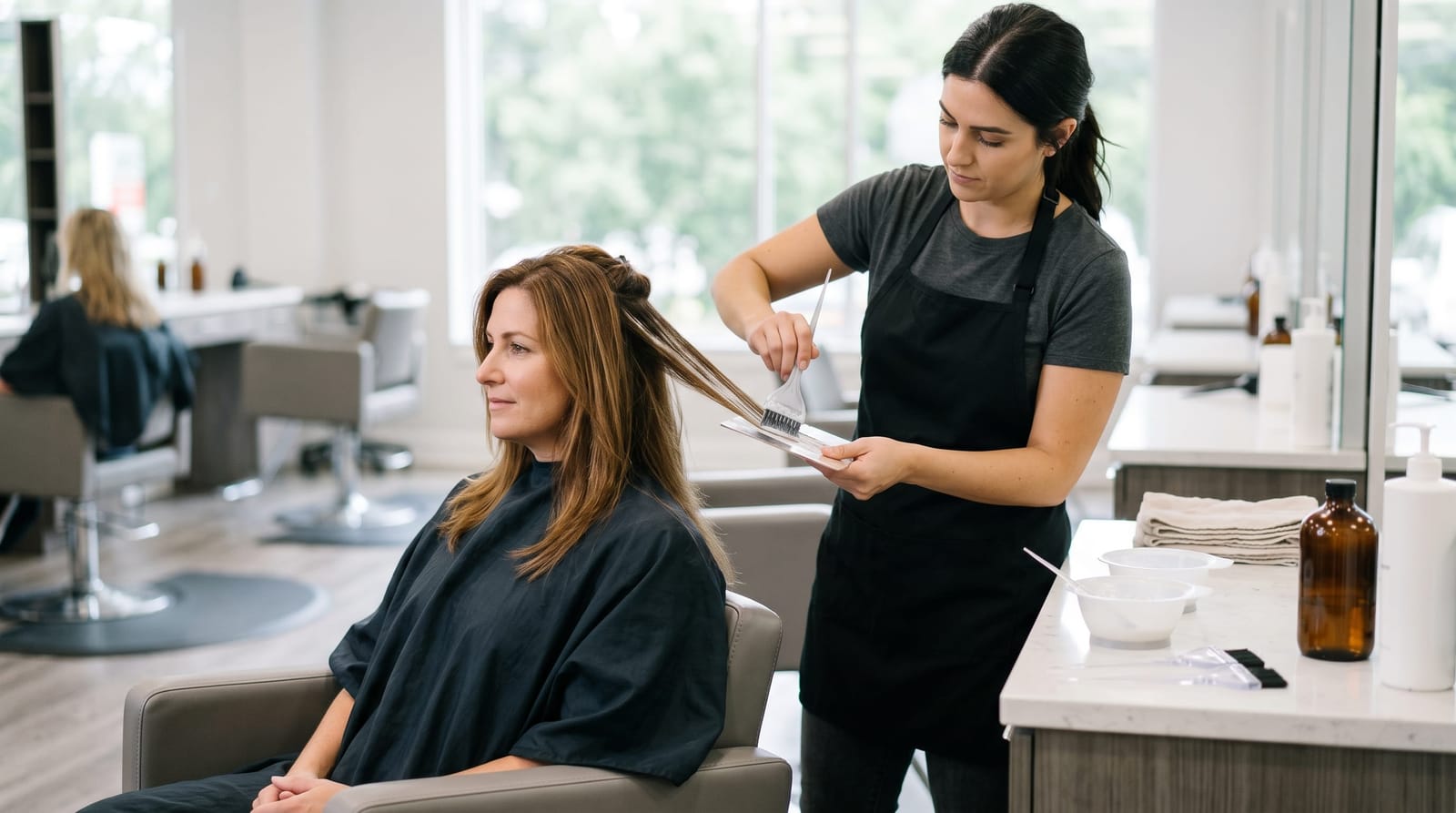
Walking into a professional root touch up salon near me for the first time can feel uncertain if you don't know what the process involves. Here's what a professional root touch-up appointment at Meraki Salon & Spa looks like from start to finish.
Formula Consultation and Hair Assessment
Before a single drop of color is mixed, your colorist will review your color history and assess your current hair. This includes looking at the shade of your regrowth, evaluating how much the existing color has faded or shifted in tone, and checking the condition of your hair's ends and mid-lengths. If your hair has become more porous over time, your colorist may need to adjust the formula to prevent uneven absorption.
At Meraki, we keep detailed records of every client's formula. This means even if your usual colorist is unavailable, any member of our team can replicate your results with precision: a critical benefit that walk-in or budget salons rarely offer.
Application and Processing
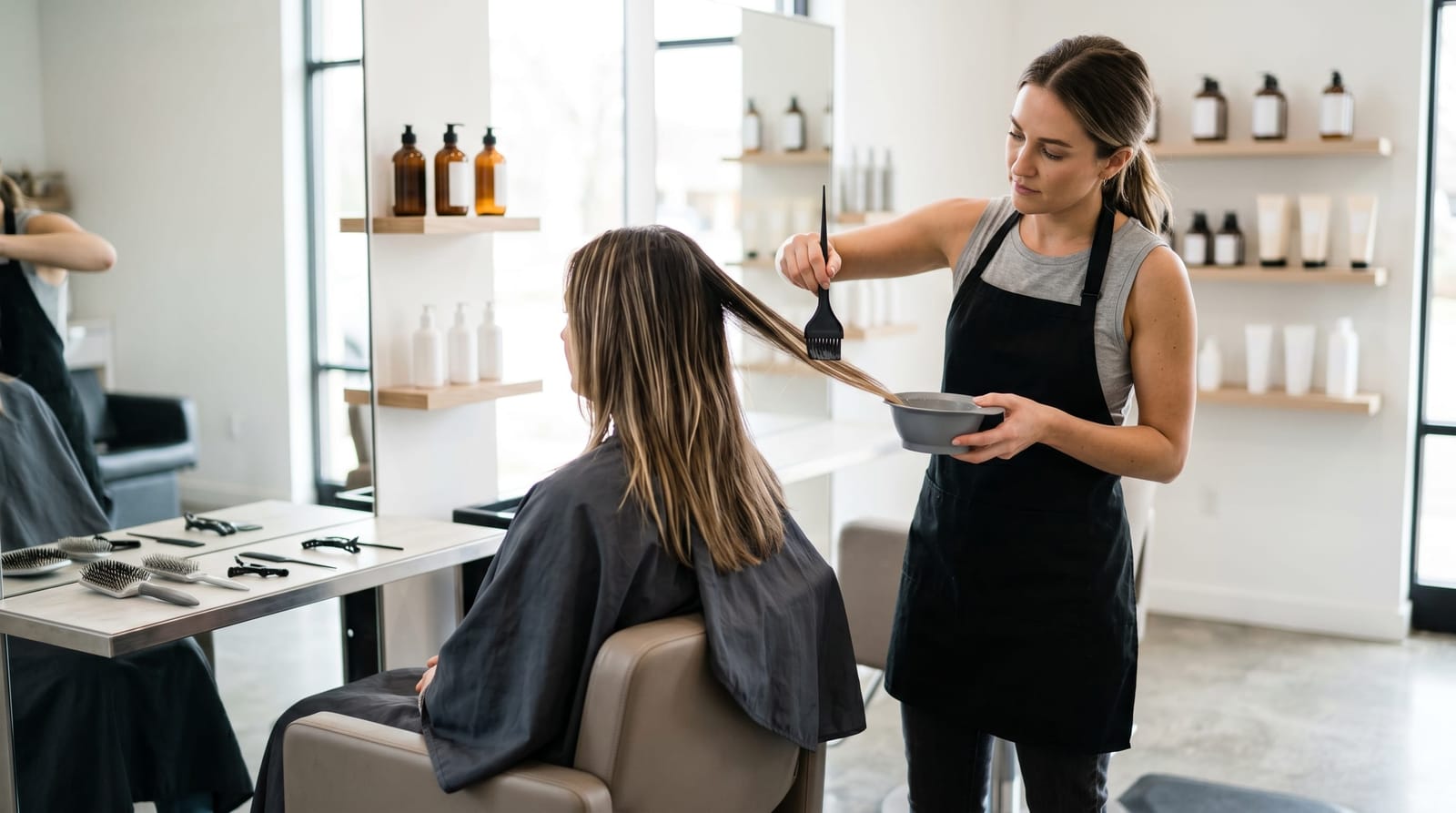
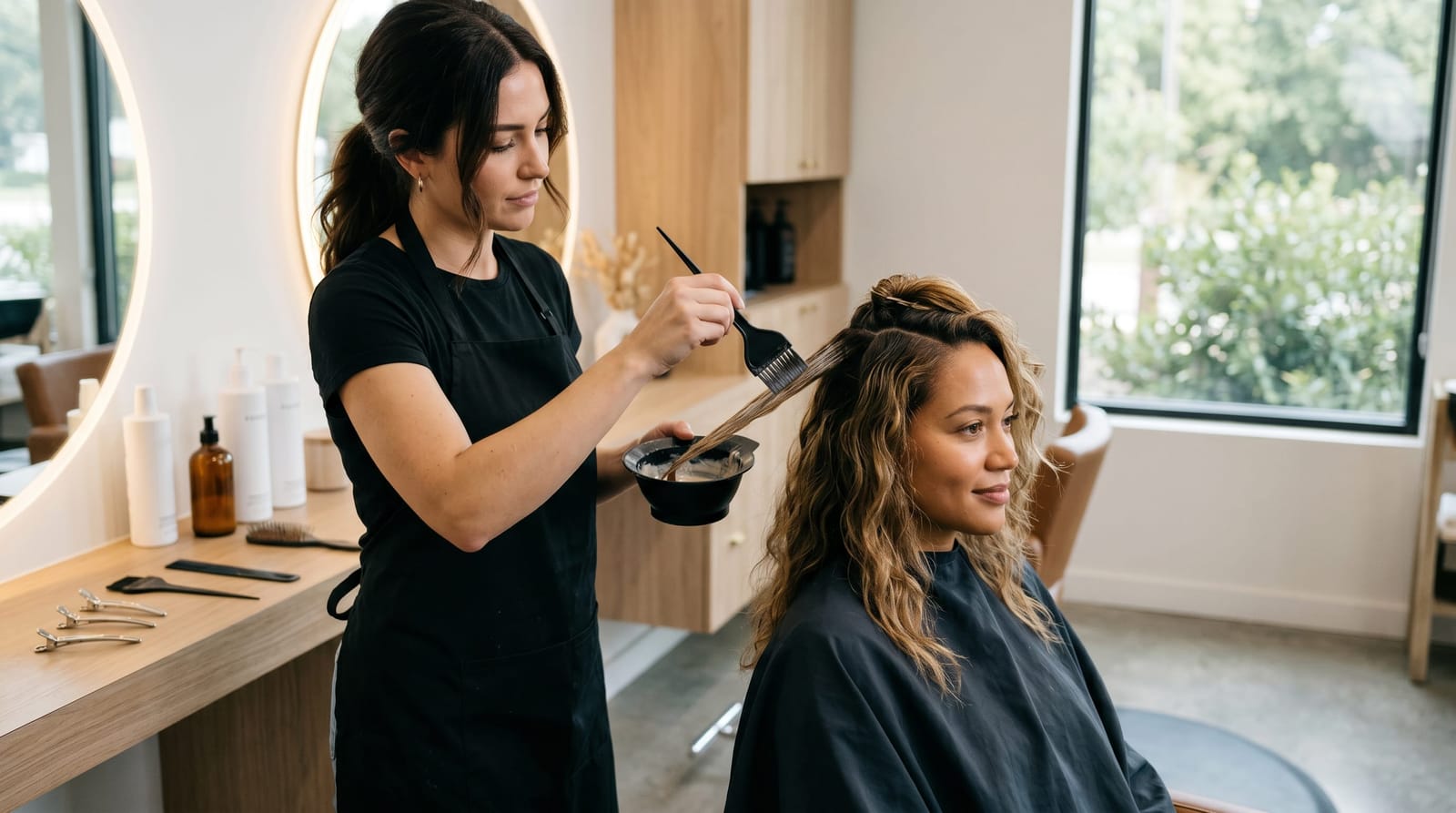
Color is applied meticulously to the regrowth area only, not dragged through the lengths unnecessarily, which can cause over-processing, fading, and damage over time. Processing time typically runs between 20 and 45 minutes depending on the color target and your natural level. For gray coverage, full saturation time is particularly important; studies in professional color education show that gray hair requires up to 20% more processing time than pigmented hair to achieve complete coverage.
Toning and Finishing
Once the root color is rinsed, many clients benefit from a gloss or toner to refresh the mid-lengths and ends that may have faded since the last appointment. This step ensures the entire result looks cohesive rather than freshly touched up in one area only. Toners also add shine and can extend the vibrancy of your color by several additional weeks.
Color Matching: The Technical Art Behind Seamless Results
Color matching is arguably the most technically demanding part of any root touch-up service. It's also the area where the difference between a highly trained colorist and an untrained technician is most obvious. A shade that's even half a level off will create a visible band at the demarcation line: the border between new growth and existing color.
Professional colorists use a structured level system (1-10, from darkest black to lightest blonde) combined with tonal notation to identify and replicate color formulas. They also account for the fact that your existing color is not a single consistent shade: it may be slightly darker near the roots (due to shading), lighter at the mid-lengths, and potentially warmer or cooler at the ends depending on how long it's been since your last service.
At Meraki, our colorists are trained in advanced color theory and blending techniques that go well beyond basic application. This expertise is part of what distinguishes a color-focused boutique salon from a quick-service chain. If you're considering a more dramatic change alongside your root maintenance, our team can discuss options like a hair color transformation in Westfield NJ that integrates your root work into a larger, intentional color journey.
Building a Maintenance Plan for Your Hair Type
A smart maintenance plan doesn't just account for when to book your next appointment: it considers the full ecosystem of how you care for your color between visits. Different hair types require different approaches.
Fine or Chemically Processed Hair
Fine hair and hair that has been lightened or chemically relaxed tends to be more porous, meaning it absorbs and releases color faster. Clients with fine hair often benefit from slightly shorter intervals between root touch-ups (every 4-5 weeks for all-over color) and regular glossing treatments to maintain vibrancy. Using sulfate-free shampoo and UV-protective styling products can extend color longevity by up to 30%.
Coarse or Resistant Hair
Coarse, resistant hair, including many gray hair textures, may require longer processing times and higher-volume developers to ensure thorough color penetration. These clients often benefit from a "pre-softening" step before color application. Intervals can sometimes stretch slightly longer because regrowth may be less visually dramatic, but this varies significantly by individual.
Highlighted or Balayage-Maintained Hair
Clients maintaining a highlighted or balayage look have the most flexibility in their scheduling, but they still benefit from regular toner and gloss appointments between full highlight sessions. A glossing treatment every 4-6 weeks can keep blondes bright and brunettes rich without requiring a full highlight appointment each time. To understand how these two foundational techniques differ and which approach best suits your hair, explore our breakdown of balayage in Mountainside NJ versus traditional foil highlights.
At-Home Color Touch-Ups vs. Professional Services: The Real Comparison
It's worth addressing the question that many color clients eventually ask: "Can I just use a box color for my roots between salon visits?" The honest answer is that at-home root touch-up products have improved, but they carry real risks that most clients underestimate.
Box color formulas use standardized developer strengths, typically 20 volume, regardless of your hair's current condition or porosity. This one-size approach means the color may process unevenly, deposit too dark, or create a noticeable line where the at-home color meets your professionally colored lengths. Research from professional cosmetology associations estimates that up to 72% of color correction appointments in salons are at least partially the result of at-home color application gone wrong.
For touch-ups between visits, professional alternatives like root concealer sprays or powders offer a safe, temporary solution that doesn't compromise your next salon appointment. When it's time for a true touch-up, trusting a trained colorist at a dedicated root touch up salon near me like Meraki is always the safer investment.
Related Detail Topics Worth Exploring
Root touch-up services connect to several more specific topics that