Can a Deep Conditioning Treatment Help With Frizz?
If you have curly, wavy, or textured hair, frizz is probably a familiar frustration, and you've likely tried more than a few products promising to tame it. But here's the thing: most frizz-fighting products work on the surface, smoothing things over temporarily without addressing what's actually causing the problem. A professional deep conditioning treatment salon service goes a step further by targeting the real root of frizz: moisture imbalance inside the hair strand itself. In this post, we'll break down exactly why frizz happens, how deep conditioning helps, and when a salon treatment is worth it.
Why Frizz Happens in the First Place
Frizz isn't random: it's your hair responding to a moisture imbalance. Each strand of hair is surrounded by a protective outer layer called the cuticle, which is made up of tiny overlapping scales, much like shingles on a roof. When those scales lie flat and smooth, moisture stays locked inside the strand and your hair looks sleek, defined, and shiny. When the cuticle is lifted or damaged, moisture escapes, and outside humidity rushes in to fill the gap. The result? Frizz, puffiness, and loss of curl definition.
Several factors can disrupt the cuticle over time, including heat styling, chemical services like color and relaxers, environmental exposure, and simply washing your hair with products that are too harsh or alkaline. Studies have shown that hair's natural pH sits between 4.5 and 5.5, and exposure to alkaline products, even many everyday shampoos, can cause the cuticle to swell and lift, making hair more vulnerable to frizz with every wash.
The bottom line: frizz is a symptom of dehydrated, compromised hair. Treating it with a light serum or anti-frizz spray may offer a temporary visual fix, but it doesn't restore what the cuticle has lost. That's where deep conditioning comes in.
What a Deep Conditioning Treatment Actually Does
A deep conditioning treatment is a concentrated, moisture-rich service designed to penetrate beyond the surface of the hair and replenish hydration from the inside out. Unlike a regular conditioner, which is rinsed out in the shower after a minute or two, a deep conditioning treatment is formulated with higher concentrations of humectants, emollients, and proteins that need time to absorb into the hair's inner structure (called the cortex) to work effectively.
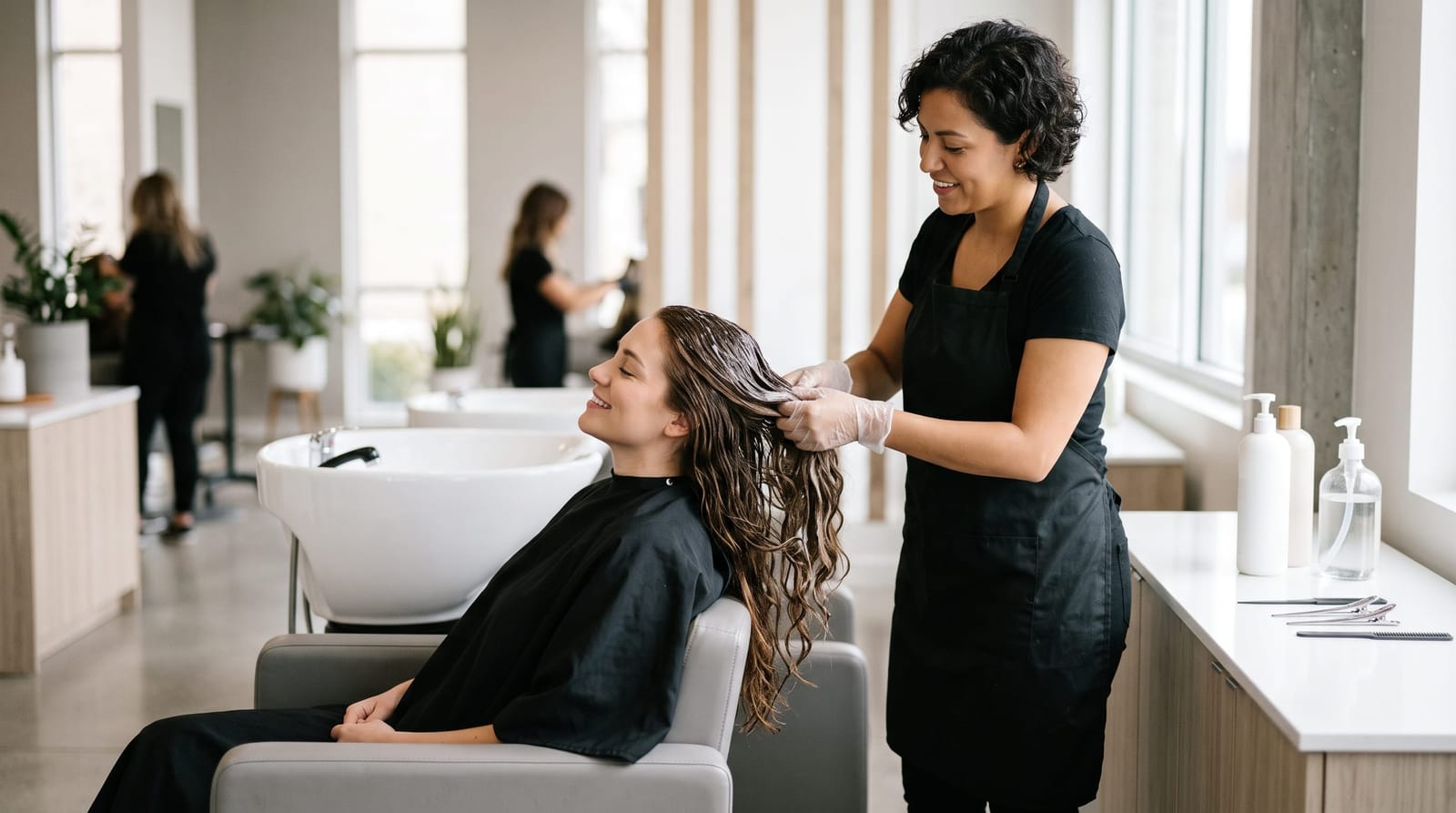
Most professional deep conditioning treatments are left on the hair for anywhere from 10 to 30 minutes, often with the help of gentle heat to open the cuticle and allow the ingredients to penetrate more deeply. Once rinsed, the cuticle closes back down: this time around a strand that's been properly replenished with moisture. The result is smoother, more hydrated hair that's better equipped to resist humidity and stay frizz-free.
Research suggests that well-hydrated hair can retain up to 30% more elasticity than dry, brittle hair: meaning it's not only less frizzy, but also more resilient and less prone to breakage. At a deep conditioning treatment salon like Meraki, professional-grade formulas go well beyond what you'll find on a drugstore shelf, often combining hydrating agents with bond-building and smoothing technologies for more comprehensive results.
Salon Treatments vs. At-Home Deep Conditioners: What's the Difference?
At-home deep conditioning masks are a valuable part of any hair care routine, and we genuinely encourage using them regularly. But there are meaningful differences between at-home products and what you receive during a professional service, and understanding those differences helps you make smarter decisions for your hair.
Over-the-counter deep conditioners typically contain lower concentrations of active ingredients due to safety regulations for consumer products. They're also formulated to work without professional guidance, which means they're designed to be more general, not calibrated to your specific hair type, texture, porosity, or damage level. High-porosity hair (hair that absorbs moisture quickly but loses it just as fast) needs a different approach than low-porosity hair, which resists moisture absorption altogether.
At a salon, a stylist can assess your hair's porosity and condition before recommending a targeted treatment. Professional formulas, such as Kérastase Fusio-Dose, Olaplex No. 8, or similar bond-building and moisture-restoring systems: are more concentrated and often work in combination with professional application techniques like steaming or infrared heat. Many clients notice that a single professional deep conditioning session delivers results that feel noticeably different from weeks of at-home masking, not because at-home care doesn't matter, but because the two approaches work best together.
When Is a Professional Deep Conditioning Treatment Worth It?
Deep conditioning at home is ideal for maintenance between salon visits. But there are specific situations where booking a professional deep conditioning treatment salon appointment makes a real difference in your results.
- After a chemical service. Color, bleaching, perms, and relaxers all alter the internal structure of the hair. A professional conditioning treatment immediately following these services helps restore moisture and reduce post-process frizz and dryness.
- Seasonal transitions. Summer heat and humidity pull moisture from the hair, while winter cold and dry indoor air do the same. Many clients schedule professional treatments in September and March to reset their hair's hydration levels as the seasons shift.
- Before a major event. A deep conditioning treatment 2-3 days before a wedding, photoshoot, or special occasion helps your hair look and behave at its absolute best.
- When frizz feels persistent and unmanageable. If your at-home routine isn't cutting it and your curls or waves are consistently undefined and frizzy, it's often a sign your hair needs professional intervention to reset its moisture baseline.
For guidance on how often to schedule professional and at-home sessions, our post on deep conditioning frequency walks through a practical schedule based on hair type and lifestyle.
What to Expect During a Salon Deep Conditioning Session
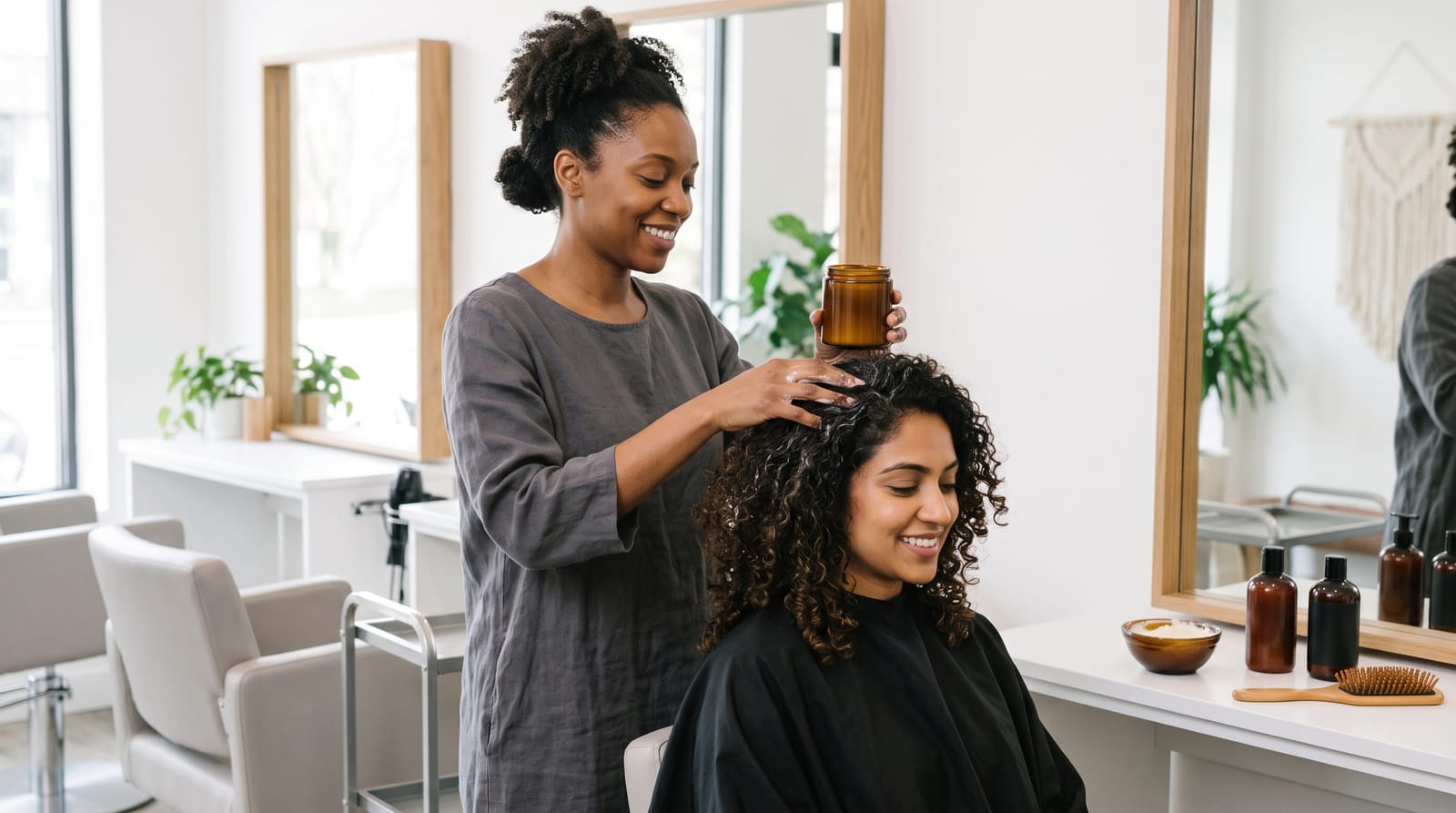
If you've never had a professional deep conditioning treatment, it's a genuinely relaxing experience: part hair care, part self-care. At Meraki, the process typically begins with a brief consultation so your stylist can assess your hair's texture, porosity, and current condition. From there, the right treatment formula is selected and applied evenly through clean, towel-dried hair.
Most treatments process for 15 to 30 minutes, sometimes with the addition of a hooded dryer or steamer to help the product penetrate more effectively. After rinsing, many clients notice an immediate difference in how their hair feels: softer, more elastic, and noticeably smoother. Results from a professional session typically last 4 to 6 weeks, though this varies depending on how porous your hair is and how you care for it between appointments.
Frequently Asked Questions
Will a deep conditioning treatment make my hair greasy or weighed down?
Not when it's applied correctly and rinsed thoroughly. Professional stylists select treatments based on your hair type: lighter, moisture-focused formulas for fine or low-porosity hair, and richer formulas for coarse, high-porosity, or heavily processed hair. Over-the-counter masks can sometimes feel heavy if they're not the right match for your texture, which is one reason a personalized in-salon treatment often feels more balanced.
How long do the frizz-reducing results last after a salon treatment?
Most clients experience noticeably smoother, more manageable hair for 4 to 6 weeks following a professional deep conditioning session. Results can vary based on your hair's porosity, how often you wash, the products you use at home, and environmental factors like humidity. Maintaining moisture with a gentle, sulfate-free shampoo between appointments helps extend your results.
Is deep conditioning the same as a keratin treatment?
No: these are different services. A deep conditioning treatment restores hydration and smooths the cuticle using moisture-based ingredients. A keratin treatment is a smoothing service that coats the hair with a keratin protein formula to temporarily reduce curl pattern and frizz for several months. Deep conditioning is a hydration reset; keratin is a longer-term structural smoothing service. Both can be part of a healthy hair care plan, but they serve different purposes.
Can I deep condition too often?
Yes: over-conditioning is possible, particularly with protein-rich treatments. Using a protein-based deep conditioner too frequently can cause hair to feel stiff, brittle, or snappy. Moisture-focused treatments are generally gentler and can be used more regularly, but finding the right balance for your specific hair type matters. A stylist can help you figure out the right cadence for both at-home and professional sessions.
The Bottom Line on Deep Conditioning and Frizz
Frizz is almost always a sign that your hair is thirsty, and a deep conditioning treatment is one of the most effective ways to address that at the source. Rather than simply coating the strand to create the appearance of smoothness, deep conditioning works to restore hydration inside the hair and help the cuticle lie flat, giving you results that last and actually improve your hair's health over time. Whether you're managing curly, wavy, or textured hair, professional conditioning is a smart investment in your overall curl care routine, and at Meraki, we're here to help you figure out exactly what your hair needs.