Curly Hair Styling Tips: How to Enhance and Define Your Natural Curls
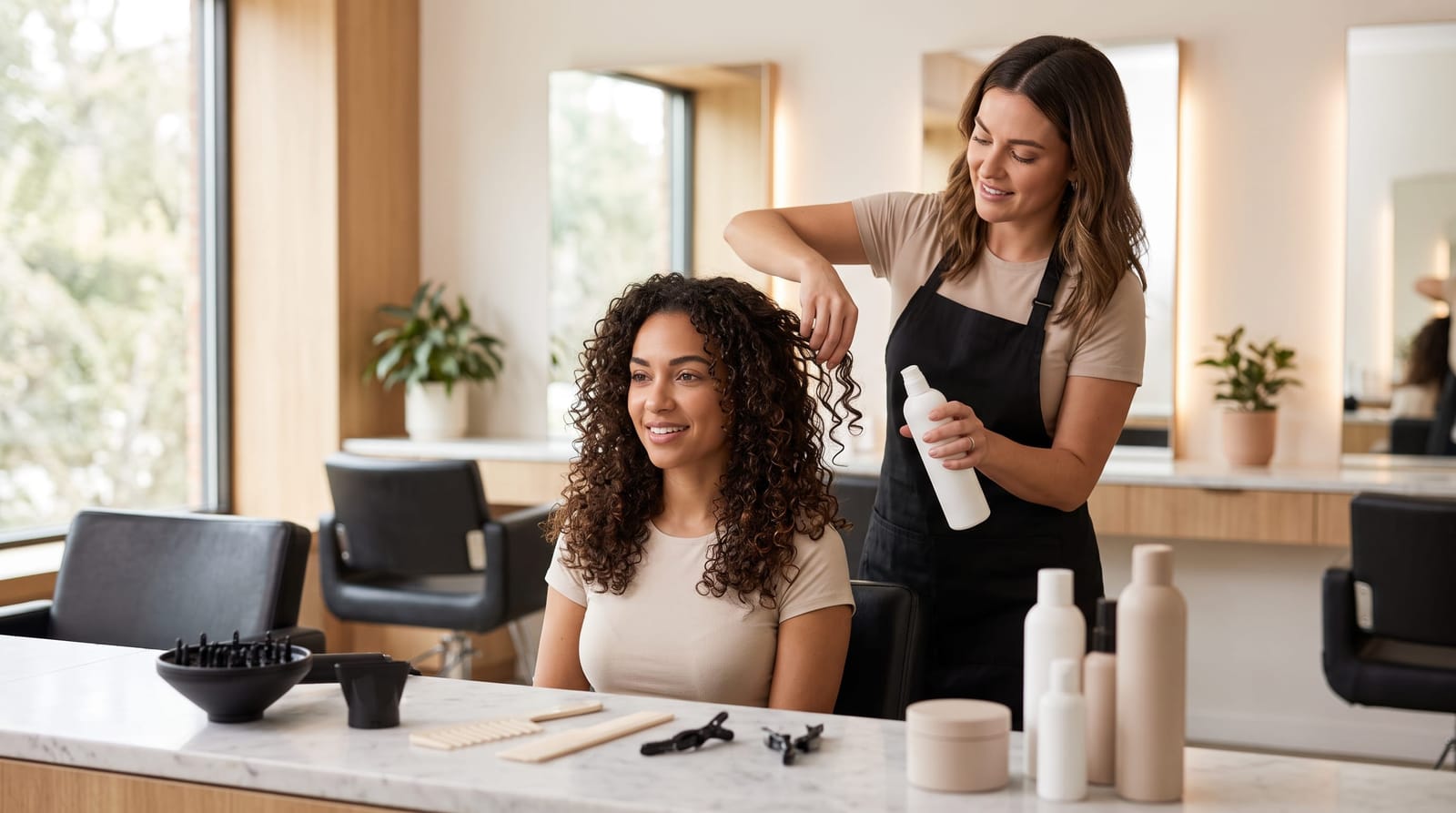
Curly and textured hair is beautiful, and it deserves a styling approach that truly honors it. Whether you have loose waves that need a little encouragement or tight coils that want definition and moisture, the right techniques make all the difference. This post is part of our broader guide to curly and textured hair care in NJ, which covers everything from curl-specific cuts to salon services designed for your unique hair type. Here, we focus entirely on styling. You'll learn the key techniques, diffusing, plopping, finger-coiling, and product layering, along with which approaches work best for your specific curl pattern. Think of this as your go-to reference for building a styling routine that actually works with your hair, not against it.
Understanding Your Curl Type First
Before diving into curly hair styling tips, it helps to understand where your curls fall on the texture spectrum. Curl types are generally grouped into three main categories: wavy (Type 2), curly (Type 3), and coily (Type 4). Each category has subcategories, A, B, and C, that reflect how tight or loose the pattern is.
Wavy Hair: Types 2A, 2B, and 2C
Wavy hair tends to be a mix of straight and curly. Type 2A is loose and fine, with a gentle S-shape. Type 2B has more defined waves with some frizz. Type 2C sits closer to curly, with tighter waves and natural volume. Wavy hair is often prone to going flat at the roots and frizzy at the ends. Lightweight products and techniques like scrunching work especially well for this type.
Curly Hair: Types 3A, 3B, and 3C
Type 3 curls range from loose spirals (3A) to springy ringlets (3B) to tight, dense corkscrews (3C). These curl types thrive with moisture and definition. They're prone to frizz when dry, so styling on wet or damp hair is essential. Heavier creams and gels tend to perform better here than they do on wavy hair.
Coily Hair: Types 4A, 4B, and 4C
Coily hair has the tightest curl patterns. Type 4A has visible S-shaped coils. Type 4B has a Z-shaped pattern with less definition. Type 4C has very tight coils with minimal curl clumping. This hair type is the most prone to dryness and shrinkage. Rich, nourishing products and techniques that stretch or define coils without heat are key.
Knowing your curl type gives you a starting point. It tells you how much moisture your hair needs, which products to reach for, and how to adjust your styling routine season to season.
The Art of Product Layering for Curly Hair
One of the most common curly hair styling tips professionals share is this: product order matters. Layering products in the right sequence creates definition, locks in moisture, and reduces frizz without weighing your curls down.
The Basic Layering Order
Start with a leave-in conditioner on wet hair. This is your moisture base. It softens the hair and helps everything else absorb better. Next, apply a curl cream or styling cream to add definition and hold the curl pattern. Finally, seal everything with a gel or mousse to lock in the style and reduce frizz as hair dries.
For wavy hair (2A: 2C), use lightweight versions of each product. Heavy creams can pull waves flat. For curly hair (3A: 3C), a medium-hold gel works beautifully over a curl cream. For coily hair (4A, 4C), don't be afraid of richer butters and oils in place of, or in addition to, a standard leave-in.
Avoiding Product Overload
More product doesn't always mean more definition. Too much can cause buildup, weigh curls down, or leave hair feeling crunchy. Use a quarter-size amount of each product and add more only if needed. The goal is hydrated, bouncy curls, not stiff or greasy ones.
Ingredients Worth Looking For
Look for products with humectants like glycerin or aloe vera. These attract moisture to the hair. Nourishing ingredients like shea butter, argan oil, and coconut oil are excellent for coily hair types. For fine wavy hair, lighter ingredients like flaxseed or marshmallow root give hold without heaviness.
Key Curly Hair Styling Techniques
The technique you use to apply and dry your products is just as important as the products themselves. These are the most effective methods used by curl stylists and clients who've mastered their routines.
Scrunching
Scrunching is simple, effective, and works for nearly every curl type. With product applied to wet hair, take sections and gently press them upward toward your scalp using a cupped hand. Repeat throughout your hair. This encourages the hair to clump into its natural pattern. For wavy hair especially, scrunching at the end of your styling routine helps create tighter, more defined waves.
Finger-Coiling
Finger-coiling is one of the best curly hair styling tips for adding definition to looser or inconsistent curl patterns. Take a small section of wet, product-coated hair and wrap it around your finger from root to tip. Slide your finger out gently. This technique works especially well for Type 3 curls and can be used all over or just on sections that need extra definition. It's time-intensive but the results are worth it.
Plopping
Plopping is a technique that uses a cotton T-shirt or microfiber towel to absorb excess water after washing, without disrupting your curl pattern. After applying your products, flip your hair forward onto the fabric, fold the edges around your head, and leave it for 15-30 minutes. Plopping reduces frizz by eliminating the roughness of a regular towel, and it encourages curl clumping naturally. It's especially popular among Type 2 and Type 3 curl clients.
Diffusing
Air drying is gentle, but diffusing speeds up the process while maintaining curl definition. A diffuser attachment distributes airflow evenly so curls don't get blown apart. Use a low to medium heat setting. Cup sections of hair into the diffuser bowl and hold for 30-60 seconds before moving to the next section. Work your way up toward the roots. Diffusing adds volume and reduces the time spent waiting for hair to dry, which is a major win during humid NJ summers.
Shingling
Shingling involves applying product to very small sections of hair and smoothing it through each curl individually. It's a time-intensive method, but it delivers exceptional definition and frizz control. It's most effective for Type 3C and Type 4 hair, where individual curl definition can be harder to achieve with scrunching alone.
Styling Tips by Curl Type
General curly hair styling tips are a great starting point. But refining your approach based on your specific curl pattern takes your results further.
For Wavy Hair (2A: 2C)
Focus on lightweight products. Avoid anything that feels thick or heavy in your hand: it will likely weigh your waves flat. Scrunch with a microfiber towel after applying product, then either air dry or diffuse on low. Avoid touching your hair while it dries. The more you handle it, the more frizz you'll get.
For Curly Hair (3A: 3C)
Apply products in sections while hair is soaking wet. This helps ensure even coverage. Use the "prayer hands" method, smoothing product down the hair shaft, before scrunching for lift. Diffuse until hair is about 80% dry, then let it finish air drying. Once fully dry, scrunch out any crunchiness left behind by gel.
For Coily Hair (4A: 4C)
Moisture is everything. Use a generous amount of leave-in conditioner, then layer a butter or cream on top. Finger-coiling or shingling works beautifully to define individual coils. If you're stretching your coils without heat, try banding (using small hair ties loosely down the length of a section as it dries) or twisting to set the pattern. Protective styles like twist-outs also work wonderfully for 4B and 4C hair.
Building a Consistent Curl Routine
Great curly hair doesn't happen by accident. It comes from a routine: one that evolves as you learn your hair. These curly hair styling tips become second nature once you practice them consistently.
Wash day doesn't have to be daily. Most curl types do better with weekly or bi-weekly washing. On non-wash days, refresh with a light mist of water and a small amount of your styling cream or a curl refresher spray. Scrunch gently and let it reset.
Protect your curls at night with a silk or satin pillowcase or a loose pineapple (a high, loose ponytail on top of your head). Both options minimize friction and preserve your curl pattern while you sleep.
Seasonal adjustments matter too. Humidity in New Jersey summers can cause frizz and over-definition. Winter air is dry and strips moisture quickly. Your products and techniques may need small tweaks to keep up.
When Professional Styling Makes a Difference
Learning to style curls at home is empowering. But there's real value in working with a stylist who specializes in curly and textured hair. A great curl stylist does more than cut: they observe how your hair behaves, assess your porosity and texture, and help you understand what your hair actually needs.
At Meraki Salon in NJ, our stylists are trained in curl-specific techniques including dry cutting and curl pattern analysis. We offer styling appointments where you can watch the process, ask questions, and leave with a routine you can replicate at home. Whether you're trying to figure out your curl type, rework your product routine, or learn how to diffuse properly, our team is here to help.
If you've ever had a great blowout and wondered how to get your curls back beautifully afterward, check out our detailed post on curly hair styling tips for restoring your curl pattern after heat styling: it's full of practical guidance for making that transition smooth.
Explore More Curly Hair Topics
Styling is just one piece of the curly hair puzzle. If you're ready to go deeper, here are a few related topics worth exploring:
- How curl-specific cutting techniques (like DevaCut and dry cutting) preserve your natural shape
- Building a curl-friendly wash day routine with the right cleansers and conditioners
- Understanding hair porosity and how it affects how your curls absorb and hold moisture
- The best salon treatments for adding moisture and improving curl definition
Each of these topics connects back to building a complete, sustainable routine for your curls: one that fits your hair type, your lifestyle, and your goals.
Final Thoughts
Curly hair styling doesn't have to be complicated. Start with the right products for your curl type, apply them in the right order, and use techniques like scrunching, finger-coiling, plopping, and diffusing to bring out your natural pattern. Small adjustments, the tools you use, the order you layer products, how you sleep, add up to a big difference over time.
If you're ready to take your curl routine to the next level with expert guidance, we'd love to help. Book a curl styling appointment at Meraki Salon in NJ and leave with the knowledge and confidence to make every day a great curl day.