Does Keratin Treatment Work on Fine Hair?
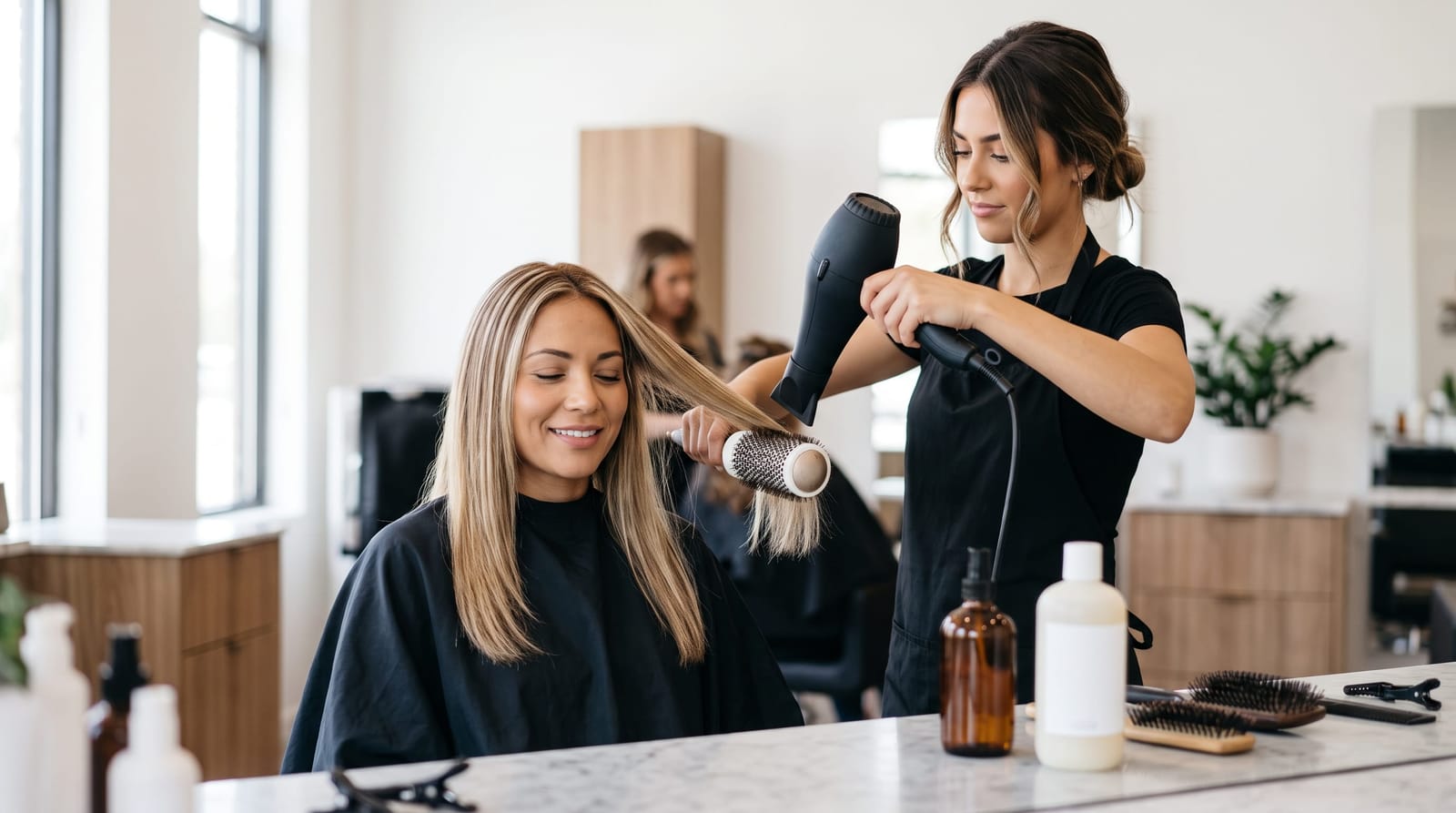
If you have fine hair, you've probably had a moment of hesitation before booking a smoothing treatment. Will it leave your hair limp? Will you lose the little volume you already have? These are completely valid questions, and the good news is that keratin treatment for hair types like yours doesn't have to mean flat, weighed-down strands. With the right formula and a skilled stylist who understands fine texture, keratin can actually be one of the best things you do for your hair this season.
Why Fine Hair Clients Hesitate: and Why That Hesitation Is Worth Addressing
Fine hair has a smaller strand diameter than medium or thick hair, which means it can be more sensitive to product buildup and weight. It's a very real concern: not every keratin formula is designed with fine strands in mind. Some heavier treatments, particularly those formulated for coarser or very curly textures, can deposit more protein than fine hair actually needs, which is where the fear of flatness comes from.
Here's what the research backs up: keratin treatments work across all hair types, including fine hair, when the formula is properly matched to the texture. Studies and professional stylist surveys consistently show that clients with fine hair report improved manageability and reduced frizz without significant volume loss when a lighter formula is applied correctly. In fact, a well-calibrated keratin treatment can actually make fine hair appear fuller and healthier because the cuticle lies flat, reflecting light more evenly.
The key isn't whether keratin works on fine hair: it absolutely can. The key is knowing which formula to use and how much to apply. That's where a consultation with an experienced stylist makes all the difference.
Which Keratin Formulas Work Best for Fine Hair?
Not all smoothing treatments are created equal, and understanding the spectrum of options helps fine-haired clients feel more confident going into their appointment. Generally speaking, keratin treatments fall into a few categories based on their intensity:
- Express or lite keratin treatments: These lighter formulas are specifically designed for finer textures. They deposit a thinner layer of smoothing proteins, tame frizz, and add shine without the heavy saturation that can flatten fine strands. Results typically last 6 to 8 weeks.
- Standard keratin smoothing treatments: A full treatment applied with a fine-hair technique, using less product and a lighter pass with the flat iron. When done correctly by a specialist, results can last 3 to 4 months without compromising body.
- Deep smoothing or restructuring treatments: These are generally better suited for thicker, coarser, or heavily textured hair and are typically not recommended as a first approach for fine strands.
At Meraki Salon, stylists assess strand diameter, density, and overall hair condition before recommending any keratin treatment for hair types that fall into the fine category. No two fine-haired clients are identical: someone with fine hair and high density needs a different approach than someone with fine hair that's also low density or color-treated.
How Meraki's Specialists Adjust the Treatment for Fine Textures
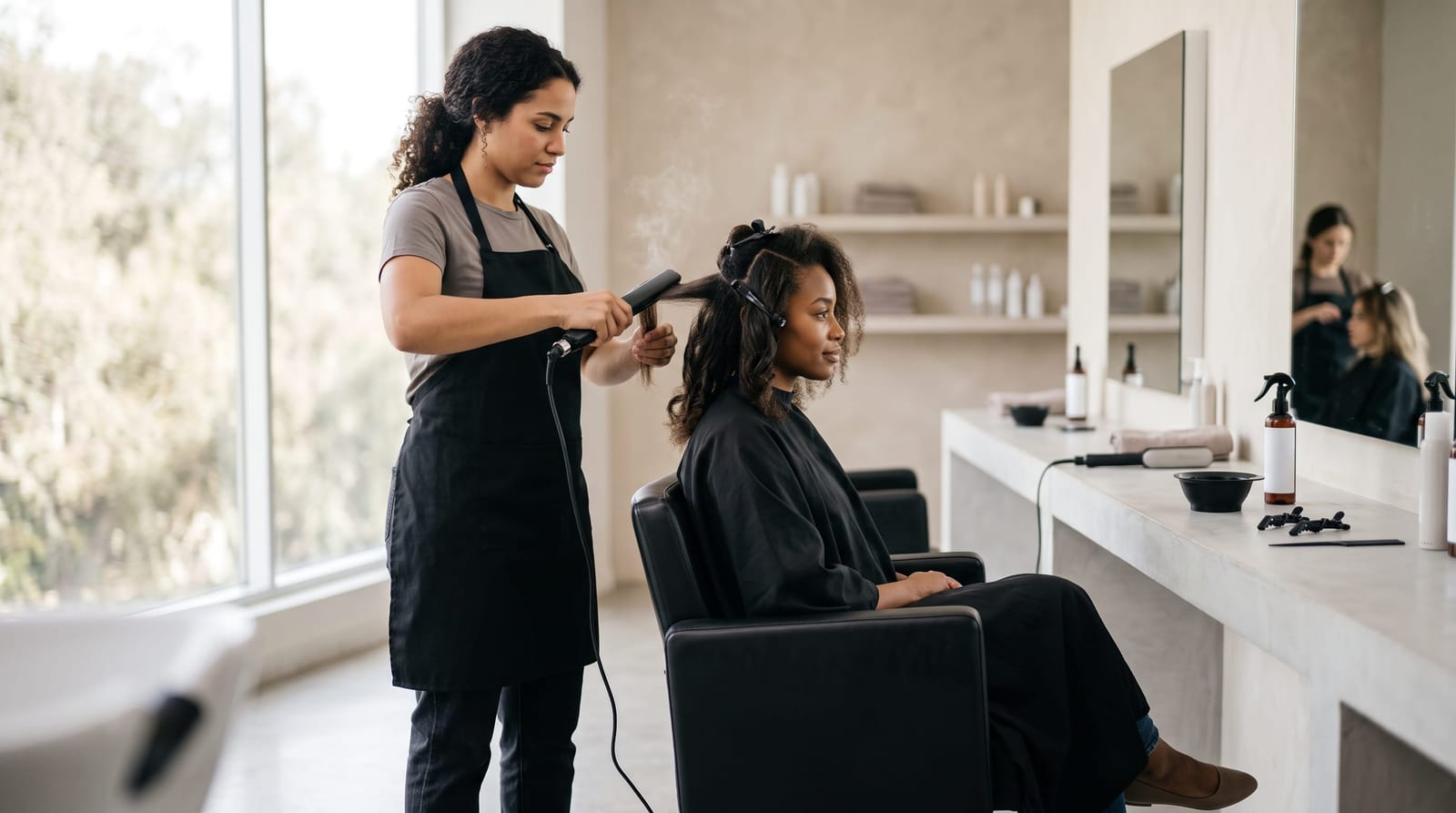
The application process for fine hair looks noticeably different from the way a stylist would approach thick or coarse hair, and those adjustments are intentional. Here's what a fine-hair keratin appointment at Meraki typically involves:
- A lighter product application: Stylists use a minimal amount of keratin formula, focusing on even distribution rather than saturation. Fine hair doesn't need, and shouldn't receive, the same volume of product used on thicker strands.
- Thinner sectioning: Working in smaller sections allows for precise control and prevents uneven buildup that can make fine hair feel heavy near the roots.
- Lower flat iron temperature: Fine hair processes at a lower heat point than coarse hair. Using the correct temperature protects the integrity of each strand while still sealing the treatment effectively.
- Root-to-mid focus vs. roots: Keeping the product slightly away from the root area helps maintain lift at the crown, preserving that natural volume fine-haired clients care about most.
These aren't shortcuts: they're precision techniques. Clients with fine hair who've had keratin treatments at volume-focused salons often walk away disappointed. The same treatment, done by a specialist who understands fine texture, produces a completely different result.
What to Realistically Expect: Results for Fine Hair
Setting realistic expectations is part of what makes a keratin consultation at Meraki so valuable. Here's what fine-haired clients can generally expect from a properly applied smoothing treatment:
- Frizz reduction of 70 to 95 percent: Depending on the formula used and the client's natural texture, most clients see a dramatic reduction in frizz and flyaways.
- Improved shine and smoothness: Fine hair often struggles with a dull, frayed appearance due to raised cuticles. Keratin seals the cuticle flat, dramatically improving how light reflects off each strand.
- Faster morning routines, Many clients report cutting their blow-dry time in half, some down to 10 to 15 minutes from 30 or more.
- Retained body and movement, When applied correctly, fine hair keeps its natural body and isn't pressed into a flat, lifeless shape. The goal is smooth and soft, not straight and stiff.
- Results lasting 3 to 5 months, With proper aftercare, sulfate-free shampoo, minimal water exposure in the first few days post-treatment, results hold beautifully for months.
If you're also curious about how these adjustments compare to the experience for curlier textures, keratin treatment hair types vary significantly in technique and outcome, and understanding those differences can help you feel more informed before your appointment.
Preparing Your Fine Hair for a Keratin Treatment
A little preparation goes a long way in ensuring the best possible result for fine strands. Here's what Meraki's stylists recommend before your appointment:
- Wash your hair with a clarifying shampoo 24 to 48 hours before your treatment to remove any product buildup or silicone residue that might block absorption.
- Avoid applying any dry shampoo, volumizing sprays, or styling products on the day of your appointment.
- Let your stylist know if your hair is color-treated, highlighted, or has had any chemical services in the past 6 months: this affects which formula is safest and most effective for your strands.
- Discuss your goals honestly: if maintaining volume is a top priority, say so. Your stylist can calibrate the treatment accordingly.
Frequently Asked Questions
Will a keratin treatment make my fine hair look flat or lifeless?
Not when it's done correctly. The key is using a lighter formula and adjusting the application technique for fine strands. A skilled stylist will keep the product away from the roots to preserve volume and use a lower iron temperature to avoid over-processing. The result should be smooth, shiny, and manageable hair that still has natural body and movement.
How long does a keratin treatment last on fine hair?
Most fine-haired clients see results that last between 3 and 5 months. Because fine hair tends to be more porous, especially if it's color-treated, using a sulfate-free shampoo and minimizing washing frequency can help extend the treatment's longevity significantly.
Is keratin treatment safe for fine hair that's been color-treated or highlighted?
Generally, yes, but the timing and formula matter. Ideally, color or highlight services should be done before a keratin treatment rather than immediately after. Your Meraki stylist will assess the condition of your hair and recommend the safest approach based on your specific color history and strand strength.
How is a keratin treatment different from a relaxer for fine hair?
A keratin smoothing treatment and a relaxer are very different services. A relaxer permanently alters the hair's internal structure using chemicals, which can be quite harsh on fine strands. A keratin treatment coats the outside of the hair shaft with a smoothing protein barrier, reducing frizz and improving texture without permanently changing your curl or wave pattern. The results are temporary and far gentler on fine hair.
The Bottom Line for Fine-Haired Clients
Keratin treatment for hair types like fine and delicate doesn't have to be a gamble. When the formula is matched to your texture and the application is adjusted by a stylist who truly understands fine hair, the results can be transformative in the best possible way: smooth, shiny, manageable hair that still moves and feels like yours. At Meraki Salon, every smoothing treatment begins with a personalized consultation because no two heads of hair are the same. If you've been on the fence, this might be exactly the season to try it.