How a Hair Glaze Can Refresh Your Color Between Balayage Appointments
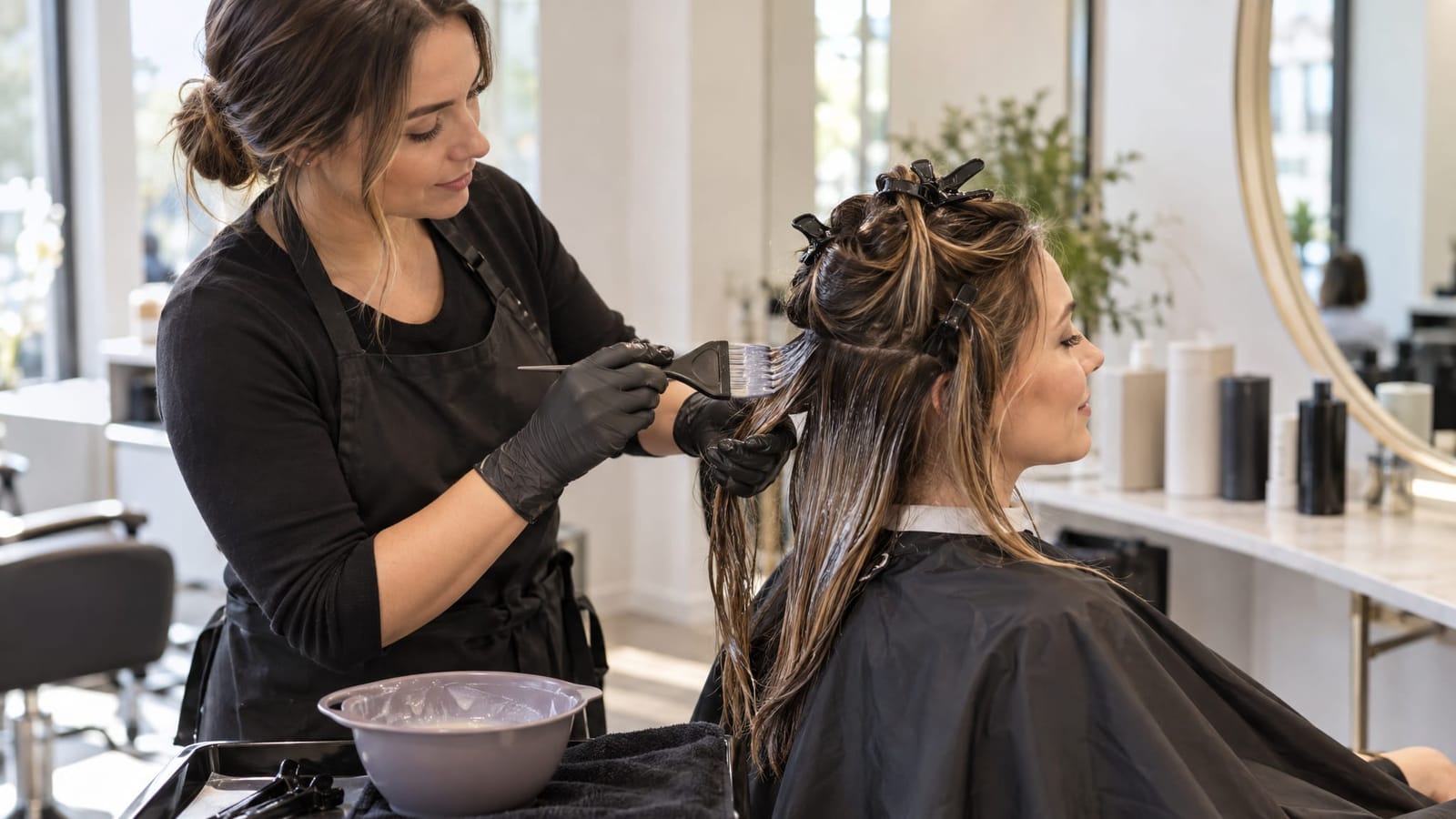
A hair glaze can refresh balayage by enhancing shine and, with a tinted formula, adjusting faded or overly warm tones. It does not create new highlights or lighten regrowth. If you still love where your lighter pieces sit but the finish looks less polished, a glaze may be the maintenance service that fits.
The key is separating what has changed: your tone, your shine, or the placement of your highlights. Each calls for a different approach.
At Meraki Salon & Spa in Mountainside, New Jersey, we offer glazing, toners and glossing alongside balayage and highlights. Here is how to decide whether a glaze belongs in your between-appointment routine and how to get a refresh that preserves the dimension you love.
Step 1: Identify What Needs Refreshing
Before choosing a service, look at your hair dry, in natural light, and styled the way you normally wear it. Warm indoor lighting can make blonde appear more golden, while a different part can change how much brightness you see around your face.
Focus on the change you notice most:
- The tone looks warmer. Blonde pieces may look more yellow, or lighter brunette sections may appear more orange than you prefer. A tinted glaze or toner can help rebalance those tones.
- The shade still looks right, but the finish seems dull. A clear, shine-focused glaze may be a better fit than adding more pigment.
- The lighter pieces look too far from your roots. A glaze will not move the highlights upward. This is a placement decision rather than a tonal refresh.
- You want a noticeably lighter result. Adding pigment cannot provide new lightness. Balayage or highlights address that goal.
Balayage is a lightening technique, not a temporary color coating that simply washes away. The lightened sections remain as your hair grows, while their tone and overall appearance can change. A glaze refreshes the finish of those existing sections rather than recreating them.
That distinction helps set a realistic goal: maintain an existing look when the placement still works, or update the lightening when it no longer does.
Step 2: Choose Between Shine and Tone Correction
Salon terms such as glaze, gloss and toner often overlap. The useful question is not just what the service is called, but whether the formula adds pigment and what that pigment is intended to change. Our explanation of hair gloss vs glaze covers those distinctions in more detail.
Choose a clear option when you like your current shade
A clear glaze focuses on shine rather than adding a new color tone. It makes sense when your caramel, honey or blonde pieces still have the warmth you enjoy, but you want a more polished finish.
Shine also affects how color catches the light, so the overall appearance can look refreshed without intentionally changing the shade. Our guide to adding shine without changing your hair color explores that option.
Choose a tinted option when the tone has shifted
A tinted glaze deposits color to adjust the appearance of existing lightened hair. Depending on the formula, the goal might be softening excess yellow, balancing orange warmth, or restoring a beige, golden or richer brunette finish.
Neutralizing brassiness does not mean removing every warm note. Honey balayage needs some warmth to retain its character. For example, if you love a golden blonde but dislike its newly yellow appearance, the goal is a balanced golden finish, not necessarily an icy one.
There is also a tradeoff: adding cooler or deeper pigment can make very pale highlights look less bright. Describing both the tone you want and the brightness you want to keep helps avoid choosing a finish that feels too dark or muted.
Step 3: Prepare a Clear Color Goal
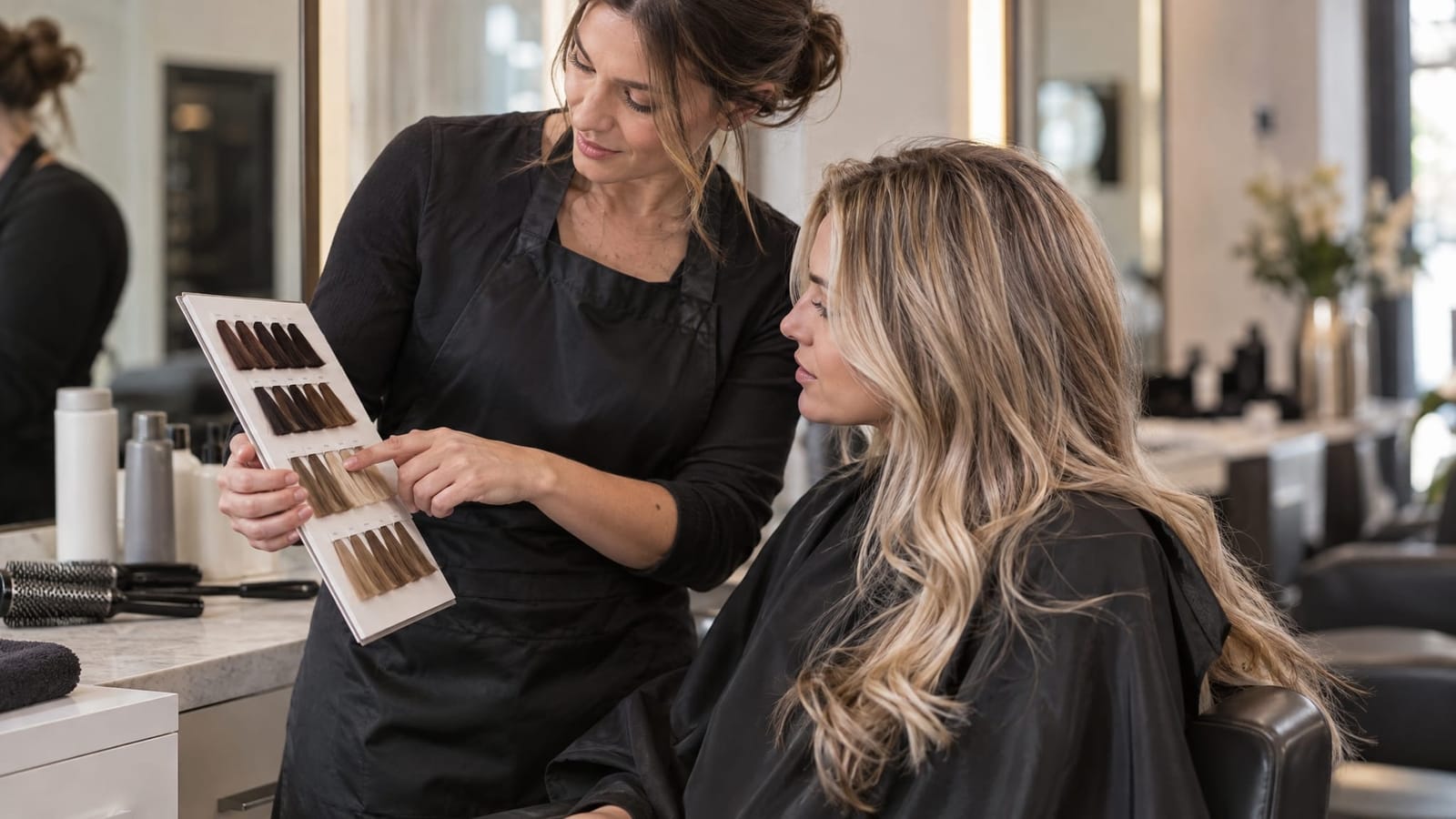
A useful consultation starts with what you want to preserve. “I like my bright ends but want less orange through the middle” gives more direction than “My color needs fixing.”
Gather a few details before your appointment:
- Your recent color history. Include salon color, at-home color, previous toners and color-depositing masks or shampoos.
- The areas that bother you. Notice whether the change is around your face, through the middle lengths, at the ends or throughout your hair.
- Your preferred finish. Describe it as warm, neutral or cool, and say whether preserving brightness matters more than reducing every trace of warmth.
- A useful reference photo. A photo of your own balayage when you loved it can help communicate the tone you want back.
Reference images work best when you can explain what appeals to you. You might like the soft beige tone in one photo without wanting its darker roots or lighter ends.
For more appointment preparation, our guide to the hair consultation process explains which details help communicate your goals. Keep your routine consistent beforehand rather than experimenting with a new color-depositing product to correct the shade yourself.
Step 4: Plan the Refresh Around Your Balayage
Balayage depends on contrast between lighter pieces and the surrounding base color. A refresh should account for that pattern rather than treating every strand as though it starts at the same shade.
Identify which sections need adjustment
Your face-framing pieces may be pale blonde while the hair through the back is a deeper caramel. The same tinted formula can look different on those two starting points.
Previously lightened ends can also absorb color differently from less-processed sections. That is why placement and formula choice matter, even when the desired change sounds small.
An all-over tinted application is not automatically the best match for every refresh. The approach depends on where the unwanted tone appears and which areas already look right.
Keep brightness and dimension in the conversation
Consider brunette balayage with warm middle lengths and light beige ends. If only the middle lengths look too orange, making the entire head cooler or deeper could change the ends you already enjoy. The decision is about balancing the uneven tone while preserving the lighter accents.
A glaze can also soften a tonal difference, but it cannot relocate a highlight or erase every visible line. If the concern is a strong band, uneven lightening or grown-out placement, a broader color plan may be more appropriate.
At Meraki, we tailor color services to your style and maintenance preferences. For a refresh, that means defining the desired finish without assuming that a bigger color change is the goal.
Step 5: Time the Glaze Around Tone, Not Just the Calendar
There is no single interval that suits every balayage client. Washing habits, home products, hair condition and the tone you prefer all influence when a refresh feels useful. A very cool blonde may reveal unwanted warmth sooner than a golden balayage whose finish already embraces it.
Instead of automatically pairing every glaze with new highlights, make two separate decisions:
- Does the existing placement still suit you? If you like the brightness around your face and through your lengths, more lightening may not be the priority.
- Does the tone still look the way you want? If it has shifted but the placement works, a tonal refresh may address the change.
This is how glazing can help you enjoy balayage between lightening appointments. It maintains the appearance of the existing color; it does not stop regrowth, prevent all fading or make the highlights permanent in their original form.
For maintenance planning, compare the scope of the services as well as their cost. A glaze addresses shine and tone. A balayage appointment addresses lightness and placement. Choosing the service that matches the change you need is more useful than treating one as a substitute for the other.
Step 6: Support the Finish at Home
A glaze is a color refresh, not permanent protection against fading or a replacement for conditioning. A consistent home routine helps keep the finish looking polished.
- Use a shampoo suited to color-treated hair. Cleanse according to your scalp and styling needs rather than forcing a washing schedule that does not suit you.
- Condition the lengths and ends. Conditioning helps with softness and manageability, which supports a smoother-looking finish.
- Use heat protection when styling. Choose a heat setting appropriate for your hair rather than defaulting to the highest setting.
- Treat tinted shampoos and masks as color products. They deposit pigment and can shift the balance created during your appointment.
More toning is not always better. Repeated use of a purple or blue product can make pale pieces look muted or leave an uneven cast. A home toning product is most useful when its pigment and frequency match the tone you are maintaining.
If your hair looks dull but its shade still looks right, adding pigment may not solve the problem. Consider whether the need is shine, conditioning or a change in your styling routine before assuming the color needs further correction.
Keep the Dimension, Refresh the Finish
A glaze is a good fit when you still love your balayage but want renewed shine or a more balanced tone. The most useful starting point is specific: what has changed, what do you want back, and what do you want to keep? Those answers help distinguish a focused refresh from a service that needs to add brightness or reshape your color placement.