How Often Should You Deep Condition Your Hair?
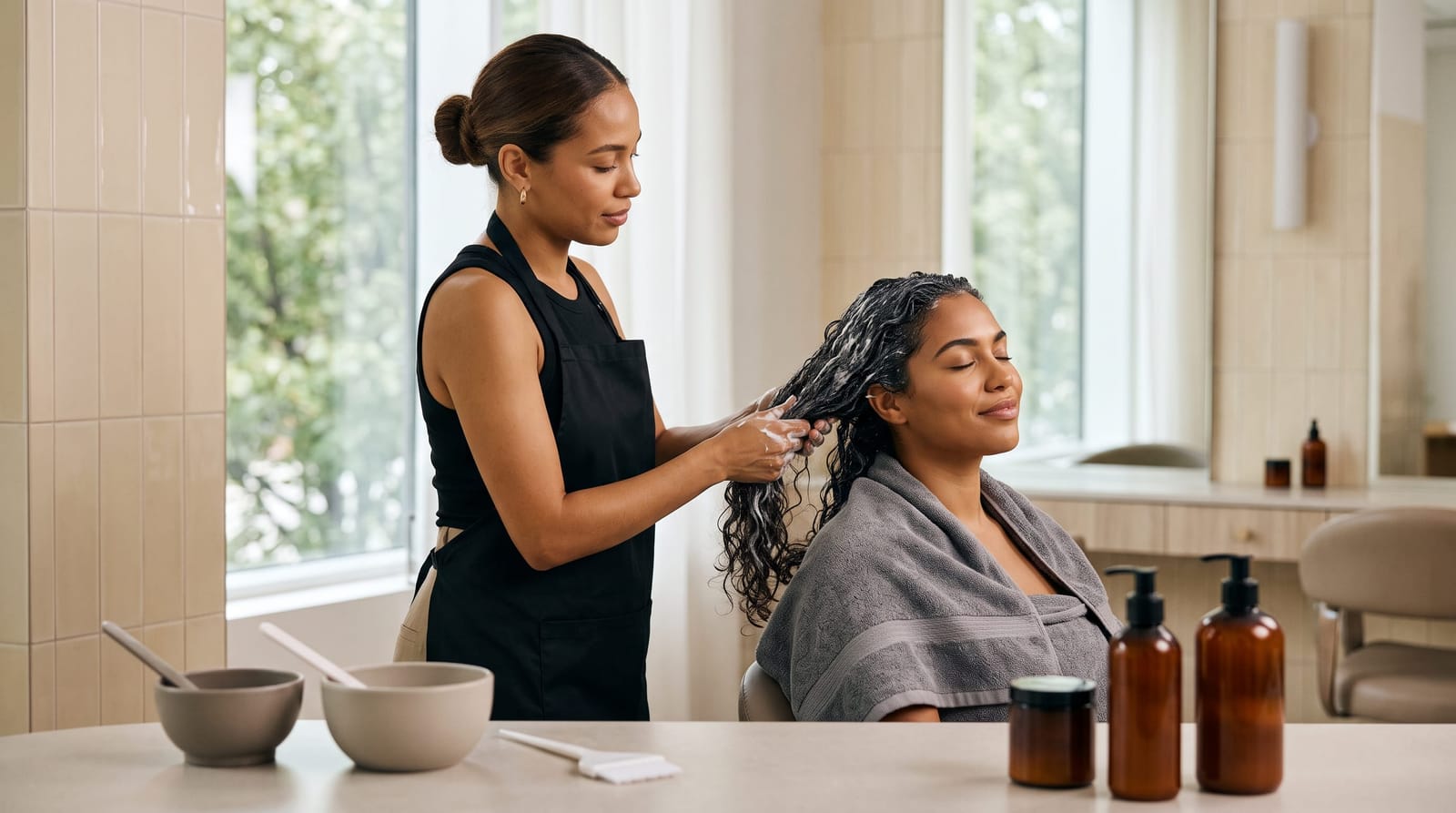
Deep conditioning is one of the most impactful things you can do for your hair. But one question comes up again and again: how often should you actually do it? Too little, and your hair stays dry and prone to breakage. Too much, and you risk over-softening the strands. The right deep conditioning frequency depends on your hair type, texture, and lifestyle. This guide breaks it all down so you can build a routine that genuinely works for your hair.
Why Deep Conditioning Frequency Matters
Deep conditioning is not a one-size-fits-all step. Unlike a regular rinse-out conditioner, a deep conditioner is designed to penetrate the hair shaft. It restores moisture, improves elasticity, and reduces breakage over time. Research from curl-care experts suggests that curly and textured hair loses moisture up to three times faster than straight hair. That stat alone explains why deep conditioning frequency is especially important for clients with curls, waves, and coils.
Skipping this step, or doing it sporadically, leaves hair more vulnerable to dryness and frizz. In fact, studies on textured hair care show that consistent deep conditioning can reduce breakage by up to 50% compared to moisture-only rinse-out routines. Regular treatments help the hair hold onto hydration longer, which means less daily frizz and more defined curl patterns over time.
The key is finding your personal sweet spot. That starts with understanding your hair's porosity: how well your strands absorb and retain moisture.
Deep Conditioning Frequency by Hair Type and Porosity
Hair porosity is one of the biggest factors in determining your ideal deep conditioning schedule. Porosity describes how easily moisture enters and exits your hair shaft. There are three levels: low, medium, and high.
Low Porosity Hair
Low porosity hair has a tightly closed cuticle. Products tend to sit on top of the strand rather than absorbing quickly. For this hair type, deep conditioning every 10 to 14 days is usually enough. Over-conditioning can actually lead to product buildup and limp, weighed-down hair. When you do deep condition, apply gentle heat, a warm towel or a hooded dryer, to help open the cuticle and allow the treatment to absorb properly.
Medium Porosity Hair
Medium porosity hair is the most balanced. It absorbs and retains moisture well. Once a week is the ideal deep conditioning frequency for this hair type. Most people with wavy (2A: 2C) and some curly (3A) hair types fall into this category. A weekly 20 to 30 minute deep conditioning session keeps this hair type looking healthy and hydrated with minimal effort.
High Porosity Hair
High porosity hair has gaps or damage along the cuticle. It absorbs moisture quickly but loses it just as fast. This type often benefits from deep conditioning twice a week, especially in dry seasons or humid climates where the hair reacts strongly to environmental changes. High porosity hair is also more common in people with tighter curl patterns (3C, 4A, 4B, 4C) or hair that has been color-treated or chemically processed.
Color-Treated Hair and Deep Conditioning
If your hair has been color-treated, balayaged, highlighted, or chemically relaxed, your deep conditioning frequency should increase. Color services open the hair cuticle during the process, which can leave strands more porous and prone to dryness afterward. Most stylists recommend deep conditioning at least once a week following a color service, for the first 4 to 6 weeks.
Over time, color-treated hair benefits from a consistent weekly deep conditioning routine as a long-term maintenance strategy. Skipping it regularly can cause color to fade faster, since dry and porous hair releases pigment more quickly. Keeping the hair moisturized and the cuticle smoothed helps color look more vibrant for longer, which means fewer touch-up appointments and a better overall result.
If you experience persistent dryness after a color service, that's a signal to step up from a weekly at-home mask to a professional in-salon treatment. The formulations used in professional deep conditioning treatments are typically more concentrated and designed to work at a deeper level than retail options.
At-Home Masks vs. Professional In-Salon Treatments
There is an important difference between your weekly at-home deep conditioning mask and a professional in-salon treatment. Both are valuable: they just serve different purposes.
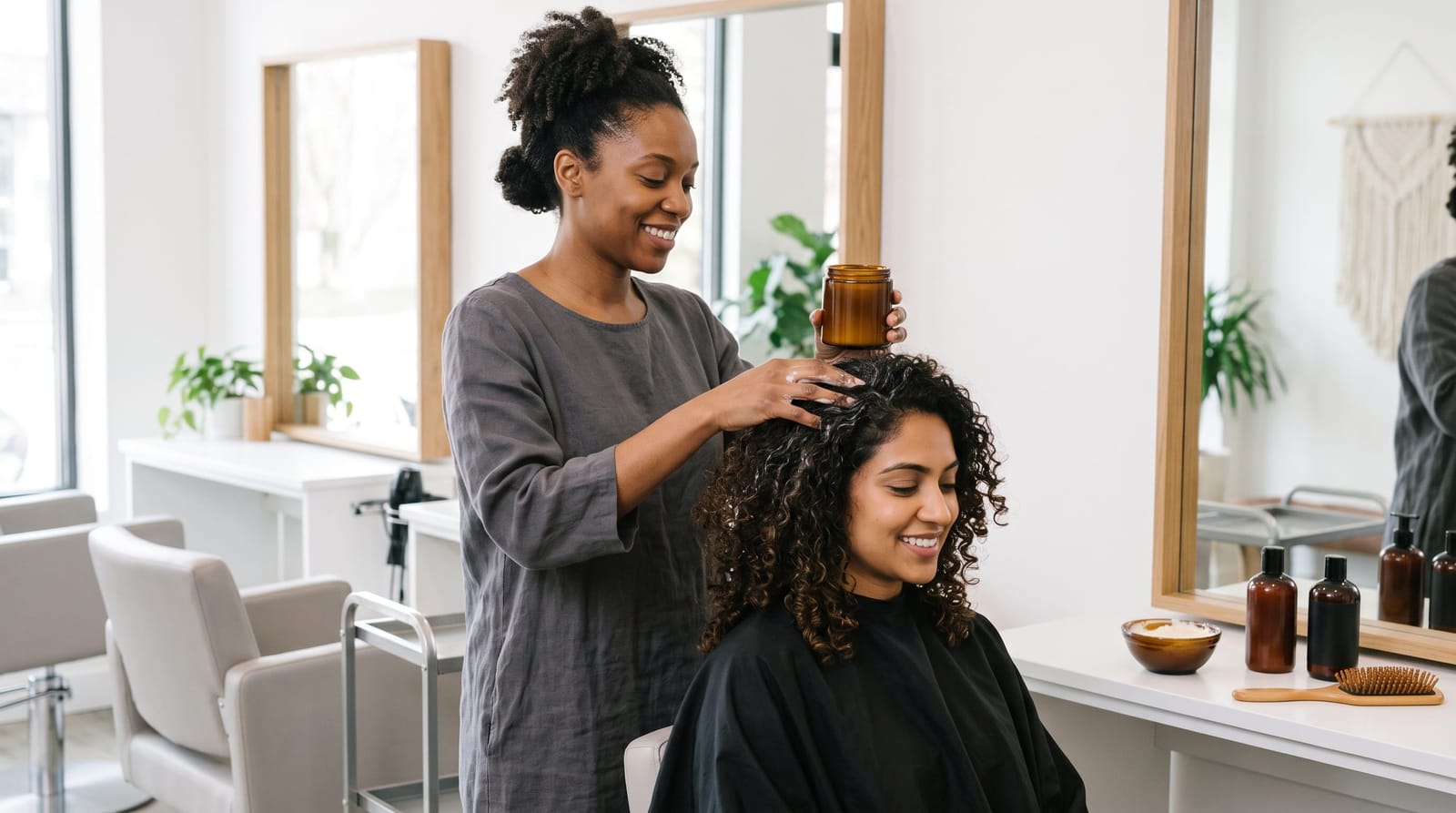
At-home masks are your regular maintenance tool. Used once or twice a week depending on your hair type, they keep moisture levels balanced between salon visits. Most at-home masks are designed to sit on the hair for 15 to 30 minutes before rinsing. They work well as a consistent, preventative step.
Professional in-salon deep conditioning treatments go further. They typically use higher-concentration formulas that retail products can't match. At Meraki, in-salon deep conditioning services are recommended every 4 to 6 weeks for most clients, or monthly for those with highly processed or very dry hair. These treatments are often combined with steam or heat tools that help the product penetrate more effectively than anything achievable at home.
Think of it this way: your weekly mask is like daily skincare. Your monthly professional treatment is like a facial. Both matter, and neither replaces the other.
If you've been curious about whether a professional deep conditioning treatment could also help with frizz, a deep conditioning treatment and frizz control are more closely connected than most people realize: something worth exploring as part of your overall curl care routine.
Environmental and Seasonal Factors to Consider
Your deep conditioning frequency should shift with the seasons. In winter, cold air and indoor heating strip moisture from hair more aggressively. Many clients find they need to add an extra session per week during the colder months: going from once a week to twice a week, for example.
In summer, humidity can cause high porosity hair to swell and frizz. Regular deep conditioning helps smooth the cuticle and reduce that reactive frizz. Clients who swim frequently, especially in chlorinated pools or saltwater, should deep condition within 24 hours of each swim. Chlorine and salt are two of the most drying elements for textured and curly hair.
Climate in New Jersey specifically means clients deal with humid summers and dry winters: both of which affect how hair holds moisture. Adjusting your deep conditioning frequency across seasons is one of the most practical things you can do to keep your curls consistent year-round.
Frequently Asked Questions
Can I deep condition too often?
Yes, it's possible to over-condition. For low porosity hair especially, deep conditioning more than once a week can lead to product buildup and limp, over-softened strands. If your hair starts to feel mushy, loses its curl definition, or snaps rather than stretches when wet, scale back your frequency and reassess.
How long should I leave a deep conditioner in?
Most deep conditioners are designed to work in 20 to 30 minutes. Some intensive treatments can be left in for up to 45 minutes with heat. Always follow the product directions. Leaving a deep conditioner in overnight is generally not recommended unless the product is specifically formulated for extended use.
Does deep conditioning work on straight hair too?
Absolutely. While curly and textured hair typically needs deep conditioning more frequently, straight hair also benefits, especially if it's color-treated, heat-styled regularly, or naturally fine. Every 2 to 4 weeks is a reasonable starting point for straight hair types.
What should I look for in a deep conditioner for curly hair?
Look for ingredients that support moisture retention, like shea butter, aloe vera, glycerin, and proteins like hydrolyzed keratin or silk amino acids. Avoid formulas heavy in silicones if you follow a low-poo or no-poo routine, as they can build up on curly hair and block moisture over time. When in doubt, ask your stylist: product recommendations are always part of the conversation at Meraki.
Finding Your Deep Conditioning Routine
The right deep conditioning frequency is personal. For most people, once a week is a reliable starting point. From there, adjust based on your hair's porosity, your color history, your lifestyle, and how your hair responds season to season. Pair consistent at-home treatments with a professional in-salon deep conditioning service every four to six weeks, and you'll have a solid foundation for healthier, more hydrated hair year-round.
Deep conditioning is just one part of a complete curly and textured hair care routine. At Meraki, our stylists are happy to walk you through a personalized approach, from the right frequency to the right products for your specific texture and goals.