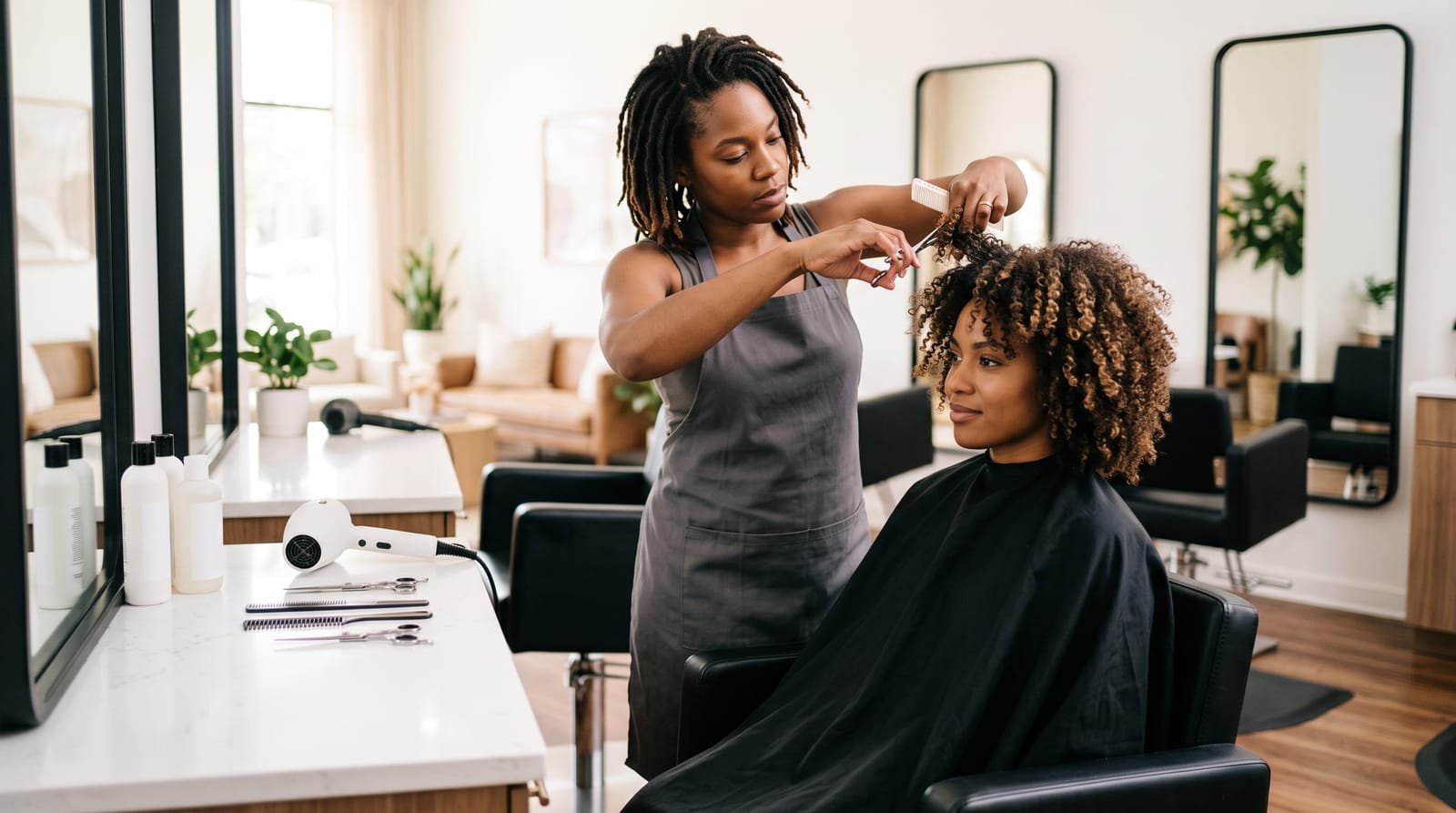
How Often Should You Get a Curly Haircut?

If you have curly or textured hair, you've probably heard conflicting advice about how often you actually need a trim. Every six weeks? Every few months? Once a year if you're growing it out? The truth is, curly hair follows its own timeline, and the right haircut frequency schedule depends on more than just a calendar reminder. This post breaks down exactly how often curly hair needs to be cut, what factors influence that timeline, and how to tell when your curls are ready for some professional attention.
The General Haircut Frequency Schedule for Curly Hair
For most hair types, the standard advice is to schedule a trim every 4 to 8 weeks. But curly and wavy hair is different, and in a good way. Because curl patterns disguise split ends more effectively than straight hair does, and because curls tend to retain moisture better when left undisturbed, most curly-haired clients can comfortably go longer between appointments.
The general recommendation for curly hair is a trim every 8 to 12 weeks, which works out to roughly 3 to 4 times per year. For many curl types, stretching to 12 to 16 weeks is perfectly reasonable, especially if the hair is well-moisturized, minimally heat-styled, and in good overall condition. Compared to straight hair, which may need attention as often as every 6 to 8 weeks to stay polished and split-end-free, curly hair gives you a bit more flexibility.
That said, "every few months" isn't a one-size-fits-all answer. Your specific curl pattern, hair length, styling habits, and overall hair health all play a role in determining what schedule actually works for you.
How Curl Type and Texture Affect Your Schedule
Not all curls behave the same way, and your curl pattern is one of the biggest factors in determining your ideal haircut frequency schedule.
- Wavy hair (Type 2): Wavy textures tend to be more prone to frizz and can lose their shape faster than tighter curl patterns. A trim every 8 to 10 weeks helps keep waves looking defined and healthy.
- Loose curls (Type 3A/3B): These curls are bouncy and well-defined but can develop split ends that travel up the hair shaft if left too long. Every 10 to 12 weeks is typically a good rhythm.
- Tight curls and coils (Type 3C/4A/4B/4C): Tighter curl patterns tend to experience more shrinkage and dryness, which can make the ends feel brittle over time. A trim every 12 to 16 weeks works well for many clients in this category, though hydration and protective styling play a big role in stretching that timeline.
Your stylist should be evaluating your curl type at each visit and adjusting their approach accordingly. If you're looking for a specialist who truly understands textured hair, finding the right curly hair salon NJ makes a significant difference in how your curls hold up between appointments.
Length Goals Change Everything
One of the most common reasons curly-haired clients avoid regular trims is the fear of losing length. It's understandable: curls shrink significantly when dry, so even a half-inch trim can feel like more. But skipping trims to grow length often backfires. Split ends don't stay at the tips; they travel up the hair shaft, causing breakage higher and higher over time. What could have been a small clean-up becomes a more significant cut down the line.
Here's how to think about it based on your goals:
- Maintaining your current length and style: Stick to the standard 8 to 12 week schedule to preserve shape and remove any damage before it spreads.
- Actively growing your hair longer: You can extend to 12 to 16 weeks between trims, but don't skip them entirely. A small dusting trim, removing as little as a quarter-inch, keeps the ends healthy so your hair can actually retain the length you're working toward.
- Recovering from damage or a major color service: You may need more frequent visits in the short term, closer to every 6 to 8 weeks, until the hair is restored to a healthier baseline.
Communicating your length goals clearly with your stylist ensures that every trim serves your bigger picture rather than working against it.
Signs Your Curls Are Overdue for a Trim
Even with the best intentions, it's easy to lose track of time between appointments. Your curls will usually let you know when they've been waiting too long. Here are the most common signs that a trim is overdue:
- Excessive tangling: If your curls are knotting up more than usual, especially at the ends, that's often a sign of split ends creating friction between strands.
- Loss of curl definition: When ends are damaged or uneven, curls can look stringy or limp rather than bouncy and formed.
- Frizz that doesn't respond to product: Roughed-up cuticles at the ends of damaged hair create frizz that no amount of leave-in conditioner will fully smooth.
- Dry, rough-feeling tips: Healthy curls feel soft and springy. If the last inch or two feels coarse or straw-like, the ends are telling you something.
- Uneven curl pattern: When some sections curl beautifully and others fall flat or stretch out, the shape of your cut may be off and benefit from a refresh.
None of these are emergencies: they're simply your hair communicating what it needs. Paying attention to these cues is part of developing a sustainable curly hair care routine.
Dry Cutting vs. Wet Cutting: Does It Affect Your Schedule?
The technique your stylist uses can also influence how long your cut stays fresh. Curly hair specialists often prefer dry cutting, shaping the curl while it's in its natural, dry state, because it allows them to see exactly how each curl falls and interacts with the rest of the shape. This tends to produce results that last longer and require fewer adjustments between visits.
If you're curious about the differences between these approaches and how they impact your styling routine, learning more about curly hair styling tips can help you make more informed decisions when you sit down in the salon chair. The right technique, paired with the right trim schedule, is what keeps curly hair looking intentional rather than overgrown.
Frequently Asked Questions
Can I go a full year without cutting my curly hair?
Technically, yes, but it's not recommended for most people. Going 12 months without any trim almost always results in split ends that travel up the hair shaft, leading to more significant breakage and a loss of curl definition. Even once or twice a year is better than never, but most curly hair benefits from at least 3 to 4 trims annually to stay in good shape.
Will trimming my curly hair make it grow faster?
Trimming doesn't speed up hair growth at the root: that's determined by biology. What regular trims do is prevent breakage, which means your hair can retain the length it's already grown. Skipping trims often results in more hair breaking off than growing, which makes it feel like your hair isn't growing at all.
How do I know if I need a trim or a full reshape?
If your curl pattern looks uneven, your layers have grown out, or your style has lost its structure, you may benefit from a full reshape rather than just a dusting trim. A knowledgeable curly hair stylist can assess this at your appointment and recommend the right approach based on your current shape and goals.
Does coloring or heat styling change how often I need a trim?
Yes. Chemical services like color and relaxers, as well as frequent heat styling, tend to make the ends more fragile over time. If you regularly use heat tools or have chemically treated hair, you'll likely benefit from trimming closer to every 8 to 10 weeks rather than stretching to 12 or 16.
Finding Your Rhythm
There's no universal answer to how often curly hair should be cut, but for most people, somewhere between every 8 and 16 weeks strikes the right balance between maintaining healthy ends and preserving length. Your curl type, styling habits, and hair goals all matter. The most important thing is to stop treating trims as optional and start thinking of them as a regular part of your curly hair care routine. When you work with a stylist who understands curly and textured hair, every appointment becomes a step toward curls that look and feel their best, not just on cut day, but every day in between.