Is Your Hair Damaged or Just Dry? How to Tell the Difference
If your hair feels rough, looks dull, or breaks more than it used to, it can be hard to know what's actually going on. Dry hair and damaged hair can look similar on the surface, but they have very different causes and need very different care. Getting this distinction right is one of the most important steps in building a healthy curly or textured hair routine. Here's how to read what your hair is telling you, and when it's worth booking a professional consultation to get things back on track.
Dry Hair vs. Damaged Hair: Why the Difference Matters
Dry hair is a moisture issue. Your strands aren't retaining enough hydration, which can happen for all kinds of reasons: seasonal weather changes, hard water, over-washing, or simply using products that aren't a good match for your hair type. The good news is that dryness is relatively easy to address with the right conditioners, oils, and styling products. Once you restore moisture, your hair typically bounces back fairly quickly.
Damaged hair is a structural issue. This means something has disrupted the actual architecture of your strands: the cuticle (the outer protective layer) or the cortex (the inner structure that gives hair its strength and elasticity). Heat styling, chemical treatments like bleach or relaxers, and even aggressive brushing can all cause this kind of damage. According to hair care research, over 70% of people with color-treated or heat-styled hair show some signs of structural damage, yet many don't realize it because they assume their concerns are just dryness.
Here's why the distinction matters: if you only add moisture to structurally damaged hair, you may not see meaningful improvement, and in some cases, over-moisturizing already weakened strands can make them feel even more limp and fragile. Damaged hair often needs protein-based treatments to help rebuild and reinforce the strand before hydration can work effectively.
Signs Your Hair Is Damaged (Not Just Dry)
Knowing what to look for can save you months of using the wrong products. Here are the most telling signs that your hair has gone beyond simple dryness:
- Split ends and fraying tips. When the protective cuticle wears away, the inner cortex splits and strands begin to fray at the ends. No amount of conditioning will fully repair a split end: trimming is the only real solution.
- Unusual breakage. Some shedding is normal: most people lose between 50 and 100 hairs per day. But if you're noticing short, snapped pieces of hair throughout your styling routine (especially mid-shaft, not at the root), that's a breakage pattern associated with structural weakness.
- Gummy or mushy texture when wet. Healthy hair feels slightly slippery and pliable when wet. If your hair feels excessively soft, stretchy, or gummy, it's a sign the protein structure has been compromised.
- Persistent dullness that doesn't respond to conditioning. Dull hair that bounces back after a good deep conditioning session is likely just dry. Dull hair that stays flat and lifeless even after treatment is more likely damaged at the cuticle level.
- Tangles that weren't there before. Raised or roughened cuticles snag against each other, causing tangling that feels different from typical curl knots. If detangling has become noticeably harder over the past few months, it's worth paying attention to that shift.
The At-Home Elasticity Test
One of the simplest ways to assess your hair's structural health is a quick elasticity test you can do yourself at home. This test checks how well your strands stretch and recover: a direct reflection of how intact the inner protein structure is.
How to Do It
- Wash your hair as normal and let it reach a damp (not soaking wet) state.
- Take a single strand of hair: ideally from an area where you've noticed the most concern, like the ends or around your face.
- Hold the strand between both hands and gently stretch it.
- Watch what happens when you release the tension.
What the Results Mean
Healthy hair will stretch approximately 30% of its length when wet and then spring back to its original state without breaking. Over-moisturized or protein-deficient hair will stretch well beyond that, sometimes dramatically, but won't spring back, or may feel limp and weak during the stretch. Protein-deficient or damaged hair may snap almost immediately with very little stretch at all.
If your strand snapped quickly with minimal stretch, your hair is likely crying out for a strengthening treatment. If it stretched without bouncing back, your hair may have too much moisture and not enough protein to maintain structure. Either result is a helpful signal that points you toward the right next step.
Signs Your Hair Is Just Dry (Good News)
Not every hair concern signals structural damage. Dry hair is incredibly common, especially for curly and textured hair types, where natural oils from the scalp have a harder time traveling down the spiral shape of each strand. Studies suggest that curly and coily hair types can be up to 4 times drier at the ends than straight hair, simply due to the curl pattern itself.
If your hair feels dry but still has good elasticity during the stretch test, passes without breakage, and responds well to a hydrating mask or leave-in conditioner within a day or two, moisture is likely all you need. Other signs that point to simple dryness rather than damage include:
- Hair that feels soft again after a deep conditioner or hair mask
- Frizz that's mostly on the surface or in humid weather, not year-round
- No significant breakage or split ends
- Curl pattern that still looks defined, just lacking shine or bounce
For dry hair, the solution is usually consistent hydration, regular deep conditioning, using a quality leave-in conditioner, sealing in moisture with a lightweight oil, and making sure your shampoo isn't stripping your strands. Learning how to build a curl-specific wash day routine can make a meaningful difference in how your hair looks and feels week to week.
When to Book a Professional Treatment Consultation
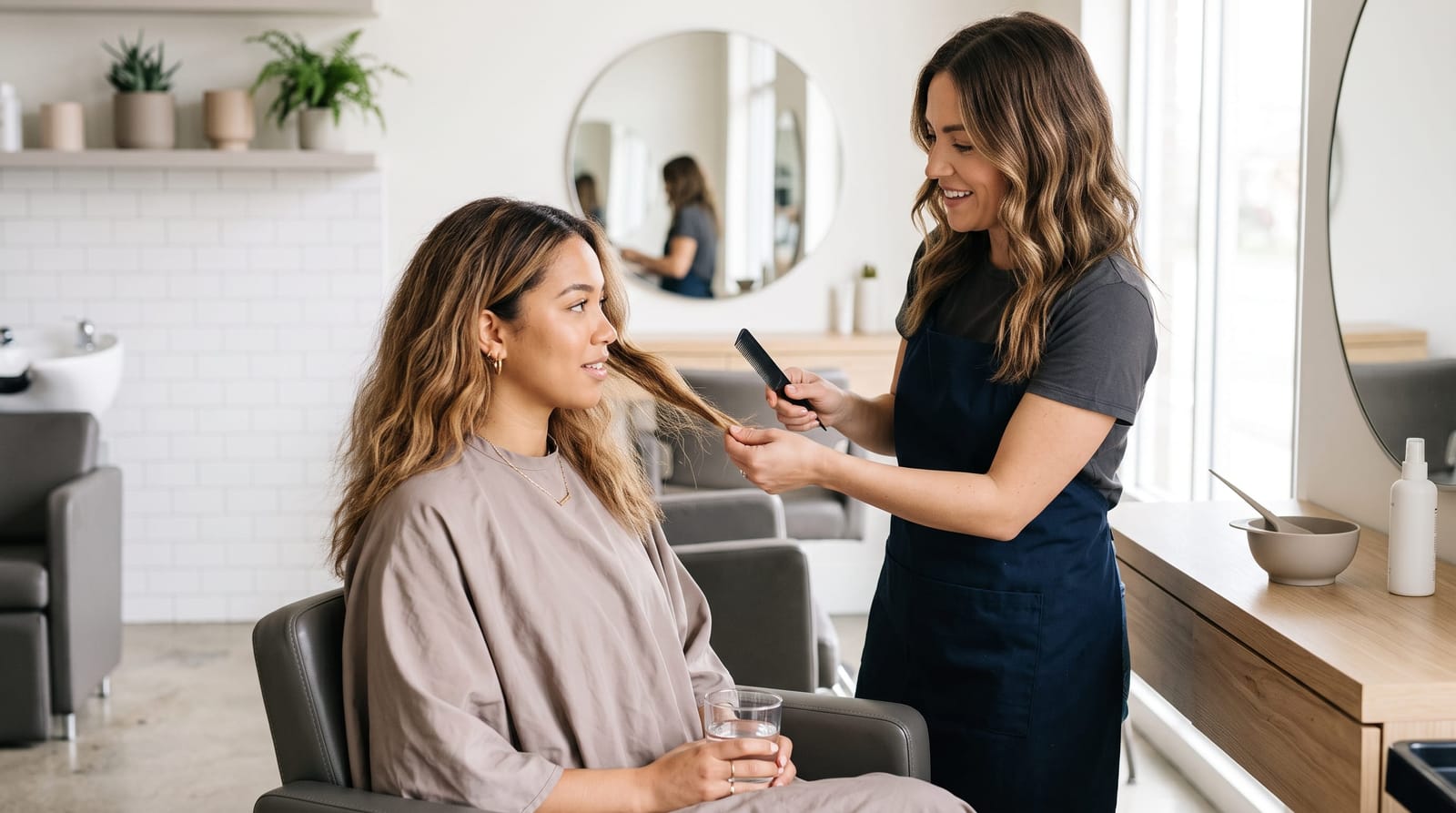
Some hair concerns are genuinely hard to assess on your own, and there's real value in having a professional take a look, especially if you've been dealing with persistent dryness, breakage, or loss of curl definition that doesn't improve with at-home care.
At Meraki, we work with a lot of clients who come in unsure whether they need a protein treatment, a moisture-focused treatment, or something in between. During a consultation, we assess your hair's current condition, the history of any chemical or heat services you've had, and how your hair is responding to your current routine. From there, we can recommend a targeted in-salon treatment, whether that's a bond-building service, a deep nourishing mask, or a combination approach, and help you build a maintenance plan that makes sense for your specific curl or texture pattern.
A good rule of thumb: if you've tried adjusting your home routine for 4 to 6 weeks with no improvement, or if breakage is consistent and noticeable, it's worth having a conversation with a stylist who specializes in curly and textured hair care. This is especially true if you have signs of damage and are considering any color or chemical service: treating the underlying condition first leads to much better results. Understanding the signs damaged hair needs treatment before your next appointment means your stylist can get to work on a plan right away.
Frequently Asked Questions
Can damaged hair become healthy again?
Hair that has been damaged at the cuticle level won't fully "repair" the way skin heals, but the right treatments can significantly improve its condition, strength, and appearance. Bond-building and protein treatments help reinforce the strand structure, while consistent moisture and protective styling habits prevent further breakage. New growth will be healthy if the underlying routine is a good one. Trimming away the most damaged ends also makes a big visible difference.
How often should curly hair get a deep conditioning treatment?
For most curly and textured hair types, a deep conditioning treatment once every one to two weeks is a solid baseline. If your hair is especially dry, color-treated, or showing early signs of damage, you may benefit from more frequent conditioning in the short term. A stylist familiar with your curl pattern can help you dial in a schedule that makes sense for your specific needs rather than following a one-size-fits-all recommendation.
Does heat styling always cause damage?
Not necessarily, but heat used without proper protection or at excessive temperatures does increase the risk of structural damage over time. Research indicates that sustained heat above 450°F can begin to break down the protein bonds in hair. Using a quality heat protectant, keeping temperatures appropriate for your hair's thickness and condition, and limiting frequency are all ways to enjoy heat styling while managing risk. If your curls no longer bounce back after air-drying post-blowout, that's worth discussing with your stylist.
What's the difference between a protein treatment and a deep conditioner?
A deep conditioner focuses on restoring moisture and improving softness and slip. A protein treatment focuses on reinforcing the hair's internal structure by depositing proteins that temporarily fill gaps in the cuticle and cortex. Most curly and textured hair types need a balance of both: too much moisture without protein creates limp, overly stretchy hair, while too much protein without moisture leads to brittleness. Finding your hair's balance is one of the things a professional consultation can help clarify.
The Bottom Line
Dry hair and damaged hair might look similar at first glance, but they call for very different approaches. A simple elasticity test can give you a useful starting point, and paying attention to how your hair responds to conditioning over time tells you a lot. If moisture alone isn't moving the needle, structural support through protein-based treatments may be what your strands actually need. When in doubt, a consultation with a curl-specialist stylist is the clearest path forward, and a great first step toward hair that looks and feels genuinely healthy.