Layering and Shaping for Curly Hair: How the Right Cut Changes Everything
If you've ever walked out of a salon with a curly cut that felt flat, poofy, or completely shapeless, you already know that not all haircuts are created equal, especially for curls. Layering and shaping are among the most powerful tools a curl specialist can use, yet they're also among the most misunderstood. When done well, a layered cut can reduce bulk, bring your curl pattern to life, and create the kind of natural movement that makes your hair feel like yours. This guide is part of our broader resource on curly hair salon NJ services, and here we're going deeper into the cut itself: what layering actually does, how different techniques work for different curl types, and how to walk into your next appointment feeling prepared and confident.
What Layering Actually Does for Curly Hair
Layering isn't just about adding visual interest to a haircut. For curly and textured hair specifically, it's a functional decision that affects how your hair behaves every single day. Understanding the purpose behind layers helps you communicate more clearly with your stylist and set realistic, exciting expectations.
When hair is cut all one length, the weight of the hair pulls curls downward. This is especially true for thicker or denser curl types, where the sheer volume of hair can stretch out your curl pattern or cause the ends to look heavy and undefined. Layers remove that weight strategically, not randomly, allowing each curl to spring back to its natural shape.
The Weight Distribution Effect
Think of layering as redistributing weight rather than simply removing it. A skilled curl stylist will assess where your hair carries the most density and shape accordingly. For many clients, that means shorter layers through the crown to create lift, and longer layers toward the ends to preserve length. Studies from professional hair education programs suggest that removing as little as 15-20% of bulk through strategic layering can visibly improve curl definition without significantly altering overall length: a detail that matters a great deal to clients growing out their curls.
Volume, Movement, and Definition
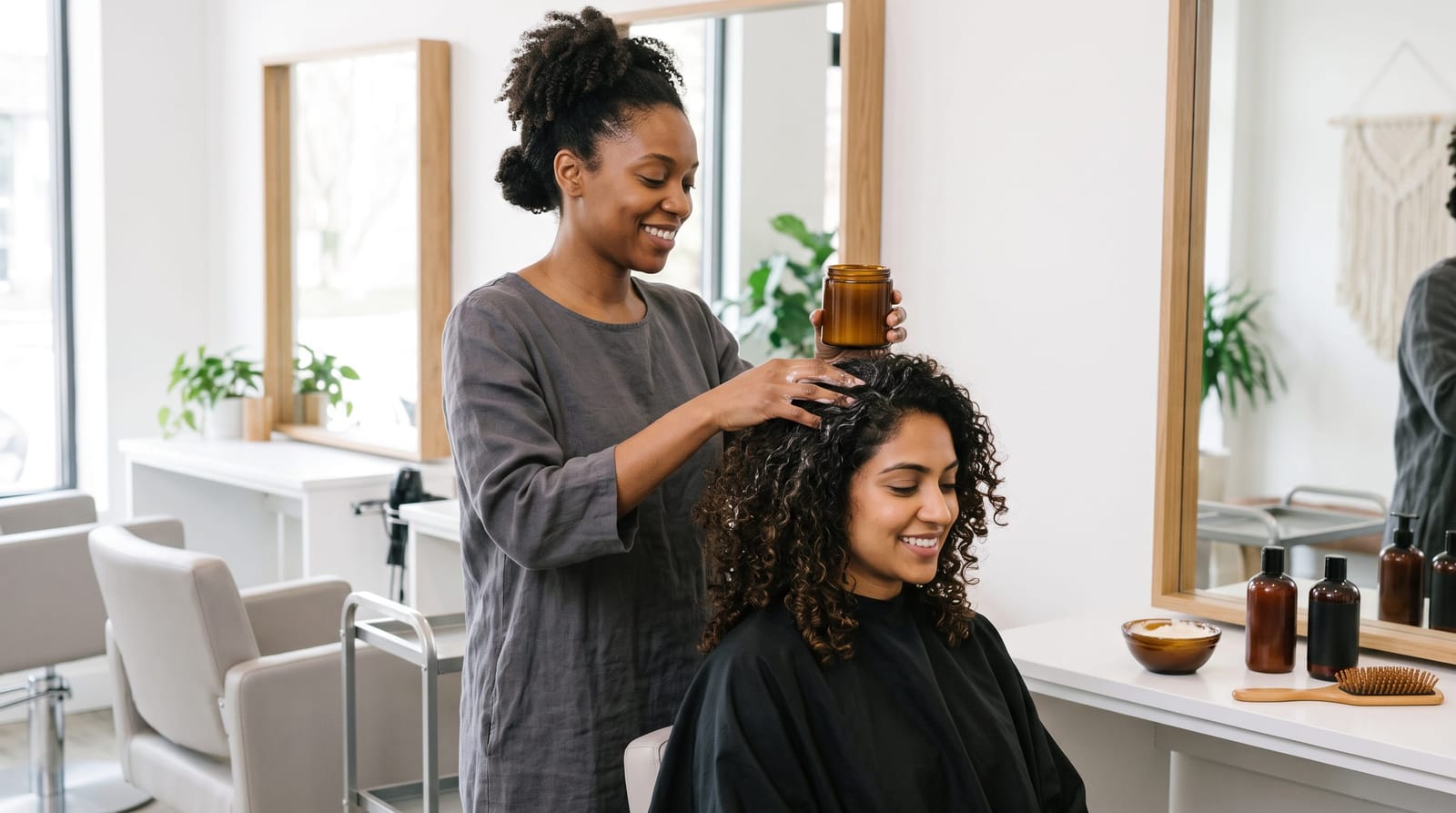
Layers also introduce movement. Rather than sitting as a solid mass, layered curly hair has sections that move independently: bouncing, coiling, and falling in ways that feel dynamic and natural. This is particularly important when choosing products for layered hair, because well-distributed layers allow product to penetrate and coat each curl more evenly, improving hold and shine throughout the entire style.
A Beginner's Look at Curl-Specific Cutting Techniques
Not every layering technique works for every curl type. This is one of the most important distinctions between a generalist salon and a curl specialist like Meraki. The technique a stylist uses, and the tools they reach for, should be chosen based on your specific texture, density, and curl pattern.
Dry Cutting vs. Wet Cutting
One of the most significant choices a curl specialist makes is whether to cut your hair dry or wet. Traditional wet cutting was the standard in salons for decades, but it has one key limitation for curly clients: curls behave very differently wet than they do dry. A curl that sits at shoulder length when wet might spring up to two or three inches shorter once it dries, which means a stylist cutting wet may not be seeing the full picture.
Dry cutting, or a combination of the two, allows the stylist to see exactly how your curls fall naturally. This approach has become widely preferred among curl specialists because it accounts for shrinkage, density, and natural movement before a single snip is made. According to curl-focused education platforms, approximately 70% of clients with type 3 or type 4 curls report better cut satisfaction when their hair is shaped while dry or mostly dry.
Point Cutting and Slide Cutting
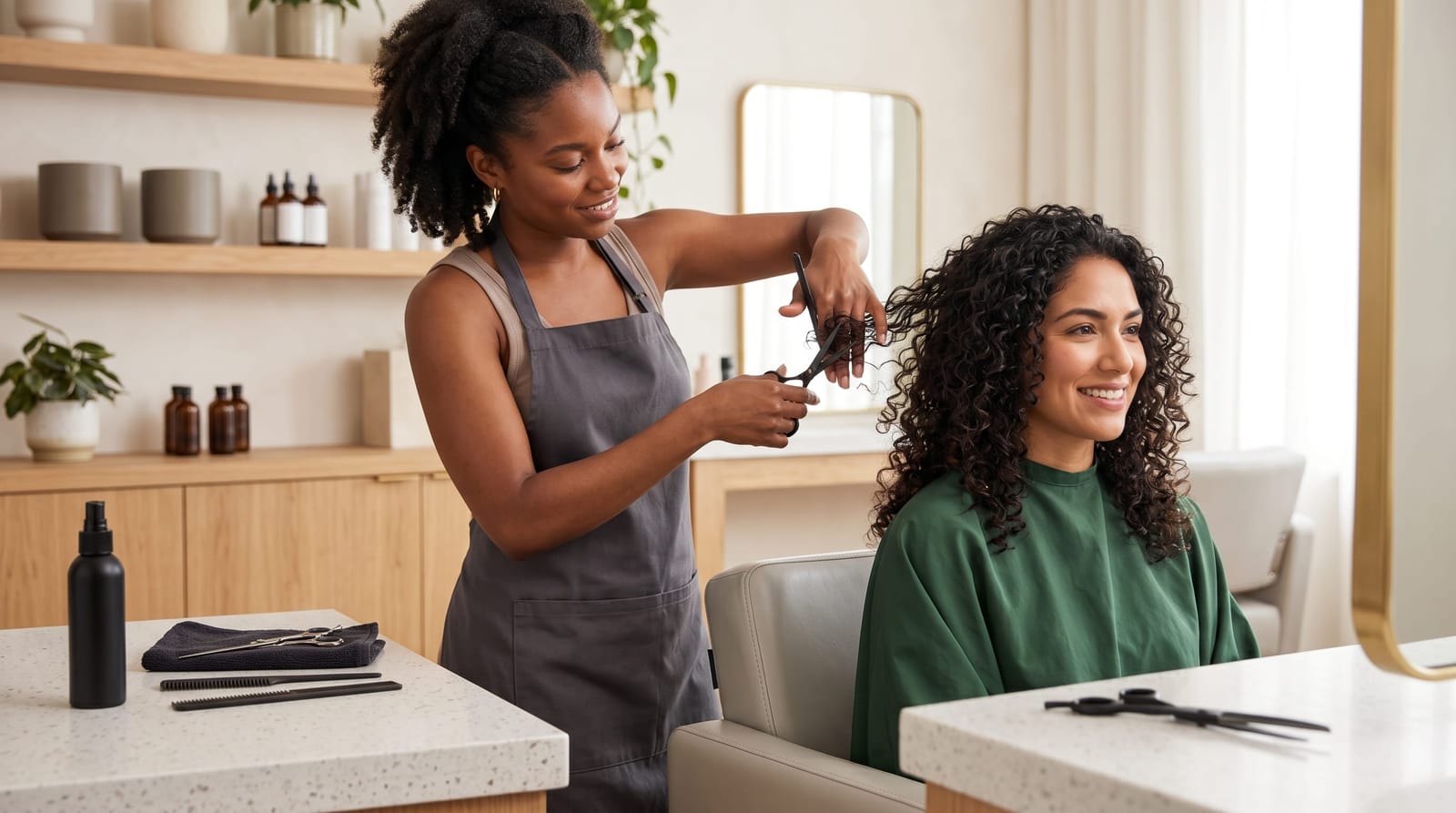
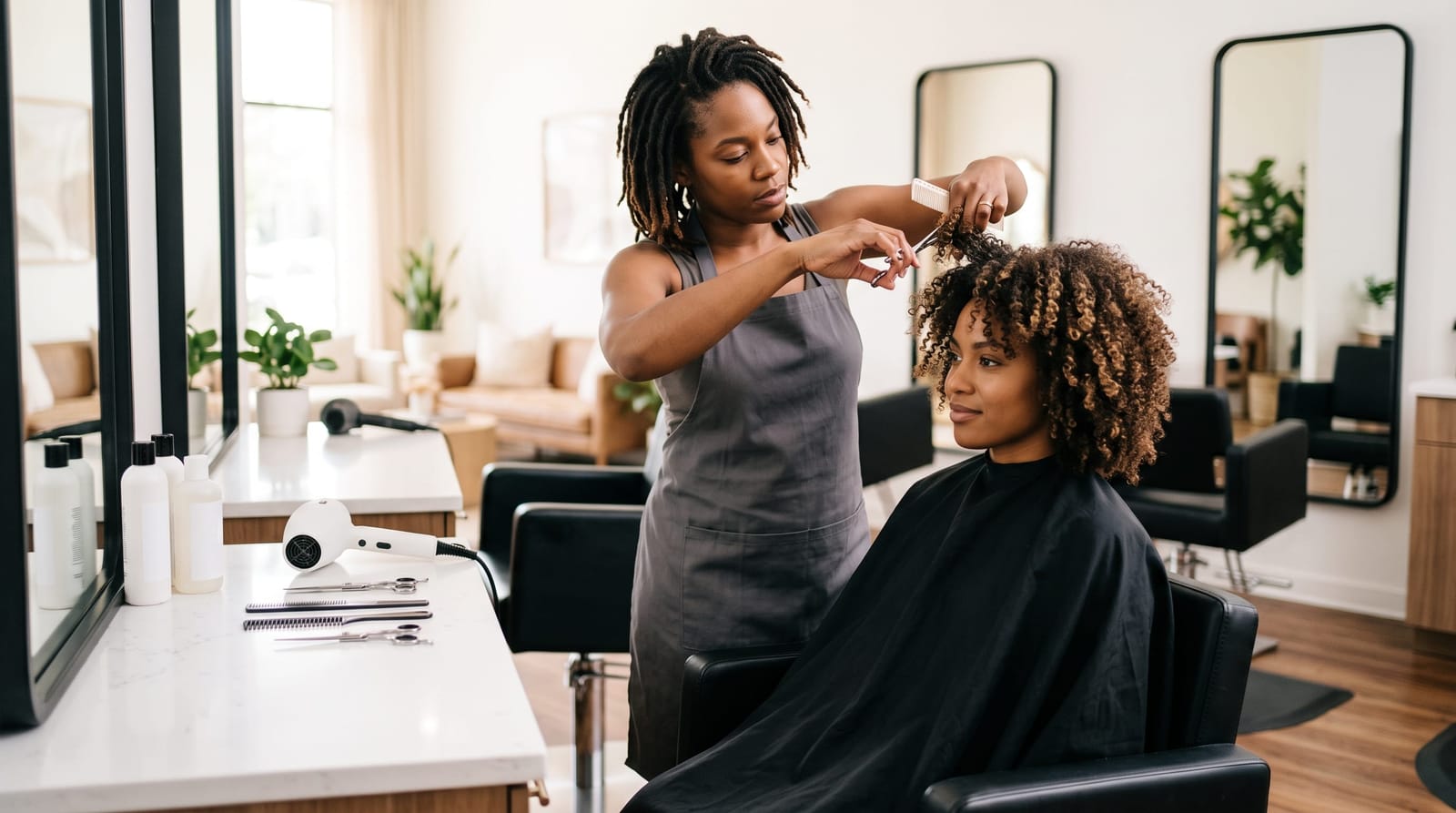
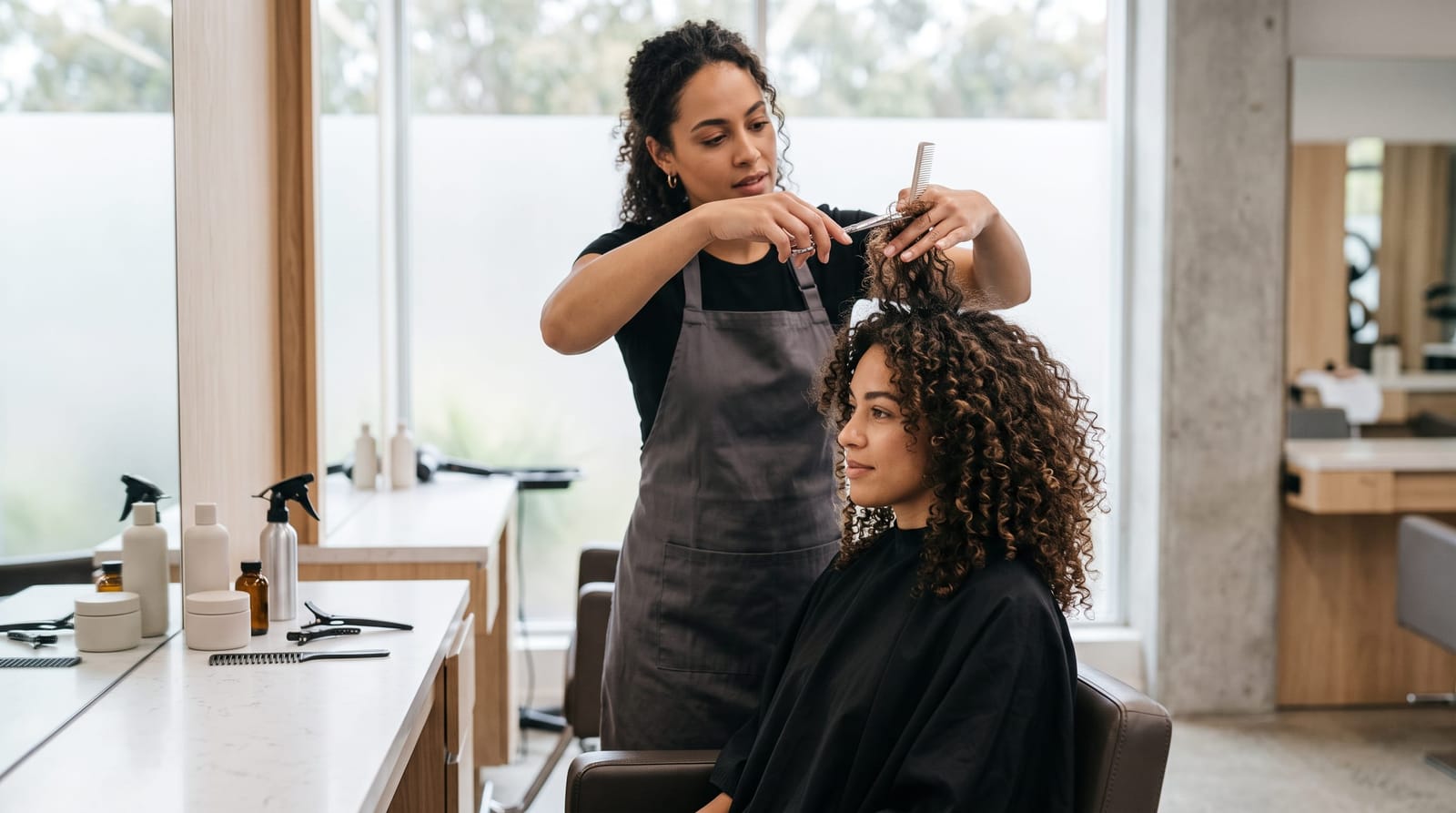
Rather than blunt, straight-across cuts that can create a flat or boxy shape in curly hair, curl specialists often use point cutting: a technique where the shears are held vertically and small, precise cuts are made into the ends of the hair. This softens the perimeter, removes microbulk at the tips, and allows curls to close naturally rather than fanning outward. Slide cutting is another approach used to thin specific sections of dense hair without disrupting the curl pattern, creating a seamless finish that still holds shape and volume.
Different Curl Types, Different Shaping Approaches
A layered cut for a loose, beachy wave looks nothing like a layered cut designed for a tight coil. The shape, angle, and depth of layers all change depending on where your hair falls on the curl spectrum. Here's a general breakdown to help you understand what your stylist might be thinking about when they assess your texture.
Wavy Hair (Type 2)
Wavy hair tends to be flatter at the roots and looser at the ends. For this curl type, layers are often cut to add volume at the crown and encourage the wave pattern to activate rather than fall flat. Face-framing layers are especially effective here, drawing the eye upward and giving the style a lifted, effortless finish. Long, cascading layers, sometimes called curtain layers, work particularly well for type 2 clients who want movement without sacrificing length.
Curly Hair (Type 3)
Type 3 curls range from loose spirals to tighter ringlets, and they tend to carry more volume and density than wavy hair. The primary goal with layering in this range is often to reduce pyramid-shaped expansion, where the hair gets wider at the bottom, and create a rounder, more balanced silhouette. Layers here are typically cut at different angles through the sides and crown, with careful attention to maintaining enough length for curls to coil fully rather than frizz outward.
Coily and Textured Hair (Type 4)
Type 4 hair has the highest density and the tightest curl pattern, which means it also carries the most weight and experiences the most shrinkage. Layering for coily textures requires a careful, often more conservative approach: removing weight where it's needed while respecting the hair's natural volume and shape. Many type 4 clients find that shaping the perimeter and crown with minimal interior layers gives them the most defined, full results. Meraki's stylists assess shrinkage patterns and density before making any decisions, ensuring that the final shape works with the hair rather than against it.
What to Discuss with Your Stylist Before a Layered Cut
Walking into a curl appointment with clarity about what you want, and what you don't, makes a significant difference in the outcome. Even if you're not fluent in hair terminology, you can communicate effectively by sharing a few key pieces of information with your stylist.
- Your daily styling routine: Do you diffuse, air dry, or use a combination? This affects how layers should be shaped to complement your process.
- Your shrinkage factor: If your hair shrinks significantly when dry, your stylist needs to account for that before removing length.
- How much volume you want: Some clients love maximum volume; others prefer a sleeker, more controlled silhouette. Be specific.
- Your experience with layered cuts: If you've had layers before that didn't work, describe what happened. This gives your stylist critical information to work differently.
- Your product routine: The products you use at home influence what cut will work best for your lifestyle and hair goals.
A good curl specialist will also ask you questions, about your routine, your curl history, and your goals, before picking up a pair of shears. At Meraki, every curly hair appointment begins with a thorough consultation so both the client and stylist are aligned before anything changes.
How the Right Products Complete a Layered Curly Cut
Even the most expertly shaped layered cut needs the right product support to perform at its best at home. Layered curly hair benefits from a routine that adds moisture, enhances definition, and holds each curl in place without weighing it down, which is exactly the balance that good curl products are designed to strike.
A general layered hair routine follows a clear order: shampoo, conditioner, leave-in conditioner, styler, and finish. Each step serves a purpose, and skipping one can leave your layers looking flat or undefined. A leave-in like It's a 10 Miracle Leave-In Product is a popular choice for layered curly hair because it provides lightweight moisture, smooths frizz, and helps curls close cleanly at the tips, which matters especially for point-cut ends that need a little extra encouragement to coil properly.
For more in-depth guidance on building a product routine that supports your layered cut, explore our full breakdown of products for layered hair and how to apply them effectively for your curl type. And if you're still working on defining your styling technique at home, our post on curly hair styling tips walks through practical approaches for bringing out your best curl definition between salon visits.
Meraki's Approach to Shaping: Thoughtful, Personalized, and Curl-First
At Meraki Salon in NJ, layering and shaping for curly hair isn't a one-size-fits-all service. Every client comes in with a unique combination of curl pattern, density, porosity, and lifestyle, and every cut is built around that individuality. The team approaches each consultation as a conversation, not a transaction.
Rather than applying a standard layering formula, Meraki's stylists consider how your specific curls move, where your hair carries the most bulk, and what shape will feel most natural and manageable for your daily routine. Whether you're coming in with a loose wave that wants more body or a tight coil that needs strategic shaping to reduce weight, the goal is always the same: a cut that works with your texture and makes your curl routine feel easier, not harder.
The difference is in the details: the dry assessment before any cutting begins, the attention to how layers will look once curls fully dry and spring back, and the finishing conversation about how to maintain your shape at home with the right products and techniques.
Conclusion
The right layered cut can genuinely transform your relationship with your curly hair, not through dramatic promises, but through thoughtful shaping that works with your natural texture. When layers are placed with intention, bulk is reduced, curl definition improves, and your hair moves the way it was always meant to. The key is working with a stylist who understands that curly hair requires a different approach from start to finish, and who takes the time to understand your specific pattern before making a single change. If you're ready to experience what a curl-informed layered cut can do for your hair, Meraki Salon in NJ is here to make that happen: book your consultation and bring your curls in.