Should You Cut Curly Hair Wet or Dry?
If you've ever left a salon with a haircut that looked perfect when you walked out, only to watch your curls spring up shorter and shapeless once they dried, you've experienced firsthand why this question matters so much. Cutting curly hair isn't the same as cutting straight hair, and the decision to cut wet or dry has a real impact on your final result. Whether you're exploring new curly hair styling tips or searching for a stylist who truly understands your texture, understanding this technique helps you walk into your next appointment with confidence.
Why Curly Hair Behaves Differently on the Cutting Table
Curly and textured hair has a unique quality that straight hair simply doesn't: shrinkage. Depending on your curl type, your hair can appear several inches shorter once it's fully dry than it does when wet and stretched out. Some tighter curl patterns can shrink up to 50% or more of their actual length. This means that a stylist cutting curly hair wet is essentially working on a version of your hair that doesn't reflect how it naturally sits, moves, or frames your face in everyday life.
Each curl also has its own pattern, weight, and direction. Two sections of hair right next to each other can behave completely differently once dry. When a stylist cuts curly hair while it's wet and pulled straight, they're making decisions based on a temporary, stretched-out state rather than how your curls actually fall. The result is often uneven layers, unexpected bulk, or a shape that simply doesn't work with your natural texture.
This is why dry cutting has become the preferred method among curl-specialized stylists, and it's a cornerstone of the curly hair styling tips we return to again and again at Meraki.
What Is the Dry-Cutting Technique for Curly Hair?
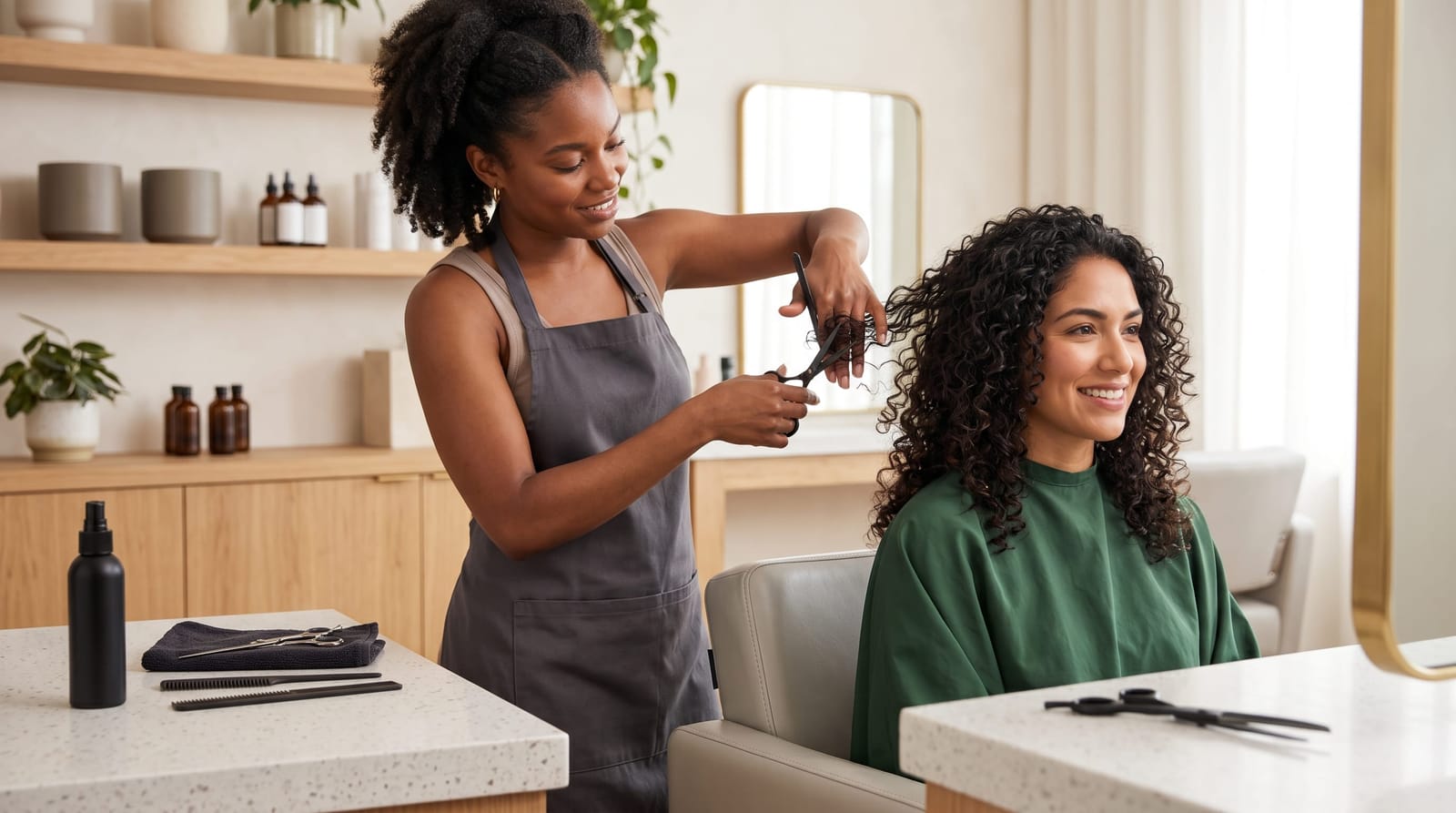
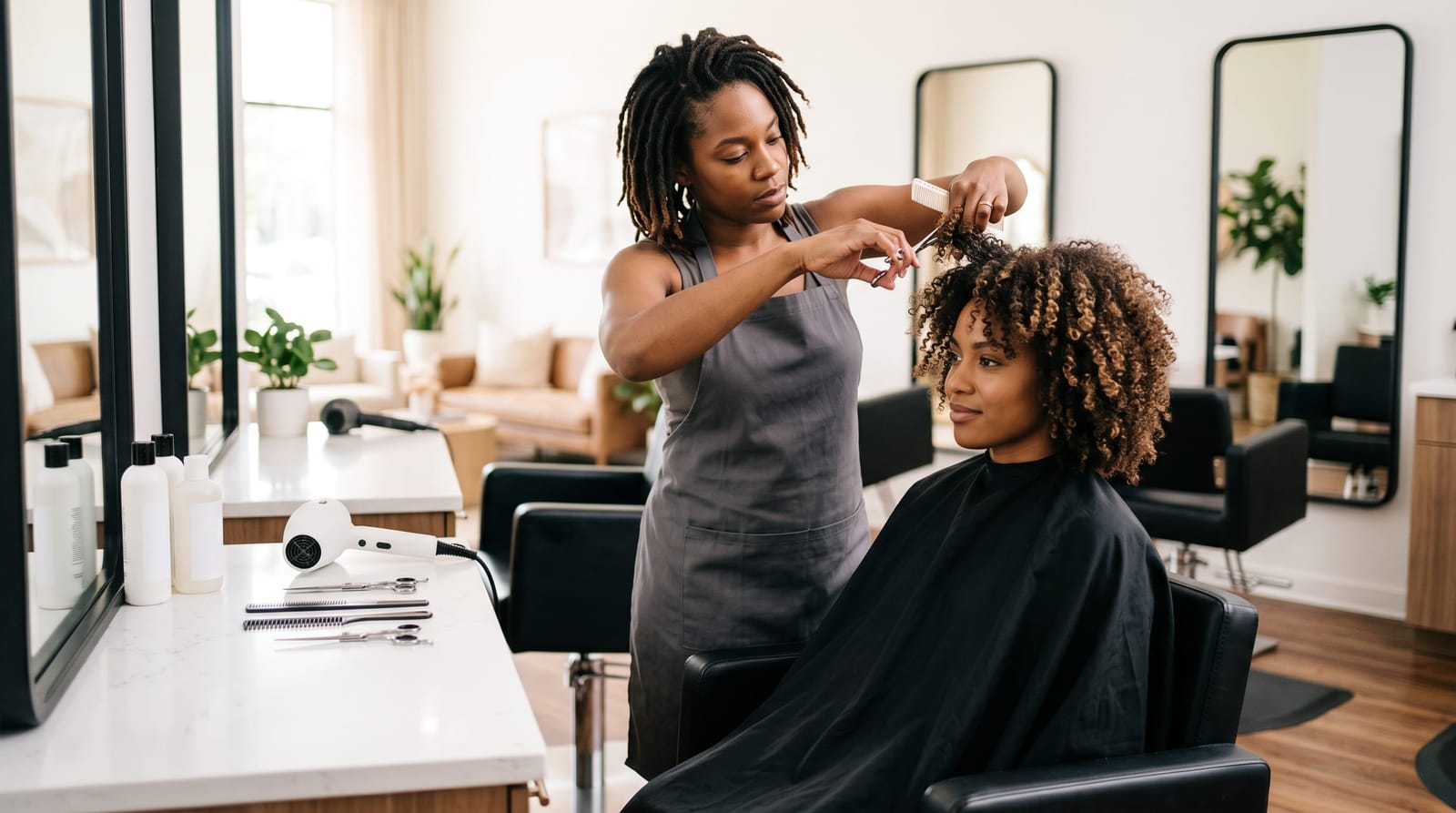
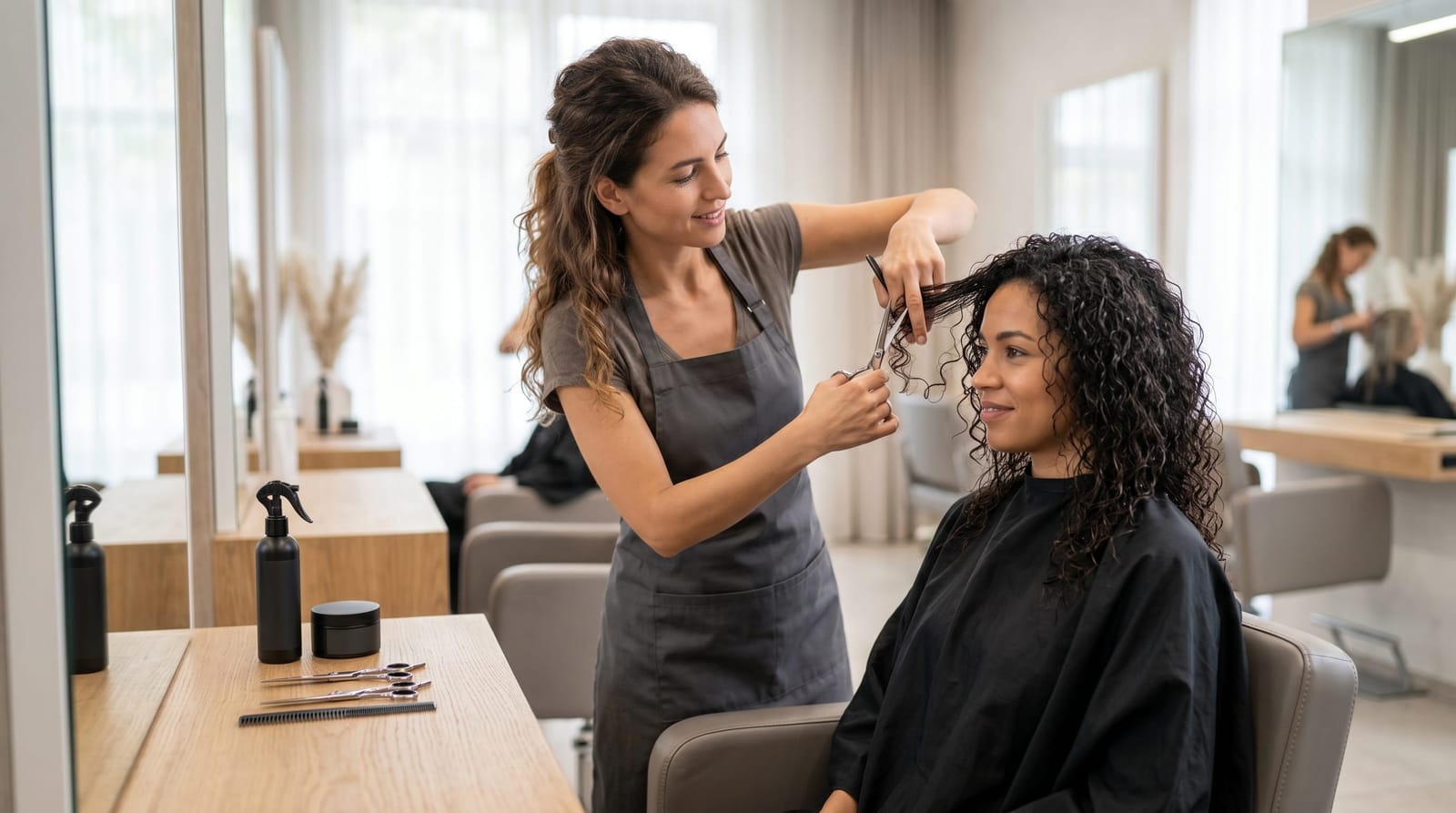
Dry cutting means your stylist works with your hair in its natural state: fully dry, unstyled (or styled as you would normally wear it), and shaped by your actual curl pattern. Rather than stretching out sections and cutting them in a uniform line, the stylist evaluates how each curl falls, how much it coils or waves, and how the overall shape sits on your head before making a single snip.
Here's a general idea of how the dry-cutting process works at a curl-focused salon:
- Consultation first. Your stylist will assess your curl pattern, density, and natural shape before touching scissors to hair.
- Cutting in sections. Hair is released curl by curl or in small sections, allowing each to spring back into its natural coil as it's cut. This accounts for shrinkage in real time.
- Shape evaluation throughout. Because the hair is already in its natural state, the stylist can see the shape evolving as they work and make adjustments accordingly.
- Wash and style after cutting. Many stylists finish by washing with curl-friendly products, then diffusing and scrunching to reveal the final shape, and make any last refinements.
The result is a cut that genuinely works with your curl pattern rather than against it: one of the most essential curly hair styling tips any curl client should know before their next appointment.
When Is Wet Cutting Still Appropriate?
Wet cutting isn't always the wrong choice: it depends on your specific hair texture and what you're trying to achieve. There are a few situations where a wet cut may still be part of the process:
- Wavy or loosely textured hair. If your curl pattern is on the looser, wavier side (think beachy waves or soft S-shapes), the difference between wet and dry length is much less dramatic. A skilled stylist may feel comfortable working with damp hair for certain cuts.
- Precision blunt cuts or perimeter lines. Some stylists use wet cutting to create a clean, precise baseline before finishing the shape dry. This can work well when combined with dry refinement afterward.
- Detangling and preparation. Wetting the hair before a cut may be necessary to work through significant tangles or product buildup, even if the actual cutting happens once the hair has dried down.
The key is that wet cutting alone, without any dry refinement, tends to leave curly hair clients disappointed. A curly hair styling tips rule of thumb: if your stylist isn't accounting for your curl's natural spring and shrinkage, the cut won't truly flatter your texture.
How Meraki Stylists Decide During Your Consultation
At Meraki, every curly and textured hair appointment starts with a real conversation, not a quick glance before reaching for the scissors. Your stylist will take time to understand your curl type, how much shrinkage you typically experience, how you prefer to style your hair at home, and what your goal is for the cut.
From there, the approach is tailored to you. A client with tight coils who wears their hair naturally will almost always benefit from a dry cut. A client with wavy hair who blow-dries regularly might call for a different strategy. A first-time curly client may walk in with their hair blown out, and the stylist will ask questions to get a clear picture of the natural texture before deciding how to proceed.
This personalized approach is part of what makes finding the right stylist so important, and why we encourage clients to explore what curly hair salon NJ options prioritize curl expertise, not just general cutting skill. The consultation is where great results begin, and it's never a step that should be skipped.
Curious about how often your curls actually need a trim? That's another important part of maintaining your shape: how often you should get a curly haircut is worth exploring as part of your overall routine.
At-Home Curly Hair Styling Tips to Complement Your Cut
A great cut sets the foundation, but what you do between appointments shapes how your curls look every day. A few curly hair styling tips to keep your cut looking its best:
- Use a diffuser attachment when blow-drying. Diffusing distributes heat evenly while encouraging your curl pattern to form naturally rather than frizzing out from direct airflow.
- Scrunch, don't comb. Once your hair is wet and products are applied, scrunching upward gently encourages curl definition. Combing wet curly hair disrupts the curl pattern and leads to frizz.
- Layer your products thoughtfully. A hydrating leave-in conditioner applied to soaking-wet hair, followed by a curl cream or gel, helps lock in moisture and hold. Finish by scrunching out the crunch once your hair is fully dry.
- Protect curls overnight. A silk or satin pillowcase (or a loose pineapple bun secured with a soft scrunchie) helps preserve your curl pattern and reduce friction while you sleep.
These small, consistent habits keep your curls defined, hydrated, and beautifully shaped between salon visits: maximizing every detail of that dry-cut shape your stylist worked to create.
Frequently Asked Questions
Does dry cutting work for all curl types?
Dry cutting works well across most curl and wave types, but the degree of benefit varies. Tighter coils and more defined curl patterns see the greatest advantage from dry cutting because they experience more shrinkage. Looser waves may need less adjustment, though dry refinement still tends to produce a more accurate final shape than wet cutting alone.
Should I come to my appointment with my hair already styled?
For a dry cut, many stylists actually prefer that you arrive with your hair in its natural, dried state: styled the way you normally wear it. This gives your stylist the most accurate view of how your curls naturally fall and behave. It's always worth asking your specific stylist what they prefer when booking.
Can I get a dry cut if my hair is very long or thick?
Yes: dry cutting works for long and thick hair, though it may take additional time and sectioning. A skilled curl stylist will work through the hair systematically, ensuring each section is evaluated for its individual curl behavior. Length and thickness don't disqualify you from the technique; they simply require more care and patience during the process.
How do I know if my stylist is experienced with dry cutting curly hair?
Ask directly during your consultation. A stylist experienced in curly cutting will be able to speak comfortably about shrinkage, curl pattern evaluation, and how they approach different textures. Looking at their portfolio of curly hair clients and reading reviews from textured hair clients are also helpful steps when choosing a salon.
The Right Cut Makes Every Curly Hair Styling Tip Work Better
Wet or dry: the answer for most curly and textured hair clients comes down to working with your curl pattern, not around it. Dry cutting accounts for the natural spring and shrinkage that make curly hair so beautifully unique, resulting in a shape that looks intentional and flattering whether your hair is freshly styled or air-dried. Combined with the right at-home curly hair styling tips, a curl-specific cut truly transforms how your hair looks and feels every day. When in doubt, start with a consultation and let a specialist guide the way.