Toning After Highlights: Why It Matters for Foils and Balayage
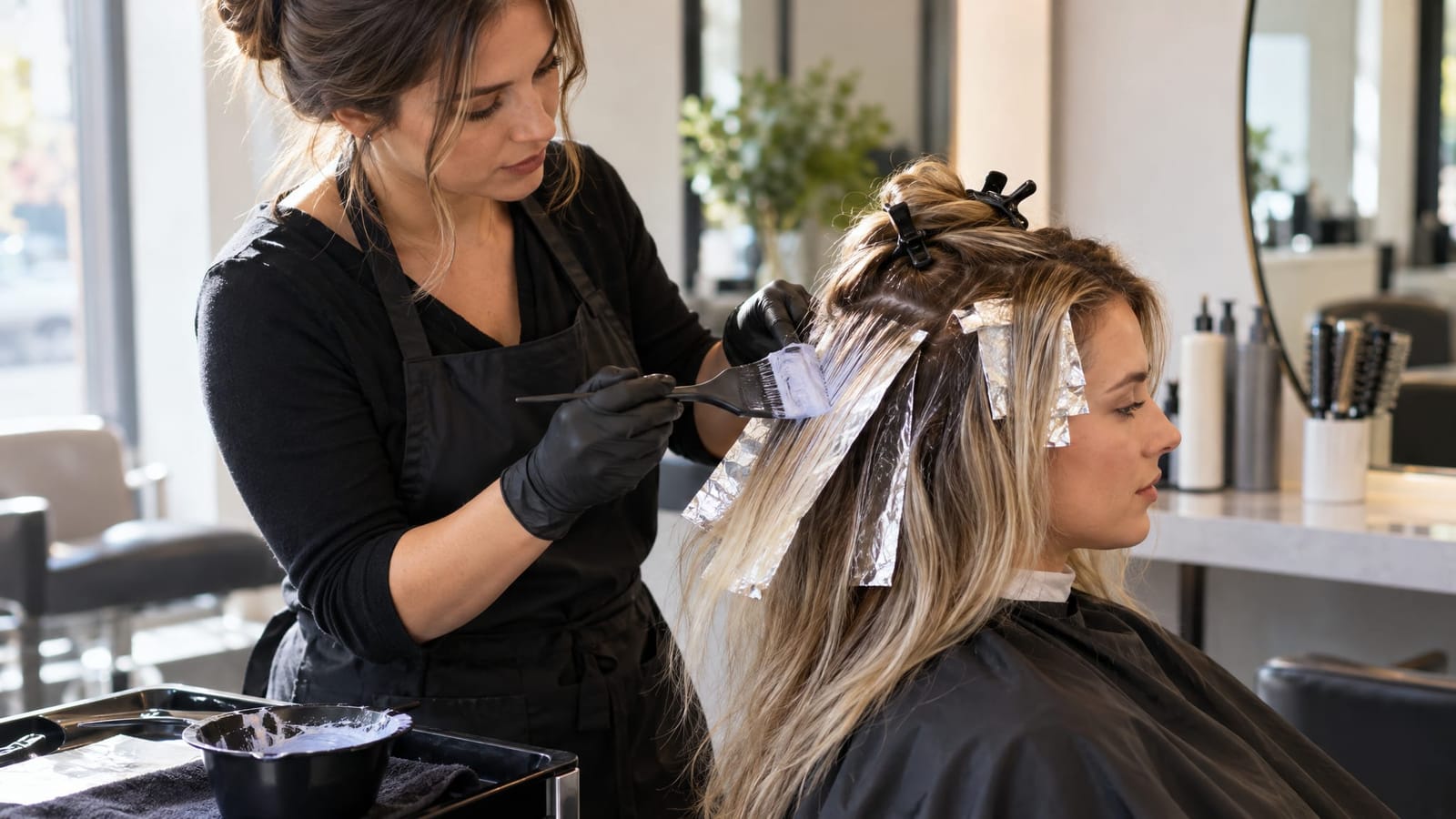
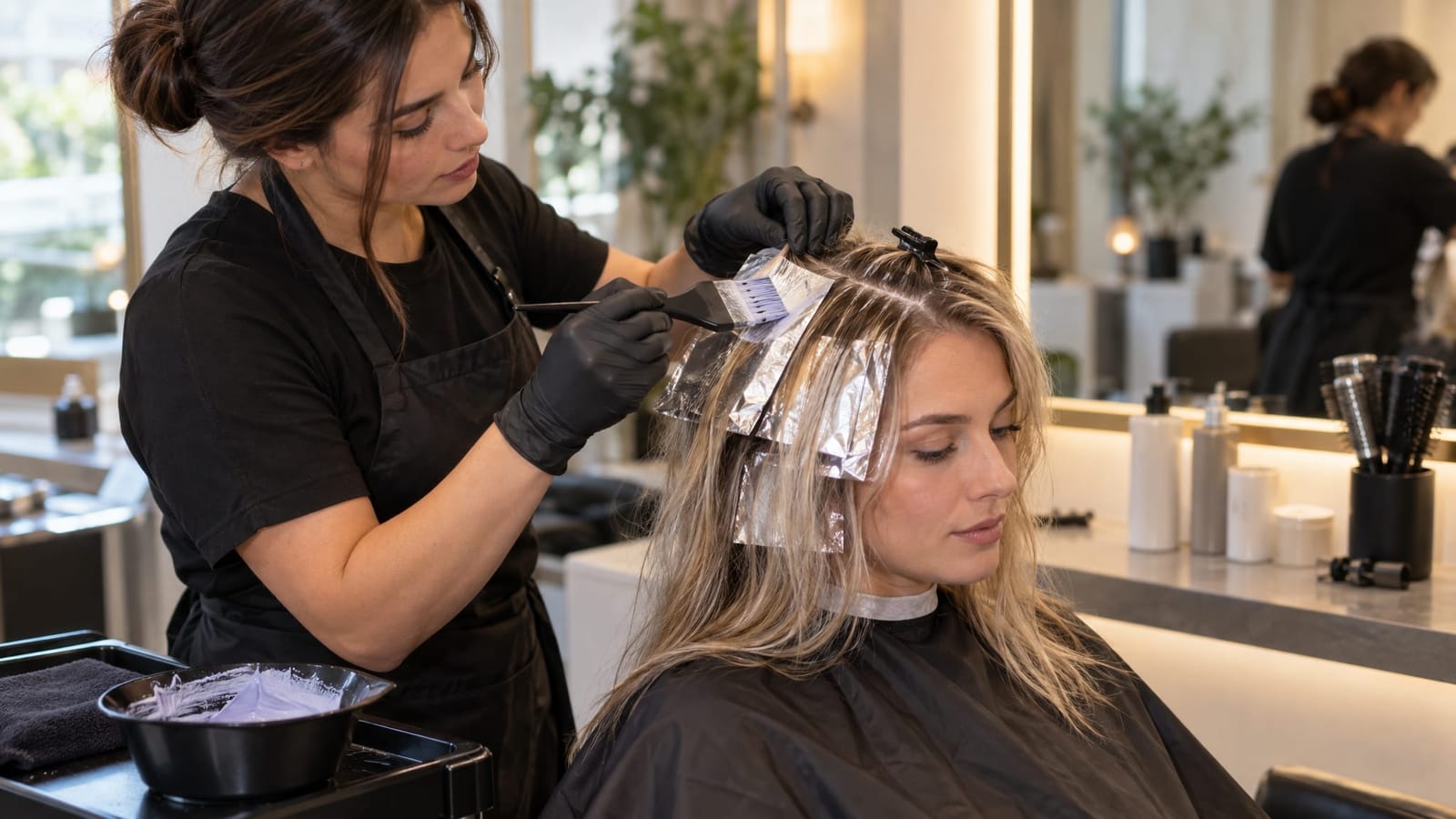
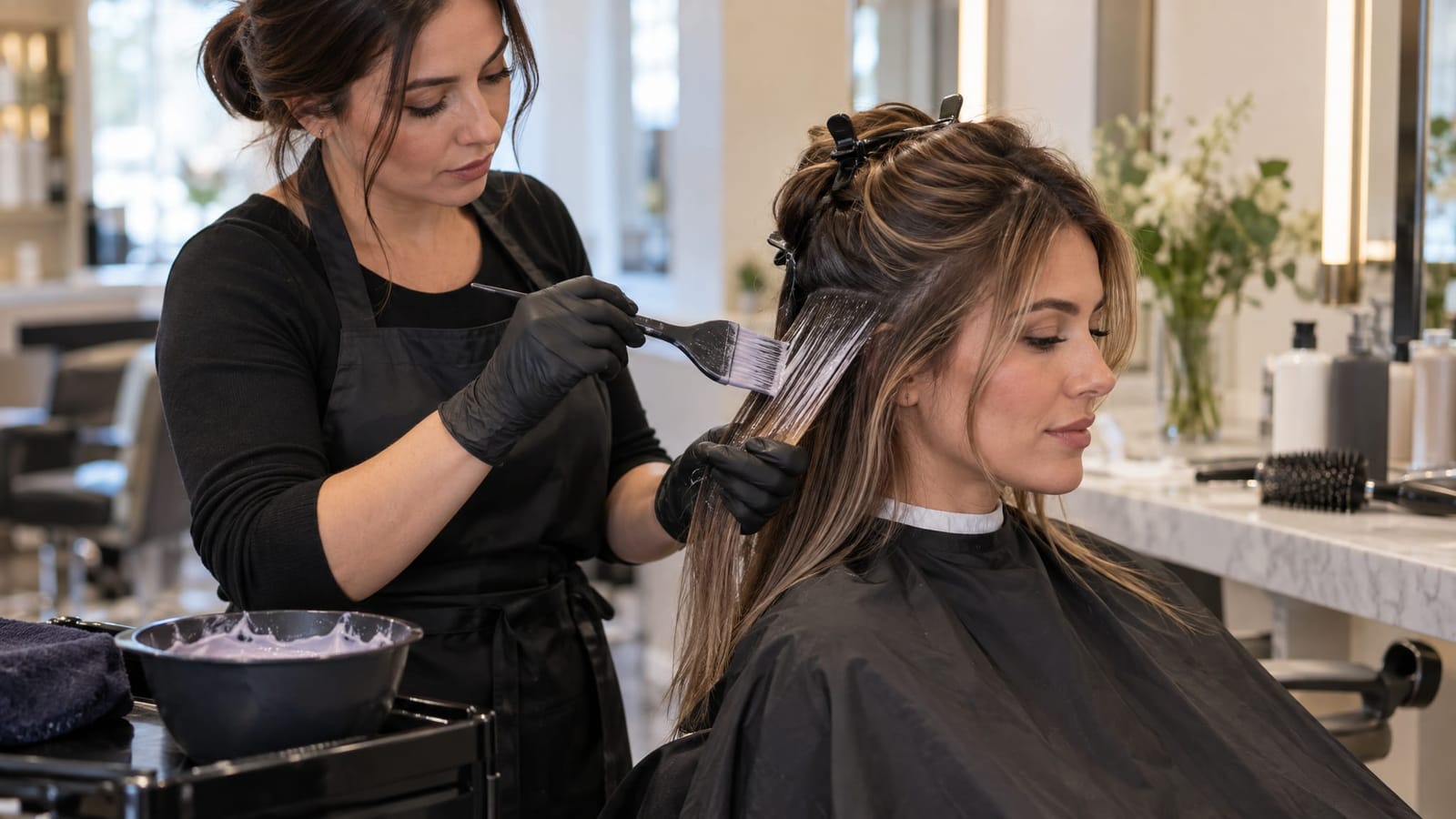
Toning after highlights refines the color that lightening leaves behind. It can soften unwanted yellow or orange, create a creamy beige blonde, or bring brunette balayage into a richer caramel shade. Lightening creates the brighter pieces; toning helps give those pieces their intended finish.
That makes toner an important part of many foil and balayage services, but not an automatic requirement for every highlighted look. If the lightened hair already matches the desired shade, additional toning may not be necessary. The decision depends on your starting color, the warmth revealed during lightening, and the result you want.
Understanding that distinction also makes maintenance easier. A change in tone does not always mean you need new highlights, and visible roots do not necessarily mean your ends need more color.
What toner does after lightening
Lightener removes natural pigment from the hair. As that pigment changes, underlying warmth becomes visible, ranging from red and orange to yellow. That warmth is a normal part of the lightening process, not automatically a sign that something went wrong.
Toner deposits color to adjust the resulting shade. Its purpose is usually to refine the color rather than create a major increase in lightness.
Neutralizing unwanted warmth
Color correction through toning uses opposing shades. Violet helps counter yellow, while blue helps counter orange. The formula needs to match both the unwanted tone and how light the hair is.
For example, pale yellow highlights intended to look creamy require a different approach from orange-toned brunette pieces intended to look caramel. Applying a violet product to both does not address the same color problem.
Neutralizing also does not mean removing every trace of warmth. Too much cooling pigment can make a color look flatter or deeper than intended.
Creating warmth on purpose
Toner is not just for icy blonde. It also helps create honey, golden beige, copper, and warm brunette finishes. In these looks, the goal is to shape the warmth into a deliberate shade rather than cancel it completely.
This is why “less brassy” and “cooler” are not always interchangeable requests. A honey blonde can look beautifully balanced while still being warm. Describing the shade you want is more useful than asking for all warmth to disappear.
Are toner, gloss, and glaze the same thing?
These terms overlap, but they do not always describe identical products. “Toner” describes the job of adjusting color. A color-depositing gloss can perform that job while also enhancing shine. A clear gloss adds no corrective pigment, so it will not neutralize yellow or orange.
“Glaze” is another term used for a surface color or shine refresh, although product terminology varies. The useful question is what the service is intended to do: change the tone, enhance shine, or both.
Our explanation of hair gloss vs glaze explores these distinctions in more detail.
At Meraki Salon & Spa in Mountainside, we offer glazing, toning, and glossing alongside foil highlights and balayage. We customize color services to your style and maintenance preferences, rather than treating every color refresh as the same service.
How toning differs after foils and balayage
Foils and balayage describe ways of placing and lightening color. Neither technique guarantees a particular finished tone. Both can produce warm, neutral, or cool results, depending on the starting hair and the color plan.
After foil highlights
Foils allow selected sections to be lightened with controlled placement. Toning then refines those sections so their color works with the surrounding hair.
For a bright beige blonde, the goal might be to soften yellow without making the highlights look gray. For dimensional brunette highlights, it might be to balance orange while retaining enough warmth to complement the deeper base.
More ash is not always better. A heavily cooled result can appear less bright, even though the hair has not become less lightened.
After balayage
Balayage often leaves more depth near the roots and brightness through the lengths and ends. Toning helps coordinate those different areas while preserving the intended contrast.
A brunette balayage might transition from a deeper base into warm caramel ends. Trying to make every section the same cool shade could work against that dimensional look.
Toner also cannot move the highlights. It adjusts color, but it does not change where the lightened pieces begin or erase a sharp placement line by itself.
Hair color touch-up frequency: separate tone from placement
Your toner refresh and your next highlighting appointment do not have to happen together. The lightened sections remain as deposited tone fades, so the color may need refinement before the placement needs updating.
Instead of treating every change as a reason for a full color appointment, identify what is actually bothering you:
- The highlights are still well placed, but look too yellow or orange: A toner or color-depositing gloss may address the change without adding more highlights.
- The tone still looks right, but the brightness sits too far from the roots: The issue is highlight placement or grow-out, not simply fading toner.
- New growth needs coverage: Root retouching addresses a different area and purpose from refreshing highlighted lengths.
- The color looks darker or patchier than intended: Adding more toner is not necessarily the right next step.
What affects your refresh timing?
The desired finish matters. A very cool blonde may feel ready for a refresh as soon as warmth becomes visible, while someone who prefers golden blonde may still like the same amount of warmth.
Washing habits, heat styling, sun exposure, swimming, and the condition of the lengths also influence how color looks between visits. More porous areas, which absorb and release moisture and color differently, can take up pigment unevenly.
For example, softly rooted balayage can still have flattering placement when the ends begin looking more orange than caramel. Refreshing the tone addresses that concern without automatically moving the brightness higher.
For a closer look at what changes between appointments, our article on why blonde hair turns brassy and how toning helps explains the difference between underlying warmth and fading color.
Keeping the tone balanced at home
Home care supports the salon finish, but it does not need to become a constant effort to cancel warmth. The aim is to maintain the shade you chose, not keep adding cool pigment regardless of how the hair looks.
- Use a gentle cleansing routine suited to colored hair. Wash according to your scalp and styling needs rather than following an arbitrary schedule solely to preserve toner.
- Condition the lengths. Smoother-feeling hair helps the finished color look polished. Conditioning supports manageability, but does not replace faded pigment.
- Keep styling heat moderate. Use a heat protectant as directed and avoid unnecessary repeated passes with hot tools.
- Treat purple shampoo as a color product. It deposits violet pigment to counter yellow. It is not a universal solution for orange tones or uneven color.
- Follow the product directions. Leaving a pigmented shampoo or mask on longer is not automatically better. Excess pigment can leave lighter sections looking dull or tinted.
When evaluating a change, look at dry hair in similar natural light. Warm indoor lighting can make a neutral blonde appear more golden, while cool lighting can make it seem ashier. Consistent lighting makes comparisons more useful.
When toning is not enough
Toner works within the lightness and placement already present. It is not a substitute for every kind of color adjustment.
If the goal is a very pale blonde but the highlighted sections remain a deeper orange, toner alone cannot create the missing lightness. Likewise, it cannot relocate chunky highlights, fully blend a pronounced lightening band, or reliably make unevenly processed sections identical with one all-over application.
Adding more pigment can also make hair appear darker. That may be helpful when softening overly bright highlights, but disappointing when the real goal is a lighter result.
These are different decisions from a routine refresh. Our overview of color correction in Mountainside, NJ explains situations where a broader color plan is needed.
Describe the finish, not just the service
The most useful color conversation separates three things: how light you want the hair, where you want the brightness, and what tone you prefer.
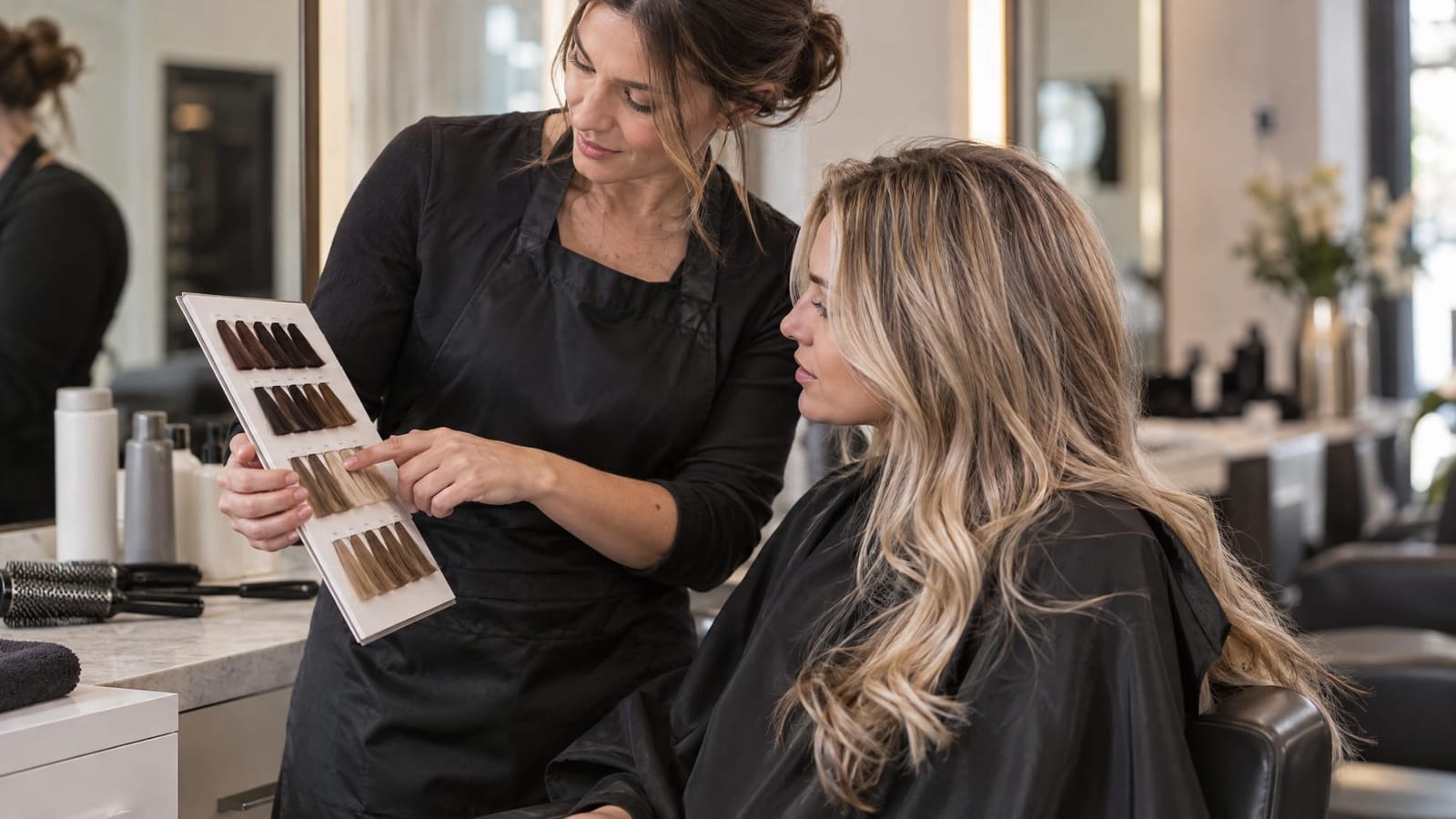
“I like where my highlights are, but the ends look too yellow” points toward a different solution from “I want brighter pieces around my face.” Reference photos are helpful when you identify the specific feature you like, such as a creamy finish, golden dimension, or a softer transition from the roots.
Toning is often the finishing step that brings highlights into balance. Knowing what it can change, and what it cannot, helps keep maintenance focused on the service your color actually needs.