What's the Difference Between Hair Gloss and Hair Glaze?
If you've ever asked your colorist about adding shine to your hair and heard the words "gloss" and "glaze" used almost interchangeably, you're not alone. These two treatments sound nearly identical, but they work very differently, and choosing the wrong one could mean missing out on the results you actually want. Whether you're maintaining a fresh balayage, toning down brassiness, or simply want mirror-like shine, understanding the hair gloss vs glaze distinction helps you walk into your appointment knowing exactly what to ask for. Here's everything you need to know.
How Hair Gloss Works: The Deeper Treatment
A hair gloss is a semi-permanent treatment that actually penetrates the hair's cuticle to deposit color pigment, condition the strand from within, and seal the cuticle back down. Because it works beneath the surface, the results last significantly longer than a glaze: typically between 4 and 6 weeks, with some clients seeing results that fade gradually over up to 8 weeks depending on their hair type and washing habits.
At Meraki Salon & Spa, gloss treatments are frequently recommended as a finishing step after balayage or color services. Why? Because a gloss can neutralize unwanted warm or brassy tones, boost the vibrancy of your color by as much as 40%, and add a deep, glass-like shine that a regular conditioner simply can't replicate. A clear gloss (with no added pigment) will purely enhance shine and softness, while a tinted gloss can shift your tone slightly: cooling down a warm blonde or deepening a brunette, for example.
Because gloss treatments do involve a mild processing agent to open the cuticle, they are typically applied and monitored by a professional colorist. This ensures the tone correction is precise and the treatment is tailored to your specific hair needs.
How Hair Glaze Works: The Surface-Level Shine Boost
A hair glaze, by contrast, works entirely on the outside of the hair strand. Rather than penetrating the cuticle, a glaze coats the surface of each strand with a thin, reflective film that smooths down the cuticle, adds immediate shine, and can slightly enhance or refresh color. Because it doesn't penetrate the hair shaft, a glaze is considered a gentler, deposit-only treatment with no processing chemicals involved.
The tradeoff is longevity. Most glaze treatments last approximately 1 to 2 weeks before they begin to fade, and they wash out more quickly with frequent shampooing. That said, glazes are an excellent choice for clients who want a low-commitment shine refresh, have very fine or sensitized hair that may not respond well to deeper treatments, or need a quick polish before a special event.
At-home glaze products also exist in the market, though professional glazes applied in-salon use higher-quality ingredients and are applied more evenly for a more consistent result. Think of a glaze as the express lane: fast, easy, beautiful results, just not built to last as long.
Hair Gloss vs Glaze: Side-by-Side Comparison
To make the decision easier, here's a direct comparison of both treatments across the factors that matter most:
- Penetration depth: Gloss penetrates the cuticle; glaze coats the surface only.
- Longevity: Gloss lasts 4-8 weeks; glaze lasts 1-2 weeks.
- Color correction: Gloss can neutralize brassiness and deposit tone; glaze offers minimal tonal change.
- Chemical involvement: Gloss uses a mild processing agent; glaze is chemical-free and deposit-only.
- Best for: Gloss suits clients maintaining color or needing tonal correction; glaze suits clients wanting a quick shine refresh with minimal commitment.
- Shine level: Both dramatically increase shine, but gloss tends to produce a deeper, more long-lasting luminosity.
- Hair health benefits: Both improve smoothness and manageability; gloss provides conditioning benefits that penetrate the strand.
In practice, many clients at Meraki receive a gloss treatment 2 to 3 times per year as part of their regular color maintenance routine, while a glaze might be added between appointments or before a big event for a fast pick-me-up.
When Should You Choose a Gloss Over a Glaze?
Choosing between these two treatments comes down to your current hair goals and the condition of your color. A gloss is almost always the better investment if any of the following apply to you:
- Your blonde highlights or balayage have developed a brassy or yellow tone between appointments.
- You want to extend the vibrancy of a recent color service: research suggests a gloss can help color last up to 50% longer by sealing the cuticle and protecting pigment.
- You have dull, lackluster hair that needs deep conditioning alongside a shine boost.
- You're looking for a slight tonal shift without committing to a full color appointment.
A glaze, on the other hand, is the smarter choice if you have a healthy color you simply want to refresh, if your hair is particularly fine or fragile, or if you're preparing for an event and want results without any processing whatsoever.
If you're unsure which treatment suits your hair best, our colorists can assess your hair during a consultation. Understanding your full color history, including any previous chemical services, helps determine how your hair will respond to each treatment.
What to Expect During a Professional Gloss or Glaze Treatment at Meraki
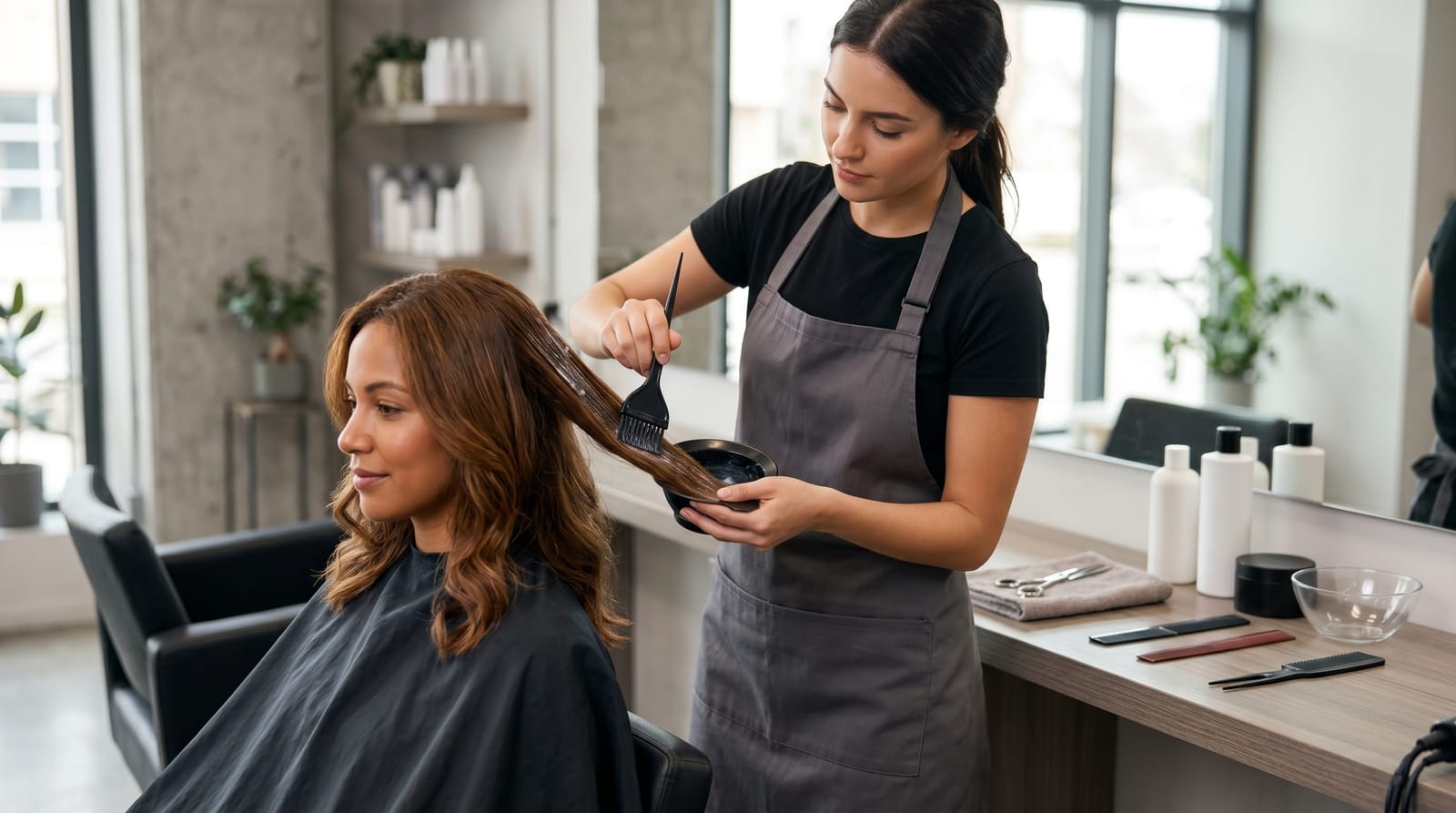
Both treatments are relatively quick additions to your salon visit. A professional gloss is typically applied after your primary color service, left on for 10 to 20 minutes, and then rinsed. Some clients notice the difference immediately: hair feels smoother, looks shinier, and color appears more saturated. A glaze follows a similar application process but with an even shorter processing window, sometimes as little as 5 minutes.
After either service, your colorist may recommend a sulfate-free shampoo to help maintain your results longer. Washing hair less frequently, ideally no more than 2 to 3 times per week, can extend the life of a gloss treatment considerably. Clients who follow post-treatment care guidelines consistently report their gloss results lasting closer to the 6 to 8 week end of the spectrum.
Both gloss and glaze services align seamlessly with Meraki's broader approach to hair color services. Whether you're undergoing a full color transformation or simply maintaining your existing look, these finishing treatments are one of the most cost-effective ways to keep your hair looking freshly done between major appointments.
Frequently Asked Questions
Does a hair gloss change your hair color permanently?
No. A hair gloss is a semi-permanent treatment that fades gradually over 4 to 8 weeks. It can deposit tone and enhance your existing color, but it does not permanently alter your hair color. It will not lighten hair, and any tonal shift it creates will wash out naturally over time.
Can I get a gloss or glaze on color-treated hair?
Yes, in fact, color-treated hair is one of the most common candidates for both treatments. A gloss is especially beneficial after services like balayage or highlights because it seals the cuticle, locks in color, and reduces the brassiness that often develops in lightened hair. A glaze is also safe for color-treated hair and adds gentle shine without affecting existing color.
How often should I get a hair gloss treatment?
Most colorists recommend a gloss treatment every 4 to 6 weeks, often timed with your regular color maintenance appointment. Clients who notice brassiness developing or who want to keep their color looking vibrant between highlights may benefit from scheduling a gloss every 6 weeks as a standalone service.
Is the hair gloss vs glaze choice different for brunettes versus blondes?
Both hair types can benefit from either treatment, but the goals often differ. Blondes and those with highlights frequently use a tinted gloss to neutralize brassiness and keep tones cool or ashy. Brunettes often opt for a clear or darkening gloss to add depth and richness to their color. For either, a glaze works beautifully as a between-appointment shine refresh regardless of base color.
The Bottom Line
When it comes to the hair gloss vs glaze decision, the right choice depends on how long you want your results to last, whether you need any tonal correction, and how your hair responds to chemical treatments. A gloss offers deeper, longer-lasting results with real color-enhancing benefits, while a glaze delivers an instant, commitment-free shine boost. Both are valuable tools in a professional colorist's kit. To find out which treatment is right for your hair, speak with the color specialists at Meraki Salon & Spa: your next appointment could be the glossiest one yet.